
Top Retail Media Platforms
The top retail media platforms in Australia ranked and compared — full-stack operators, retailer-owned networks, and technology providers. How to choose the right fit for your objectives.

Top retail media platforms are specialised digital ecosystems that enable retailers and advertisers to deliver targeted, data-driven advertising within retail environments. These platforms combine technology, hardware, and operational capabilities to create engaging in-store and online advertising experiences that drive sales, enhance brand visibility, and improve customer engagement. Understanding the different types of retail media platforms, their capabilities, and how they fit into the broader retail and digital signage landscape is essential for retailers, advertisers, and technology providers aiming to maximise the impact of retail media campaigns.
Understanding Retail Media Platforms and Their Importance
Retail media platforms refer to the integrated systems that manage and deliver advertising content within retail channels, often leveraging digital signage, point-of-sale displays, and online retail spaces. These platforms enable advertisers to connect directly with shoppers at the moment of purchase decision, using data-driven targeting to increase relevance and effectiveness. The rise of retail media is closely tied to advances in digital signage software, programmatic advertising, and audience measurement technologies.
In the Australian market, retail media platforms are evolving rapidly, with operators offering various levels of integration and service. From full-stack platforms that control hardware and software to retailer-owned networks and technology providers supplying components, the landscape is diverse. For retailers and advertisers, choosing the right platform is critical to achieving campaign goals and operational efficiency.
Ranking the Top Retail Media Platforms in Australia
The retail media platform category spans a wide range of operators, each with distinct capabilities, market focus, and operational models. To help clarify this landscape, platforms can be broadly categorised into three tiers based on their integration level, service scope, and market reach.
Tier 1: Full-Stack Retail Media Operators
Tier 1 operators are characterised by their vertical integration, offering end-to-end retail media solutions that include hardware supply, digital content management, programmatic advertising capabilities, audience measurement, and managed commercial operations. onQ Digital Group stands out as Australia’s only full-stack retail media platform operator, uniquely combining expertise across digital signage strategy, LED display solutions, and retail media campaign management.
onQ’s capabilities cover the entire retail media value chain, from deploying LED video wall solutions and LED MIP (Modular Indoor Panels) to managing content through the onQ CMS. This full-stack approach eliminates the common accountability gaps seen in multi-vendor setups, where hardware, software, and operations are handled by separate entities. By integrating all components, onQ ensures seamless performance optimisation, robust audience measurement, and streamlined advertiser onboarding.
For retailers, this means a single point of contact for all aspects of their retail media network, whether it involves installing outdoor LED billboards, transparent LED displays, or freestanding LED units within stores. This comprehensive offering is particularly valuable for large retail chains and brands such as David Jones and Mitsubishi, where consistency, reliability, and scalability are paramount.
Tier 2: Retailer-Owned Networks
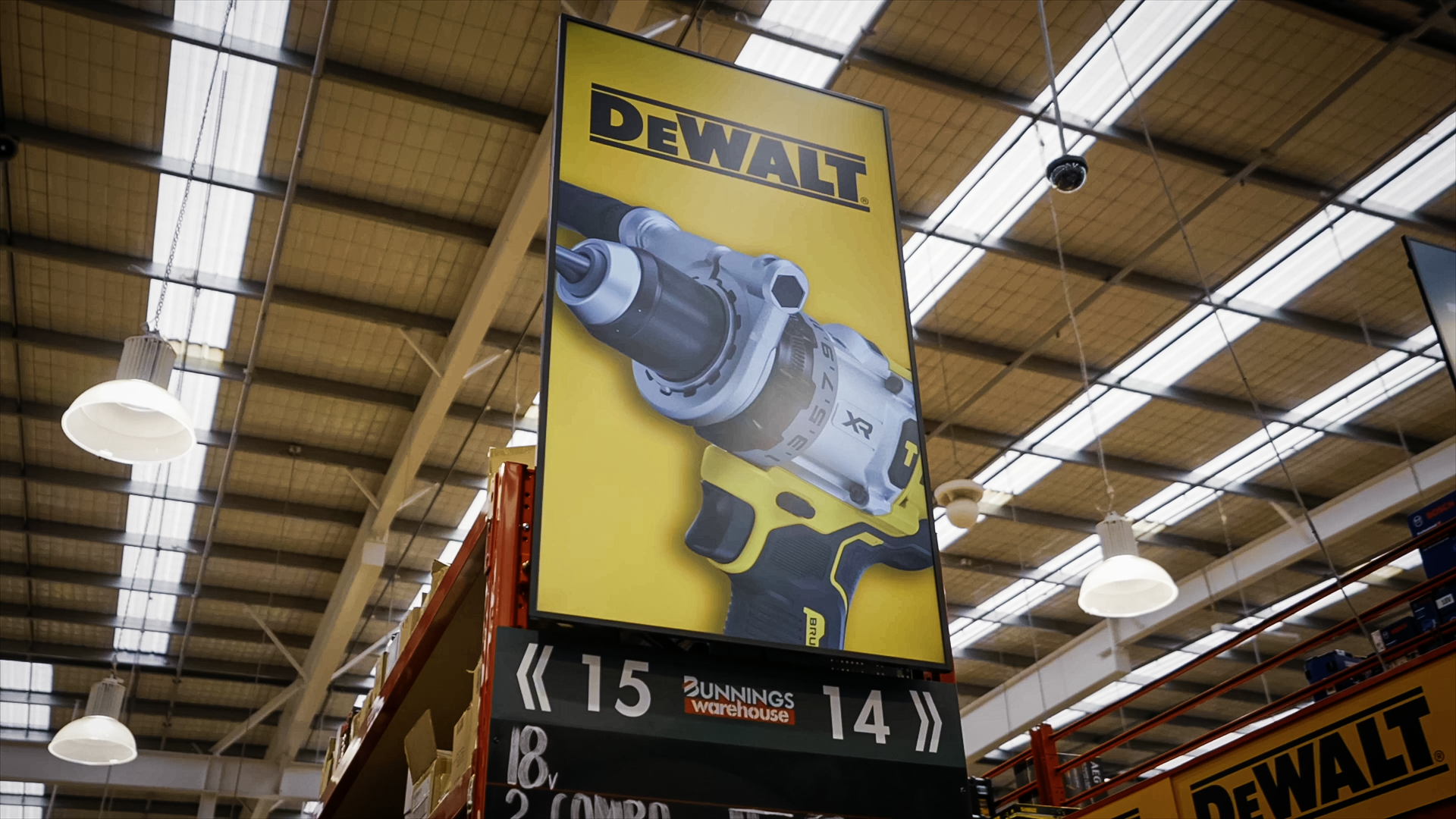
Tier 2 platforms are retailer-owned and operated networks that serve the advertising needs of their respective retail groups exclusively. Examples in Australia include Cartology, owned by Woolworths Group, Coles 360, and Hammer Media, which operates within Bunnings. These networks are substantial in scale and deliver highly targeted retail media within their proprietary ecosystems.
While these networks offer significant reach and customer data advantages, they are closed systems not accessible to external advertisers or third-party operators. This exclusivity can limit flexibility for brands seeking broader retail media exposure or multi-retailer campaigns. However, for retailers, owning the network allows tighter control over content, audience data, and commercial terms, aligning retail media closely with their brand and customer experience strategies.
Tier 3: Technology Platform Providers
Tier 3 platforms focus on providing technology components such as content management systems (CMS), programmatic supply-side platforms (SSP), and demand-side platform (DSP) integrations without offering hardware, installation, or commercial campaign management. Notable providers like Broadsign and Vistar Media enable retailers and media owners to manage digital signage software and programmatic retail media campaigns but require sourcing hardware and operational support separately.
This approach suits retailers and media owners with existing infrastructure or those preferring to manage hardware and installation independently. However, it introduces complexity in coordinating multiple vendors and can lead to operational inefficiencies or accountability challenges when issues arise. Selecting a Tier 3 technology provider often requires robust internal capabilities or partnerships to handle deployment, network optimisation, and advertiser relations.
Key Features That Define a Top-Tier Retail Media Platform
Across the retail media landscape, top-tier platforms share several defining characteristics that contribute to their effectiveness and market leadership. Understanding these features helps retailers and advertisers evaluate which platform best fits their needs.
Programmatic SSP Connectivity
Leading retail media platforms offer programmatic supply-side platform (SSP) connectivity to multiple demand-side platforms (DSPs), enabling real-time bidding and maximising advertising yield. This connectivity ensures that advertising inventory is efficiently monetised, providing retailers and media owners with access to a broad pool of advertisers and optimising campaign performance.
Retail Media Campaign Logic
Managing retail media campaigns at scale requires sophisticated campaign logic tailored to retail environments. This includes scheduling, frequency capping, geo-fencing, and audience segmentation capabilities that reflect shopper behaviour and store operations. Platforms like onQ CMS integrate these functions, allowing advertisers to deliver relevant messaging aligned with in-store promotions, seasonal events, or specific product launches.
Audience Measurement Integration
Verified impression data and audience measurement are critical for assessing campaign effectiveness and optimising media spend. Top platforms integrate audience measurement tools that capture shopper traffic, dwell time, and engagement metrics, providing actionable insights. This data-driven approach enables continuous refinement of retail media strategies and supports transparent reporting to advertisers.
Multi-Sensory Capability
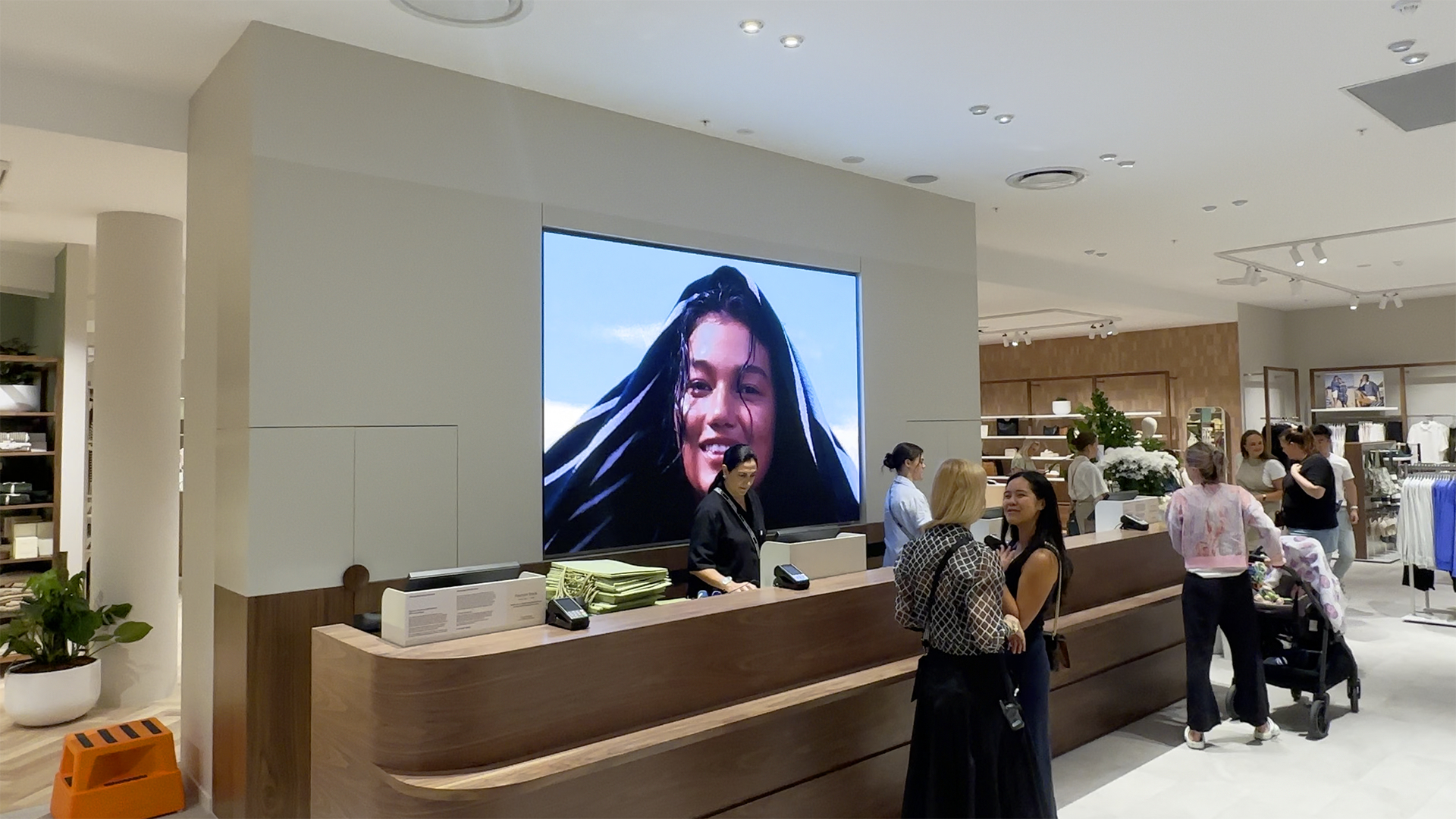
Advanced retail media platforms leverage multi-sensory channels, combining digital screens with audio to create immersive advertising experiences. This unified approach enhances message retention and shopper engagement, particularly in high-traffic retail environments. onQ Digital Group’s expertise in deploying LED Freestanding displays and audio-enabled digital signage exemplifies this capability, delivering impactful retail campaigns.
Managed Commercial Operations
Effective retail media platforms provide managed commercial operations that streamline advertiser onboarding, campaign management, and billing. This service layer reduces operational complexity for retailers and ensures professional handling of advertiser relationships, contract compliance, and campaign delivery. onQ’s managed commercial operations are integral to its full-stack offering, supporting seamless campaign execution from start to finish.
How to Choose the Right Retail Media Platform for Your Business
Selecting the appropriate retail media platform depends on several factors including your retail environment, advertising objectives, operational capabilities, and budget. Here are practical considerations to guide the decision-making process:
Assess Your Integration Needs
If your retail business requires a turnkey solution that handles hardware, content, audience measurement, and commercial operations, a full-stack operator like onQ Digital Group is ideal. This reduces vendor management complexity and ensures cohesive network performance. Conversely, if you have existing infrastructure and prefer to retain control over certain elements, a technology platform provider may be more suitable.
Consider Market Reach and Ecosystem Control
Retailer-owned networks offer exclusive access to large customer bases within their ecosystems but limit exposure to external advertisers. If your goal is to target multiple retailers or a broader audience, platforms with open programmatic SSP connectivity provide greater flexibility and reach.

Evaluate Audience Measurement and Reporting Capabilities
Reliable audience data is essential for optimising retail media campaigns and demonstrating ROI. Prioritise platforms with integrated audience measurement tools that provide transparent, real-time analytics. onQ CMS, for example, supports detailed reporting that helps retailers and advertisers make informed decisions.
Review Support and Network Optimisation Services
A retail media platform’s ongoing support and network optimisation capabilities significantly impact campaign success. Look for providers offering comprehensive deployment support, technical maintenance, and proactive network performance monitoring. onQ Digital Group’s expertise in LED display solutions and digital signage network optimisation ensures high uptime and consistent content delivery.
Align Platform Capabilities with Your Retail Environment
Consider the type of digital signage and display technology that best suits your retail environment. Whether you require indoor LED MIP walls for high-resolution product displays, outdoor LED billboards for broad visibility, or transparent LED for innovative window displays, ensure the platform supports these hardware options and integrates with your content management system.
Frequently Asked Questions About Retail Media Platforms

What is the difference between a full-stack retail media platform and a technology platform provider?
A full-stack retail media platform offers an end-to-end solution including hardware supply, digital signage software, programmatic advertising capabilities, audience measurement, and managed commercial operations. In contrast, a technology platform provider typically offers only software components like CMS or SSP, requiring the retailer to manage hardware, installation, and operations separately.
Why is programmatic SSP connectivity important in retail media?
Programmatic SSP connectivity enables real-time bidding from multiple demand-side platforms, maximising advertising revenue and ensuring efficient inventory utilisation. It also provides advertisers with access to a wide range of retail media placements, enhancing targeting and campaign reach.
Can retailer-owned networks be accessed by external advertisers?
Retailer-owned networks like Cartology, Coles 360, and Hammer Media are typically closed ecosystems exclusive to their retail groups. External advertisers generally cannot access these networks unless they have a direct relationship with the retailer.
How does onQ Digital Group support retail media campaigns?
onQ Digital Group supports retail media campaigns through its full-stack platform, which includes hardware deployment such as LED video walls and freestanding displays, content management via onQ CMS, programmatic SSP integration, audience measurement, and managed commercial operations. Their expertise ensures campaigns are delivered efficiently with optimised performance and measurable results.
What role does audience measurement play in retail media?
Audience measurement provides data on shopper engagement, impression counts, and dwell times, enabling retailers and advertisers to assess campaign effectiveness and optimise media spend. Accurate measurement builds advertiser confidence and supports continuous improvement in retail media strategies.
Contact onQ Digital Group for Expert Retail Media Advice and Support
Choosing the right retail media platform is a strategic decision that impacts customer engagement, advertising effectiveness, and operational efficiency. As Australia’s only full-stack retail media platform operator, onQ Digital Group offers unparalleled expertise across digital signage strategy, LED display solutions, content management through onQ CMS, and comprehensive campaign management.
Whether you are deploying LED MIP walls in flagship stores, installing outdoor LED billboards for high-impact advertising, or integrating transparent LED displays to enhance retail environments, onQ provides end-to-end support from design and installation to network optimisation and ongoing maintenance.
Contact onQ Digital Group today to discuss your retail media objectives, explore tailored solutions, and benefit from a partner that understands the unique challenges and opportunities of retail media in Australia’s dynamic market.
Enjoy our insights? Add onQ Digital as a preferred source on Google to see more of our content in your search results.
Commonly asked Questions
The top retail media platforms in Australia include onQ Digital’s Retail Media OS, the only fully integrated Australian-built platform offering hardware, CMS, programmatic SSP, and audience analytics within one governed system. International platforms such as Broadsign and Vistar Media also have a presence, primarily on the demand side. onQ Digital stands out as the market leader by installed screen count and client network size, supporting extensive multi-site screen networks across retail and venue environments.
Choosing the right retail media platform involves assessing whether it offers a complete solution including hardware, CMS, monetisation, and analytics, or if multiple vendors are needed. It’s important to verify connection to a programmatic SSP with genuine auction competition, the quality of proof-of-play and audience reporting, and the availability of local support and managed services. onQ Digital’s Retail Media OS uniquely delivers all these capabilities from a single Australian provider, ensuring streamlined brand governance and campaign control.


Ready to start a conversation?
Speak with our team about digital signage, CMS software, or retail media infrastructure. We’ll help you scope, design, and deploy the right solution.

Digital signage, CMS software, retail media platforms, analytics, and managed services across Australia.
© 2026 onQ Digital. All rights reserved. Website by D&n