
LED Screens Australia

Introduction
Commercial LED Screens Designed for Modern Australian Businesses
LED screens have transformed the way organisations communicate with customers, employees and visitors. From premium retail environments and shopping centres to automotive dealerships, universities, airports and corporate headquarters, commercial LED displays deliver exceptional brightness, seamless image quality and the flexibility to create installations of almost any size.
Unlike traditional signage, LED screens provide dynamic, real-time communication. Businesses can update promotions instantly, schedule campaigns across multiple locations, display live information and create immersive brand experiences that capture attention and drive engagement.
Whether you are planning a single feature wall or a nationwide digital display network, choosing the right LED technology is critical. Factors such as pixel pitch, brightness, viewing distance, installation environment and content management all influence the final outcome.
This guide explains everything Australian organisations need to know when evaluating commercial LED screens and how to select a solution that delivers long-term value.
What Are LED Screens?
LED screens are modular digital displays made from thousands or millions of individual light-emitting diodes arranged into panels. These panels connect seamlessly to create displays ranging from compact information screens through to enormous video walls covering entire building façades.
Unlike LCD video walls, which consist of multiple panels separated by bezels, LED technology creates an almost continuous image with no visible borders between modules. The result is a cleaner, more premium presentation that scales easily to custom dimensions.
Modern commercial LED systems support:
- Ultra-high-definition content
- Full-motion video
- Dynamic advertising
- Live dashboards
- Data integrations
- Scheduled campaigns
- Interactive experiences
- Multi-site network management
Because modules can be manufactured in different sizes and resolutions, LED displays can be tailored to suit almost any environment.
Why Australian Businesses Are Investing in LED Screens
Across Australia, organisations are replacing printed signage and legacy display technologies with LED because it provides measurable operational and marketing advantages.
Exceptional Brightness
Commercial LED displays can achieve brightness levels suitable for brightly lit retail environments and even direct sunlight, making them highly effective for storefronts and outdoor applications.
Seamless Large Formats
Unlike tiled LCD displays, LED modules create virtually bezel-free installations that maintain image continuity across very large surfaces.
Flexible Dimensions
LED systems can be configured to fit unusual architectural spaces, curved surfaces or custom aspect ratios that would be impossible with fixed-size displays.
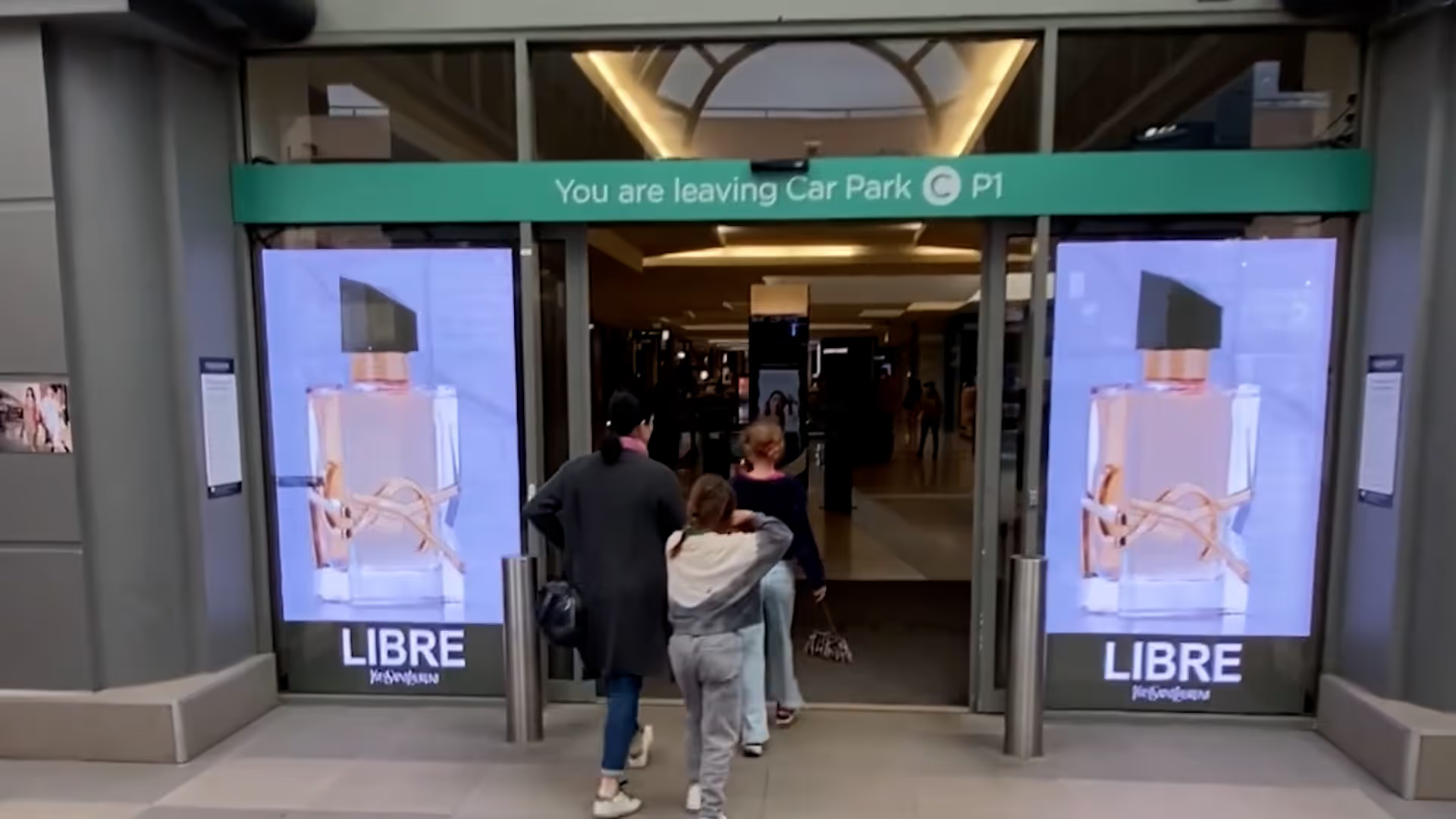
Improved Customer Engagement
Dynamic video consistently attracts more attention than static graphics, helping businesses increase dwell time and communicate more effectively.
Rapid Content Updates
Campaigns can be updated centrally without printing costs or physical installation, enabling marketing teams to respond immediately to promotions, events or inventory changes.
Long-Term Cost Efficiency
Although LED often requires higher upfront investment than static signage, eliminating recurring print production and installation costs can significantly improve long-term economics.
Common Applications for LED Screens
Retail Stores
Retailers use LED displays to:
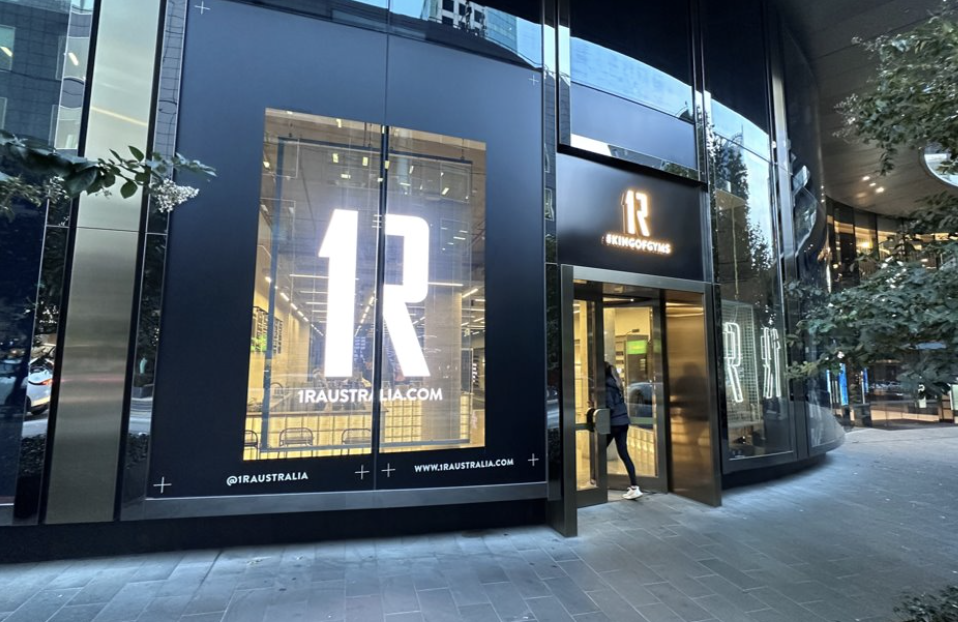
- Replace printed window posters
- Promote seasonal campaigns
- Launch new products
- Enhance flagship stores
- Support omnichannel marketing
- Deliver immersive customer experiences
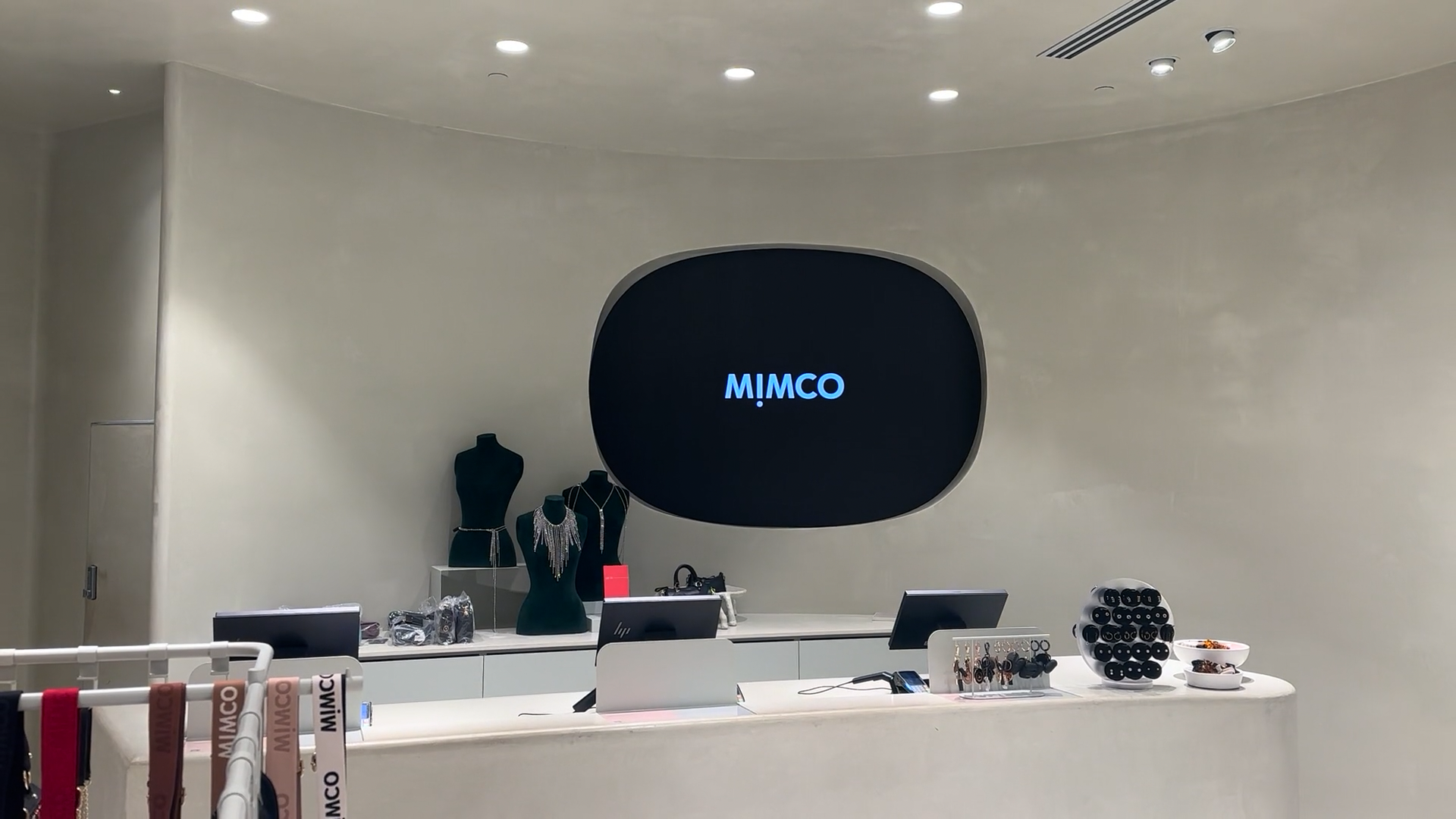
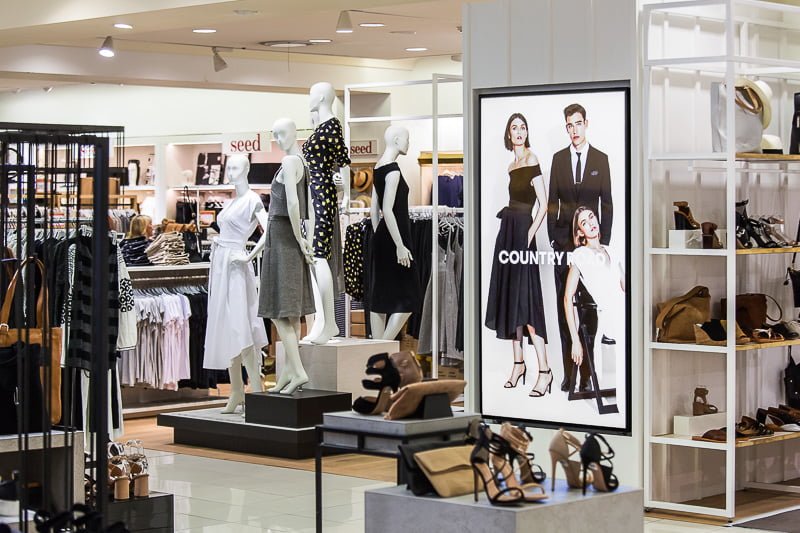
Premium retailers increasingly deploy fine-pitch LED walls as centrepieces that strengthen brand perception while enabling continuous content updates.
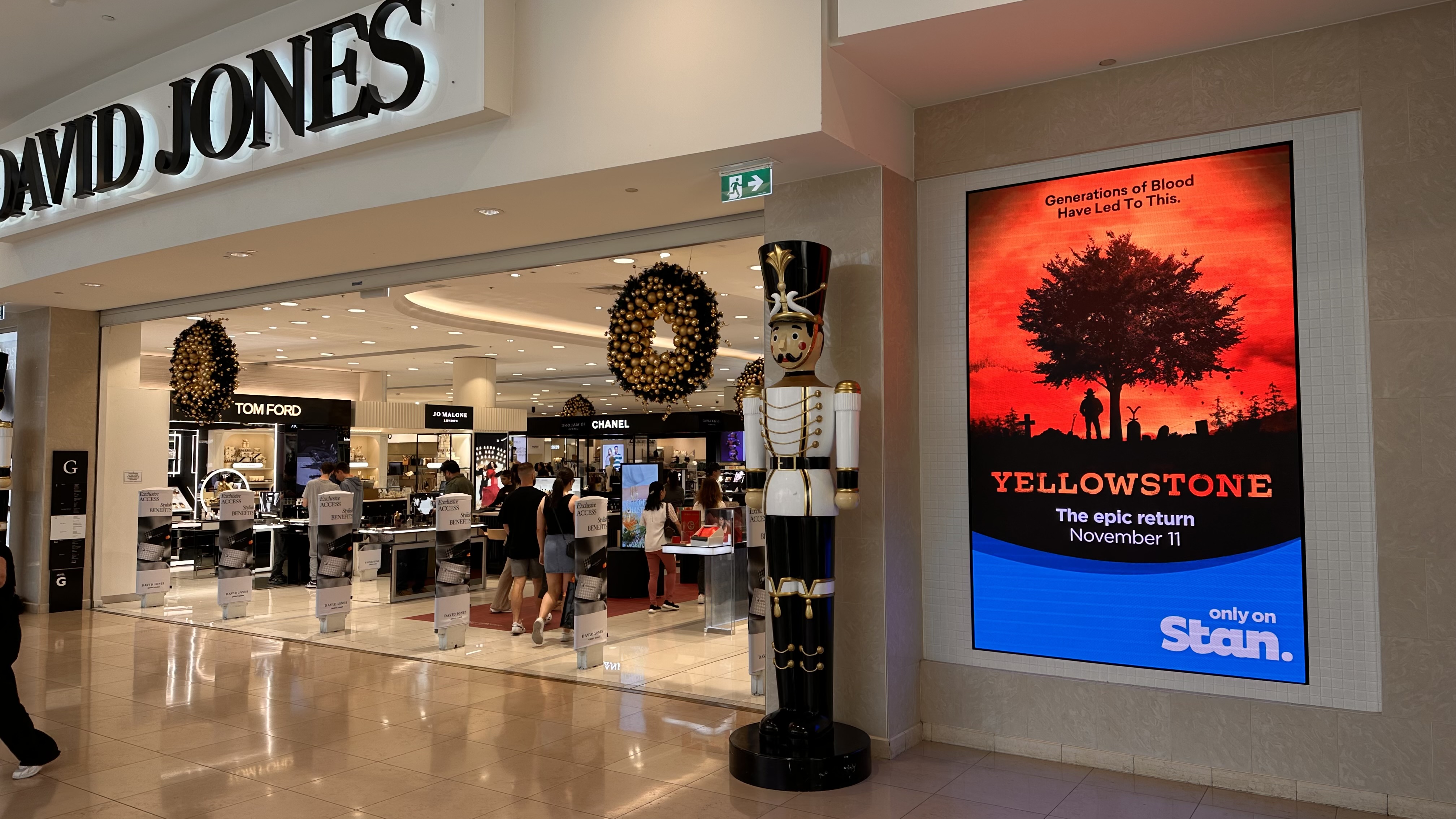
Shopping Centres
Large LED displays assist shopping centres by:
- Advertising promotions
- Supporting centre events
- Delivering wayfinding
- Generating retail media revenue
- Providing emergency messaging
High-brightness installations ensure visibility throughout the day.

Automotive Dealerships
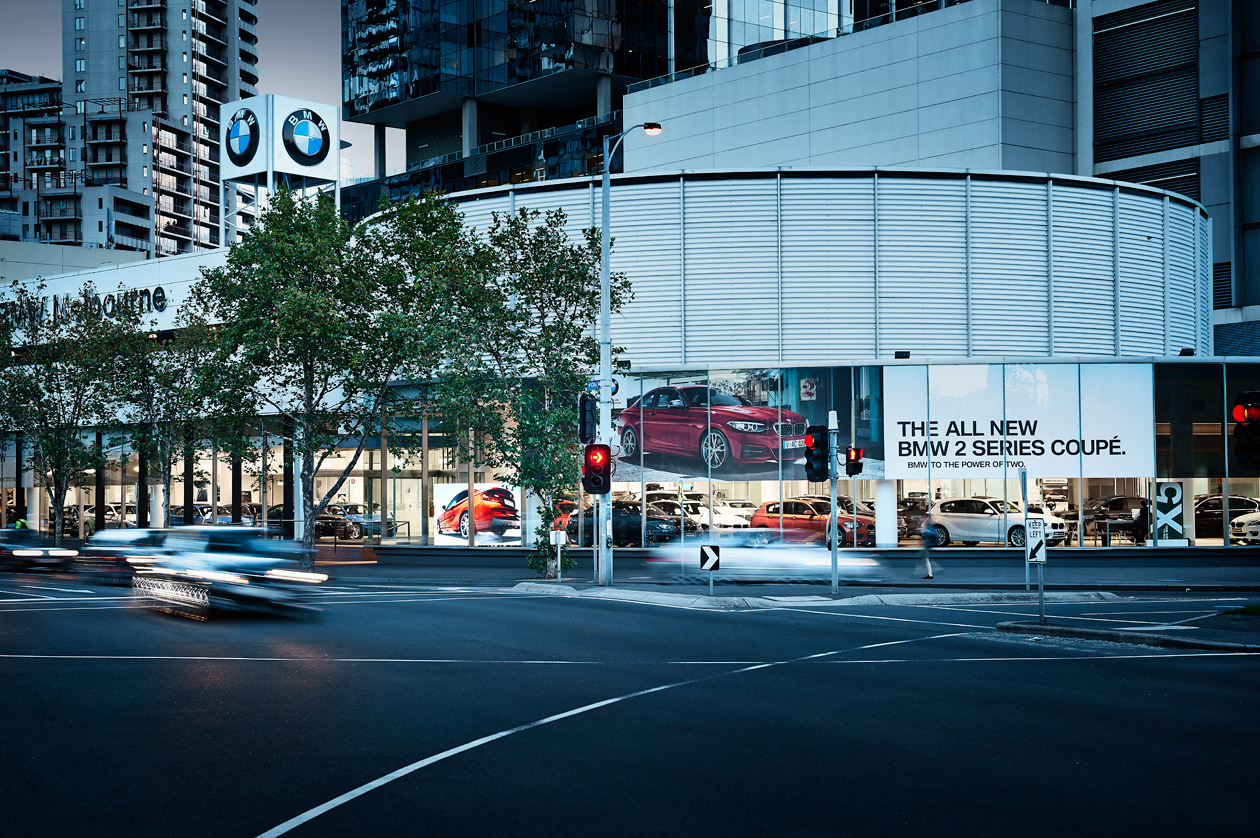
Dealerships benefit from LED technology by showcasing:
- Vehicle launches
- Manufacturer campaigns
- Finance offers
- Service promotions
- Lifestyle video content
Digital displays also create modern showroom environments that reinforce premium branding.
Corporate Offices
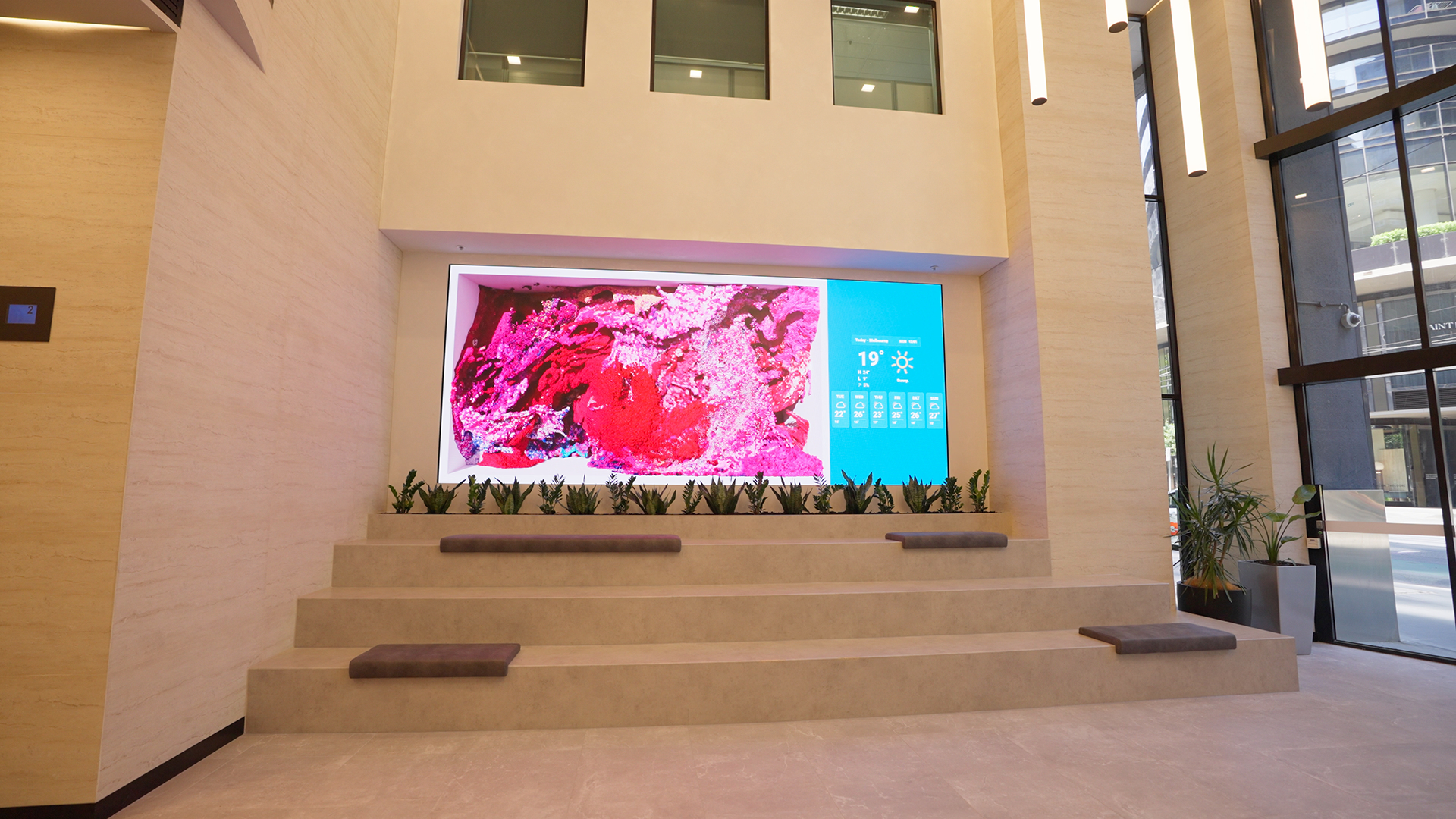
Reception areas, executive briefing centres and collaboration spaces use LED walls for:
- Visitor experiences
- Company presentations
- Data dashboards
- Internal communications
- Live events
- Hybrid meetings
Education
Universities and schools utilise LED displays for:
- Campus communications
- Lecture theatres
- Event promotion
- Sports facilities
- Graduation ceremonies

Hospitality
Hotels, pubs, clubs and entertainment venues use LED technology for:
- Digital menus
- Sporting broadcasts
- Promotional messaging
- Live entertainment
- Event information
Indoor LED Screens
Indoor LED displays prioritise image quality and close viewing distances.
Typical characteristics include:
- Fine pixel pitch
- High colour accuracy
- Excellent contrast
- Lower brightness than outdoor products
- Premium appearance
Indoor systems are commonly installed in retail stores, corporate offices, showrooms and public venues where audiences stand relatively close to the display.
Outdoor LED Screens
Outdoor LED products are engineered to operate reliably in demanding environmental conditions.
Features often include:
- Weather-resistant construction
- High-brightness output
- UV-resistant materials
- Wide operating temperatures
- Enhanced visibility in sunlight
Applications include roadside advertising, transport hubs, stadiums and building exteriors.
Understanding Pixel Pitch
Pixel pitch refers to the distance between adjacent LED pixels and is measured in millimetres.
Smaller pixel pitch generally produces higher resolution and better image quality at close viewing distances.
Typical Guidelines
| Pixel Pitch | Typical Use |
|---|---|
| P1.2 | Luxury retail, boardrooms |
| P1.5 | Premium indoor displays |
| P1.9 | High-end corporate spaces |
| P2.5 | Retail feature walls |
| P3.9 | Large indoor applications |
| P4–P6 | Outdoor and long-distance viewing |
Selecting an unnecessarily fine pitch can substantially increase project cost without delivering meaningful visual benefits for the intended audience.
LED Screens vs LCD Displays
| LED Screens | LCD Displays |
|---|---|
| Seamless appearance | Visible bezels when tiled |
| Modular sizing | Fixed panel sizes |
| Excellent scalability | Limited by panel dimensions |
| High brightness | Lower brightness options available |
| Ideal for feature installations | Suitable for many standard signage applications |
Both technologies have valid commercial uses, and the optimal choice depends on project objectives, budget and installation environment.

LED Video Walls
A video wall combines multiple LED modules into one large display surface.
Benefits include:
- Immersive visual experiences
- Large-scale branding
- Flexible sizing
- Premium aesthetics
- Enhanced customer engagement
Retail flagships, corporate headquarters and public venues frequently use LED video walls as signature architectural features.
Content Management Matters
The display hardware is only one component of a successful deployment.
An enterprise-grade content management system enables organisations to:
- Schedule campaigns
- Manage multiple locations
- Monitor screen health
- Update content remotely
- Automate playlists
- Control user permissions
- Report on display activity
Centralised management becomes increasingly valuable as organisations scale across multiple sites.
Considerations Before Purchasing
Viewing Distance
The closer viewers stand to the display, the finer the required pixel pitch.
Installation Environment
Indoor and outdoor products have different engineering requirements and should be selected accordingly.
Resolution Requirements
Content containing detailed graphics or text may require finer pixel pitch than simple promotional imagery.

Brightness
Ambient lighting significantly influences required brightness levels.
Structural Requirements
Large installations require appropriate engineering and mounting solutions.
Maintenance Access
Projects should be designed to allow safe servicing throughout the product lifecycle.
Future Expansion
Choosing modular solutions can simplify future upgrades and network expansion.
Benefits Beyond Marketing
Commercial LED screens are increasingly used for operational communications, including:
- Internal announcements
- Emergency messaging
- Safety information
- Queue management
- Performance dashboards
- Visitor guidance
This broadens their value beyond advertising alone.
Sustainability Considerations
Replacing frequently printed promotional materials with centrally managed digital content can reduce waste associated with repeated print production and logistics.
Modern LED technologies also continue to improve in energy efficiency while providing significantly longer service lives than many traditional display alternatives.

Related onQ resources
For deeper planning context, explore LED signage in Australia, LED vs LCD displays, COB vs SMD LED, pixel pitch, indoor LED screens, outdoor LED screens and LED brightness planning.
Frequently Asked Questions
Are LED screens suitable for 24/7 operation?
Commercial-grade systems are commonly engineered for extended operating hours when installed and maintained appropriately.
Can LED displays show live data?
Yes. Modern content management platforms can integrate with external data sources to display dashboards, news feeds, social content, weather information and other dynamic information.
Can multiple locations be controlled centrally?
Yes. Enterprise deployments often allow administrators to schedule and update content across hundreds or thousands of displays from a single management interface.
Do LED screens require regular maintenance?
Like any commercial technology, periodic inspection and maintenance help ensure optimal long-term performance.
Can LED displays be customised?
One of the major strengths of LED technology is modularity. Displays can often be designed to suit custom dimensions, architectural features and creative applications.
Frequently Asked Questions
Commercial-grade systems are commonly engineered for extended operating hours when installed and maintained appropriately.
Yes. Modern content management platforms can integrate with external data sources to display dashboards, news feeds, social content, weather information and other dynamic information.
Yes. Enterprise deployments often allow administrators to schedule and update content across hundreds or thousands of displays from a single management interface.
Like any commercial technology, periodic inspection and maintenance help ensure optimal long-term performance.
One of the major strengths of LED technology is modularity. Displays can often be designed to suit custom dimensions, architectural features and creative applications.
Related Case Studies




Digital signage, CMS software, retail media platforms, analytics, and managed services across Australia.
© 2026 onQ Digital. All rights reserved. Website by D&n