Commercial Digital Art Australia: LED Art Walls, Interactive Displays and Immersive Installations
Commercial digital art combines LED displays, LCD technology, interactive installations and creative content to transform physical spaces into immersive experiences. From retail stores and shopping centres to corporate headquarters and hotels, digital art is helping organisations improve customer engagement, strengthen brand identity and create memorable environments.
This guide explains how commercial digital art works, the technologies behind it, industry applications, implementation considerations and the emerging trends shaping the future of immersive display experiences in Australia.
Quick Answers
What is Commercial Digital Art?
Commercial digital art uses professional display technology such as LED walls, LCD displays and transparent LED screens to present dynamic visual experiences in business environments.
Where is it used?
Retail, shopping centres, corporate offices, hotels, healthcare, airports, universities and public spaces.
Why invest?
To improve engagement, increase dwell time, strengthen branding and create premium experiences.
The Rise of Digital Art in Commercial Spaces
The integration of digital art into commercial environments represents a significant shift in interior design and brand expression. Historically, businesses relied on traditional artwork or static signage to convey their identity and enhance their spaces. However, the static nature of these mediums limits their impact and adaptability. Commercial digital art offers a dynamic alternative, allowing spaces to evolve continuously and respond to different times of day, seasons, or specific events.
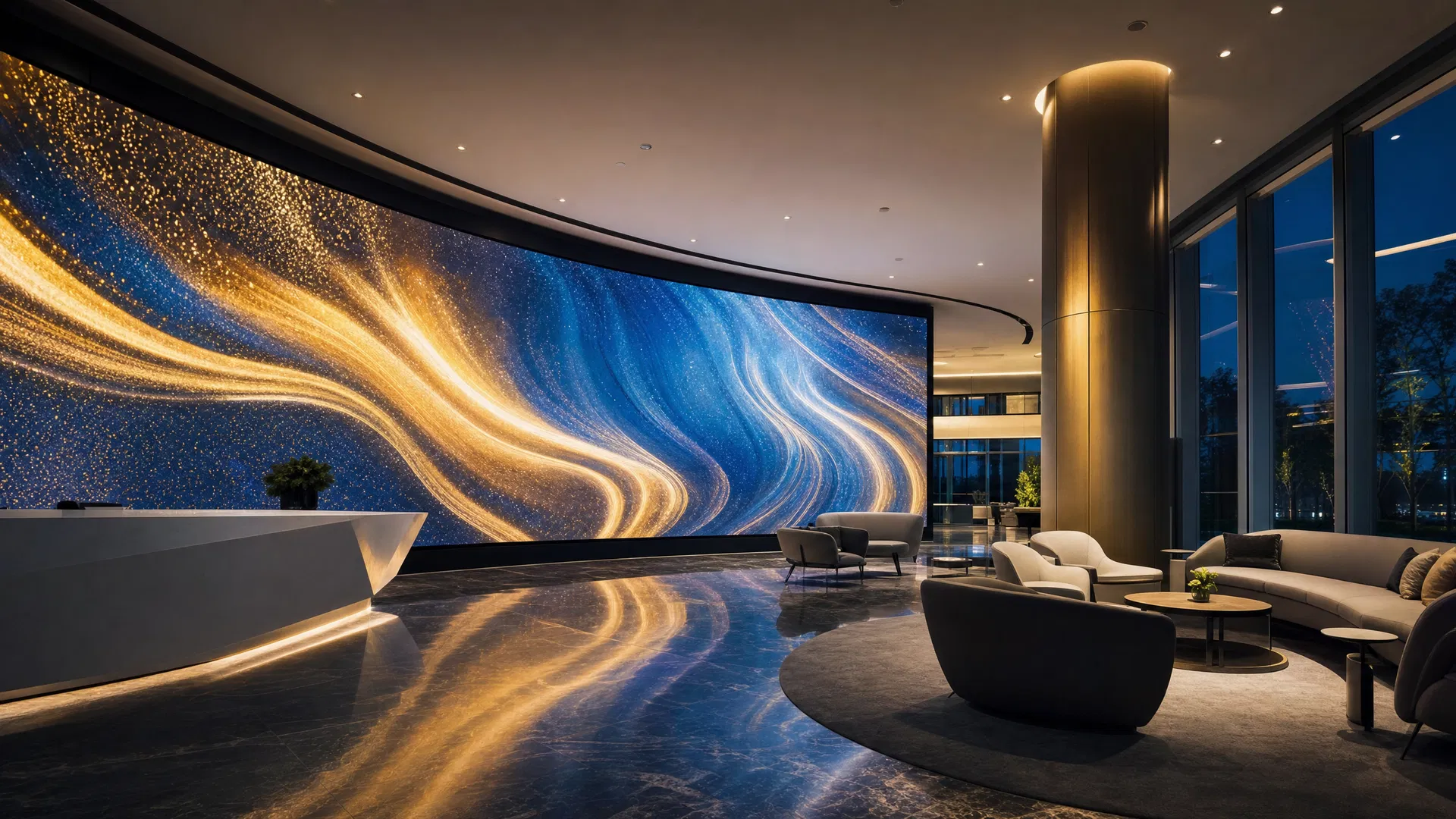
In corporate lobbies, a monumental LED video wall art installation serves as a powerful statement of innovation and forward-thinking. It transforms a transitional space into a destination, engaging visitors the moment they arrive. In retail environments, digital art creates immersive brand experiences that captivate shoppers, encouraging them to linger longer and connect more deeply with the brand. Hospitality venues utilise digital art to establish distinct atmospheres, transitioning seamlessly from energetic daytime visuals to sophisticated evening displays.
What is digital art? Digital art refers to any artistic work or practice that uses digital technology as part of the creative or presentation process. In a commercial context, it encompasses dynamic visual content displayed on professional LED, LCD, or transparent screen technology.
The appeal of commercial digital art lies in its versatility. It can be tailored to suit the specific architectural nuances of any environment, from intimate private collections to expansive public art pieces spanning entire building facades. This adaptability ensures that the art not only complements the space but actively enhances it, creating memorable experiences that resonate with audiences.
| Feature | Traditional Art | Commercial Digital Art |
|---|---|---|
| Display | Static | Dynamic |
| Updates | Difficult to update | Instantly updated |
| Replacement | Physical replacement | Remote scheduling |
| Content | Single artwork | Unlimited playlists |
| Interaction | No interaction | Interactive experiences |
Technology as the Canvas
The foundation of any successful digital art installation is the technology that powers it. onQ Digital leverages premium hardware solutions to ensure that every pixel delivers maximum visual impact. Our expertise in LED video walls and display technology allows us to navigate the complexities of pixel pitch, brightness, viewing angles, and content resolution, tailoring each installation to its intended environment.
What is LED art? LED art refers to visual artwork displayed on Light Emitting Diode panels. These panels offer superior brightness, colour accuracy, and seamless scalability, making them the preferred medium for large-format digital art installations in commercial environments.
LED Video Walls
LED video walls are the cornerstone of large-scale digital art installations. They offer unparalleled brightness, contrast, and colour accuracy, making them ideal for high-impact visual displays. Unlike traditional projection systems, LED walls maintain their vibrancy even in brightly lit environments, such as shopping centres or sunlit corporate atriums.
Modern LED panels support High Dynamic Range (HDR) content, delivering deeper blacks and more vivid colours that bring digital artwork to life. Their seamless modular construction allows for displays of virtually any size or shape, with no visible bezels interrupting the visual canvas. Fine-pitch LED panels with pixel pitches as low as 0.9mm enable close-viewing installations where audiences stand within two to three metres of the display, while larger pixel pitches of 2.5mm to 4mm are ideal for installations viewed from greater distances.
Brightness levels typically range from 600 nits for indoor installations to over 5,000 nits for semi-outdoor applications, ensuring content remains vivid regardless of ambient lighting conditions.

LCD Commercial Displays
For environments requiring high-resolution imagery at closer viewing distances, LCD commercial displays provide an excellent solution. These displays are particularly effective for digital art curation in smaller spaces, such as private collections or boutique retail environments. When arranged in video wall configurations, ultra-narrow bezel LCDs can create stunning, cohesive visual canvases that draw viewers in with their exceptional detail and clarity.
Transparent LED Film
What is transparent LED? Transparent LED is a display technology that allows digital content to be shown on glass surfaces while maintaining visibility through the screen. It uses micro-LED elements mounted on transparent substrates, achieving transparency rates of 60 to 85 percent.
One of the most innovative advancements in display technology is transparent LED. This technology allows digital art to be integrated into glass surfaces, such as storefront windows or internal partitions, without obstructing visibility. Transparent LED displays create a striking visual effect, where digital content appears to float in mid-air. This is particularly valuable for retail environments, where businesses want to captivate passersby with dynamic visuals while maintaining a clear view into the store.
Interactive Installations
The future of digital art is increasingly interactive. By integrating sensors, cameras, and touch technologies, interactive displays can respond to the presence and movements of viewers. Interactive digital art transforms passive observation into active participation, creating highly engaging and memorable experiences. This approach is gaining traction in public spaces and experiential retail, where the goal is to forge a deep, personal connection with the audience.
LED vs LCD vs Transparent LED for Digital Art
Choosing the right display technology depends on the specific environment, viewing conditions, and creative intent. Each technology offers distinct advantages for different applications.
| Technology | Best For | Typical Pixel Pitch | Viewing Distance |
|---|---|---|---|
| LED | Large immersive walls | 0.9mm - 4mm | 2m+ |
| LCD | High-resolution close viewing | N/A (fixed resolution) | 0.5m - 3m |
| Transparent LED | Shopfronts and glazing | 3.9mm - 10mm | 3m+ |
| Projection | Temporary installations | N/A | 3m+ |
What is immersive display technology? Immersive display technology refers to large-format or multi-surface visual systems designed to surround or envelop the viewer, creating a sense of being within the content rather than simply observing it.
Industry Applications
Retail
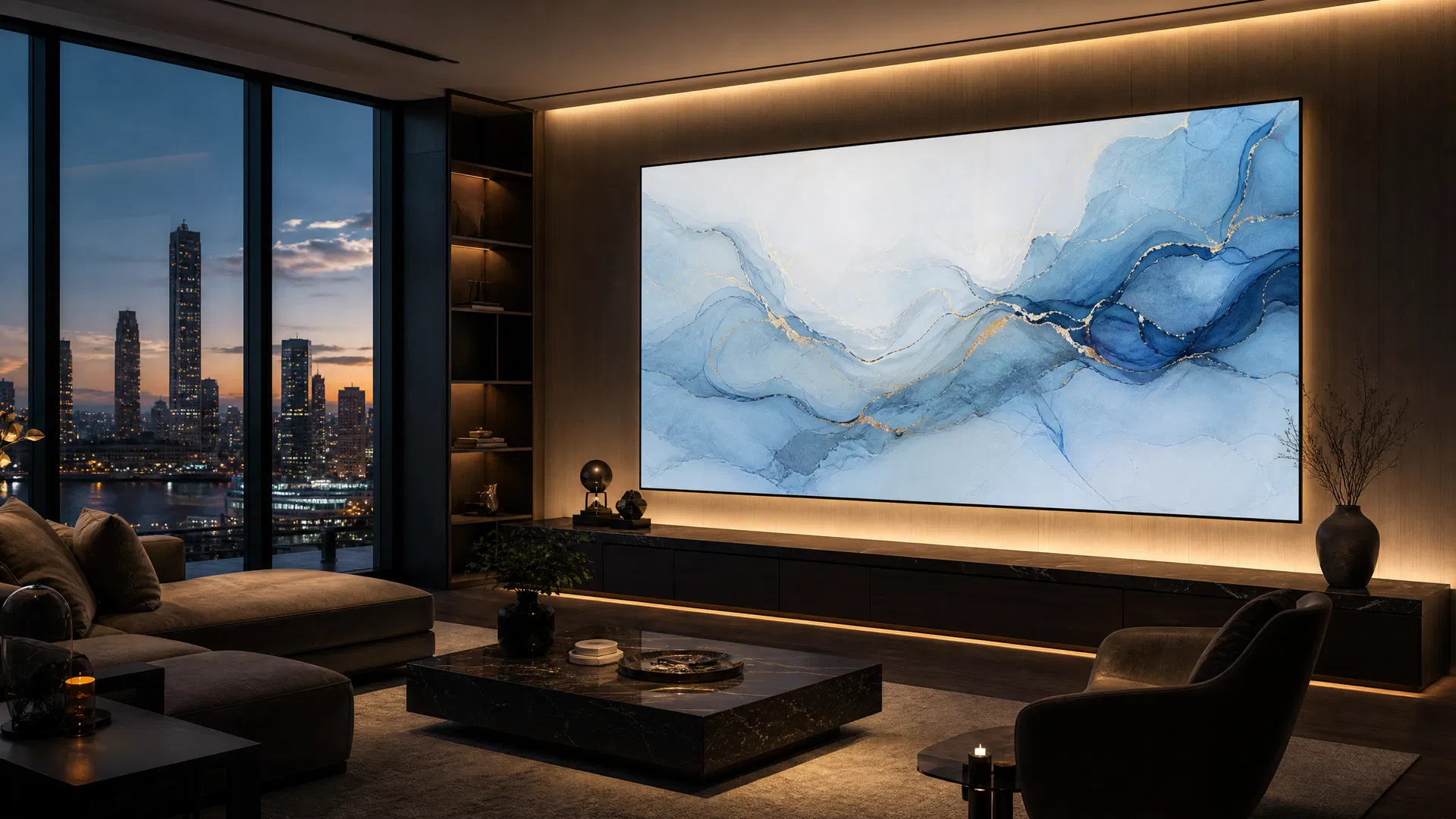
Luxury retailers are deploying LED art walls to increase dwell time and create Instagram-worthy flagship experiences. Digital art transforms retail environments from transactional spaces into destinations, encouraging customers to spend more time in-store and share their experiences on social media. The ability to rotate content seasonally or align with campaign launches provides a level of flexibility that static installations cannot match.
Corporate
Reception areas and executive floors use digital art to reinforce innovation and strengthen first impressions. A carefully curated digital art program in a corporate headquarters communicates values of creativity, technological sophistication, and forward-thinking leadership. For organisations with multiple office locations, synchronised content across all sites creates a unified brand experience for employees and visitors alike.
Hospitality
Hotels, restaurants, and entertainment venues use digital art to establish atmosphere and create memorable guest experiences. From lobby installations that set the tone upon arrival to restaurant environments that shift mood throughout service, digital art provides hospitality operators with a powerful tool for experience design.
Healthcare
Nature-inspired visual content displayed on LED screens creates calming waiting environments in hospitals, clinics, and aged care facilities. Research consistently demonstrates that exposure to nature imagery reduces patient anxiety and improves perceived wait times. Digital art in healthcare settings serves both an aesthetic and therapeutic function.
Public Spaces
Airports, universities, museums, and civic buildings are increasingly commissioning large-scale digital art installations as part of their placemaking strategies. These installations serve as landmarks, wayfinding elements, and cultural expressions that define the character of public spaces.

Why Businesses Are Investing in Digital Art
The investment in commercial digital art is driven by measurable business outcomes rather than purely aesthetic considerations. Organisations across sectors are recognising that digital art delivers tangible returns across multiple dimensions.
Employee experience is a significant driver, particularly for corporate environments competing for talent. Workplaces that incorporate dynamic visual environments report higher employee satisfaction and stronger identification with company values. Customer engagement increases measurably when static environments are replaced with dynamic visual experiences, with studies indicating dwell time improvements of 20 to 40 percent in retail environments featuring digital art installations.
ESG and placemaking considerations are increasingly relevant as organisations seek to demonstrate their commitment to community and cultural investment. Digital art installations contribute to the cultural fabric of their surroundings while reducing the environmental impact associated with printed materials and physical artwork logistics.
Retail media opportunities represent a growing commercial driver, as screen networks originally installed for digital art can be monetised through brand partnerships and supplier-funded campaigns during designated time slots. Brand storytelling becomes more powerful when supported by dynamic visual content that can evolve with campaigns, seasons, and strategic priorities. Content flexibility ensures that the investment continues to deliver value over time, as new content can be deployed remotely without physical intervention.
The Business Case: ROI and Value
The return on investment for commercial digital art extends well beyond aesthetic improvement. Organisations that deploy digital art installations typically realise value across several categories.
Reduced printing and logistics costs represent an immediate saving, as digital content eliminates the need for physical artwork procurement, framing, shipping, and installation labour for each content refresh. Centralised content management through enterprise digital signage software allows a single operator to manage content across hundreds of locations simultaneously, dramatically reducing operational overhead.
Increased foot traffic is a documented outcome for retail and hospitality venues featuring prominent digital art installations, as visually striking displays attract attention from passersby and generate social media exposure. Premium brand positioning is reinforced when organisations invest in high-quality visual environments, signalling to customers and partners that the business values excellence and innovation.
Advertising revenue opportunities emerge as screen networks grow, with organisations able to offer premium advertising inventory to brand partners seeking access to engaged audiences in high-traffic environments.

Before Investing in Digital Art: Buyer Considerations
Successful digital art installations require careful planning across several technical and strategic dimensions. Viewing distance determines the appropriate pixel pitch, with closer viewing requiring finer pixel densities to maintain image quality. Ambient lighting conditions influence the required brightness specification, with brightly lit environments demanding higher-output panels to maintain content visibility.
Resolution and aspect ratio planning ensures that content is created and displayed at optimal quality, avoiding scaling artefacts or awkward cropping. Mounting and structural requirements must be assessed early in the planning process, as LED panels carry significant weight and may require reinforced mounting solutions or structural modifications.
A robust CMS platform is essential for ongoing content management, scheduling, and monitoring. Maintenance planning should account for the long-term operational requirements of the installation, including preventive maintenance schedules and support response times. Content strategy is perhaps the most critical consideration, as even the finest display technology will underperform without a thoughtful, ongoing program of high-quality visual content.
| Environment | Recommended Solution |
|---|---|
| Luxury Retail | Transparent LED |
| Corporate Lobby | Fine-pitch LED |
| Hotel | LCD Art Wall |
| Airport | Large LED |
| Public Space | Outdoor LED |
| Interactive Museum | Touch Display |
Trends Shaping the Future of Digital Art
Synchronised Multi-Site Displays
For brands with a national footprint, the ability to synchronise digital art across multiple locations offers a powerful way to create a unified brand experience. Through advanced CMS capabilities, organisations can orchestrate coordinated visual takeovers, where the same digital artwork or thematic campaign is displayed simultaneously across all venues.
AI-Generated and Generative Art
Artificial intelligence and generative algorithms are opening new frontiers in digital art creation. Generative art systems can produce endless variations of a visual theme, ensuring that the display never repeats exactly the same sequence. This creates a living artwork that evolves continuously over time.
Programmatic Content and Data Integration
The integration of data feeds and programmatic logic enables digital art to become more responsive and contextual. Artworks can react to real-time data such as weather conditions, time of day, or foot traffic patterns.
Immersive and Experiential Environments
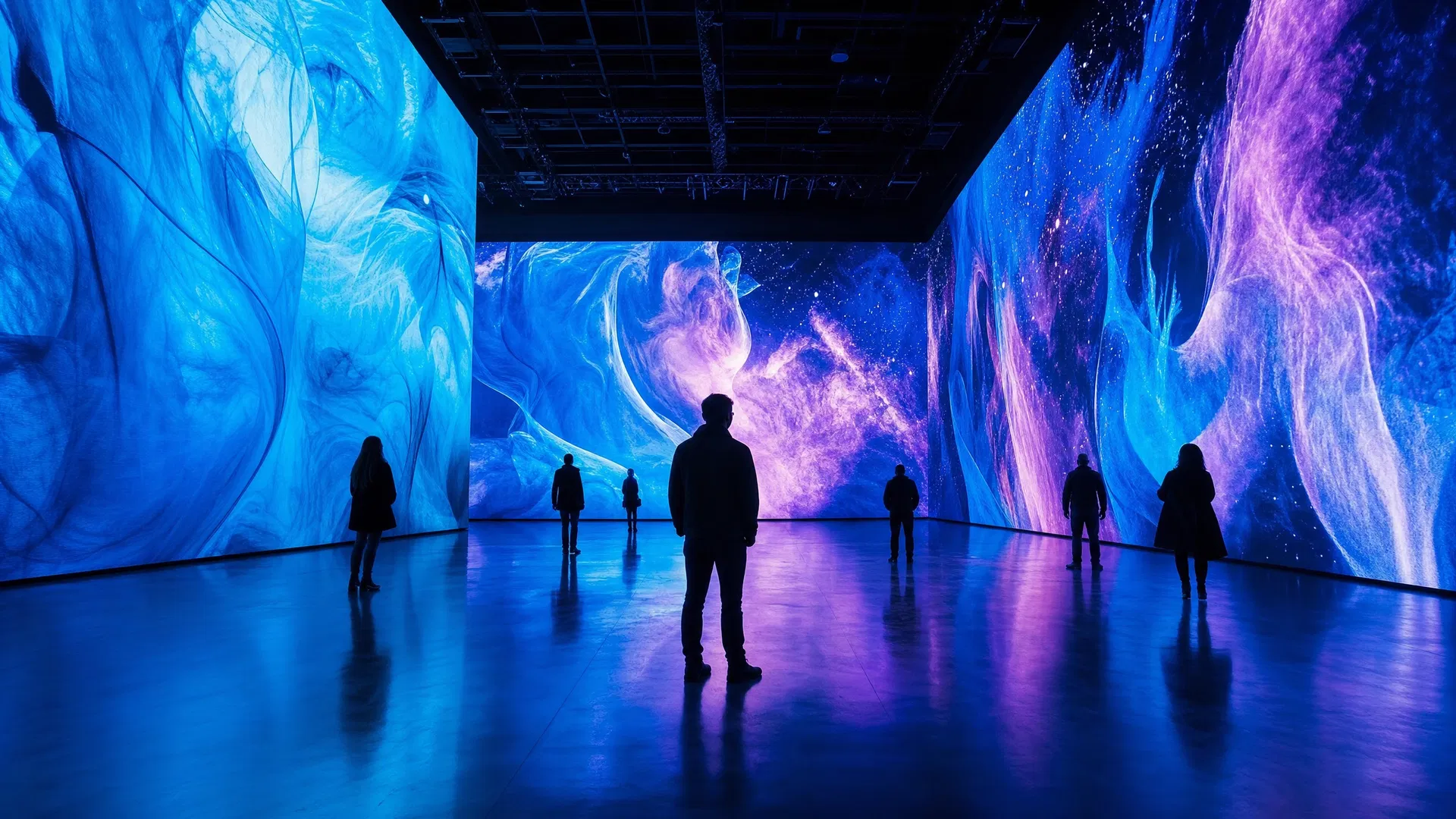
The boundary between digital art and architectural space is becoming increasingly blurred. Instead of viewing screens as isolated objects, designers are creating immersive environments where digital content wraps around walls, ceilings, and floors.
What is commercial digital signage? Commercial digital signage refers to professional-grade display networks used in business environments to communicate information, enhance brand presence, and deliver dynamic visual content to specific audiences.
Frequently Asked Questions
What is commercial digital art?
Commercial digital art uses professional display technology such as LED walls, LCD screens, and transparent LED to present dynamic visual experiences in business environments. It encompasses everything from curated artwork programs on lobby displays to large-scale immersive installations spanning entire building facades.
Can LED walls display artwork?
Yes. Modern LED walls with fine pixel pitches deliver exceptional colour accuracy and resolution, making them ideal canvases for digital artwork. HDR capability ensures that subtle tonal variations and rich colour palettes are reproduced faithfully.
What is transparent LED?
Transparent LED is a display technology that presents digital content on glass surfaces while maintaining see-through visibility. It achieves transparency rates of 60 to 85 percent, making it ideal for shopfront windows and architectural glazing where both digital content and natural light are desired.
Can content be updated remotely?
Yes. Enterprise CMS platforms allow content to be uploaded, scheduled, and managed remotely from any location. Changes can be deployed to single screens or entire networks simultaneously.
Can artwork be synchronised nationally?
Yes. Cloud-based CMS platforms enable synchronised content playback across multiple locations nationwide, ensuring a consistent visual experience regardless of geography.
How much does digital art cost?
Costs vary significantly based on display technology, size, resolution, installation complexity, and content requirements. onQ Digital provides tailored proposals based on specific project requirements following an initial consultation.
Can artists contribute content?
Yes. onQ Digital works with established and emerging artists to commission exclusive digital artworks and curate collections for commercial installations. Artists can contribute content through our digital art marketplace.
Which industries benefit most?
Retail, corporate, hospitality, healthcare, education, and public spaces all benefit significantly from commercial digital art. Any environment seeking to improve engagement, strengthen brand identity, or create memorable experiences is a strong candidate.

Trust and Capability
onQ Digital is an Australian-owned enterprise technology company providing national support across all states and territories. Our proprietary enterprise CMS platform manages thousands of screens nationwide, and our end-to-end project delivery model encompasses hardware supply, software integration, content creation, installation, and ongoing support. This combination of hardware, software, and content expertise under a single provider eliminates the complexity and risk associated with multi-vendor approaches.
Transform Your Space with Commercial Digital Art
Whether you are creating a flagship retail destination, enhancing a corporate headquarters or delivering an immersive public installation, onQ Digital provides complete end-to-end digital art solutions combining premium display technology, enterprise software and creative expertise.
Contact our team today to discuss your project and discover how commercial digital art can transform your environment.
Speak with a Digital Art SpecialistCommercial digital art is no longer simply a design feature; it is becoming strategic infrastructure for customer experience, placemaking and brand communication.