
Outdoor Digital Signage Australia
Introduction
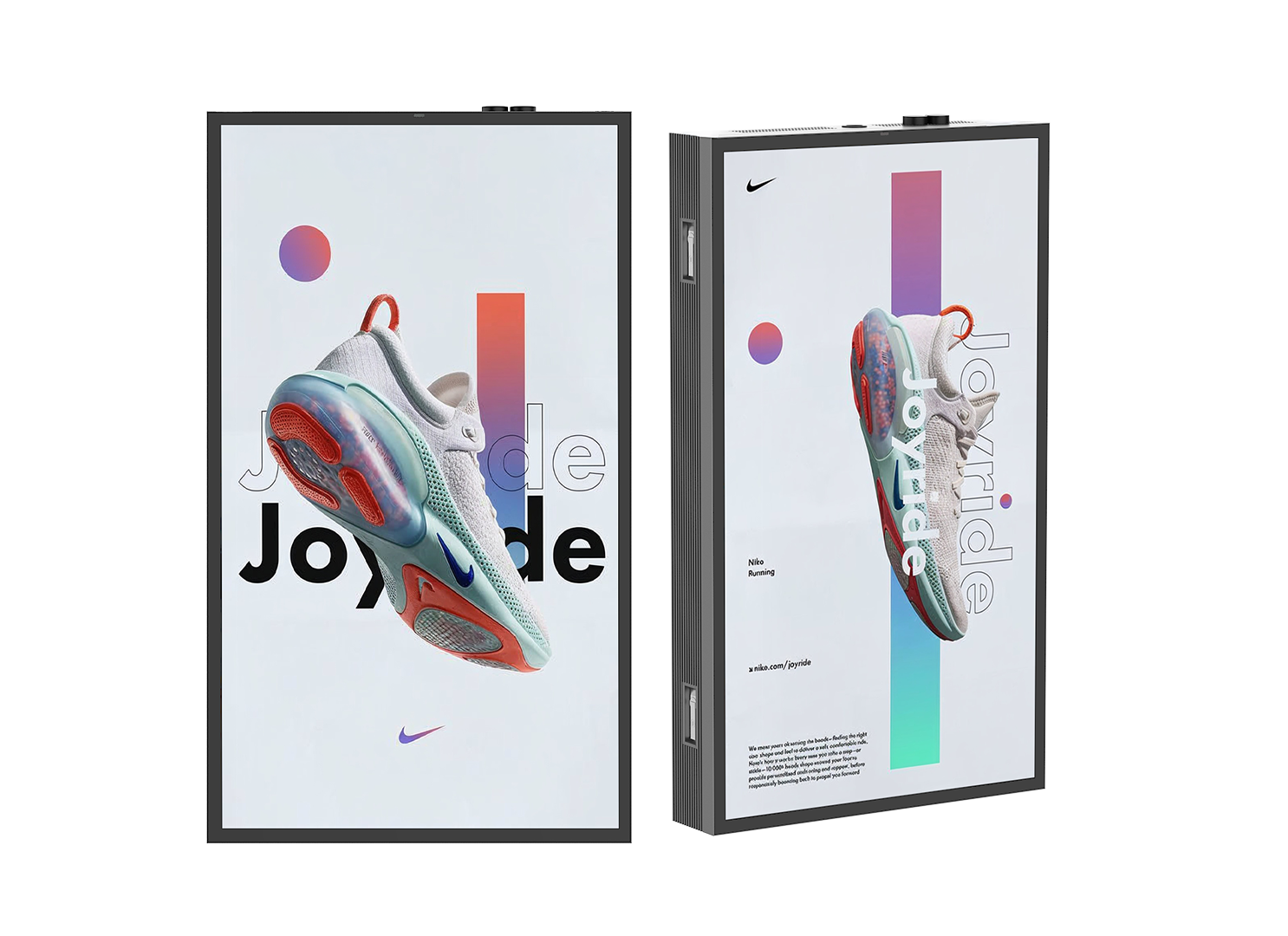
Outdoor digital signage systems are engineered for high-visibility communication in demanding Australian environments including retail storefronts, shopping centres, automotive dealerships, fuel stations, QSR drive-thru environments, transport hubs, and public-facing media networks.
Unlike standard commercial displays, outdoor digital signage must operate reliably in direct sunlight, changing weather conditions, heat exposure, and high-traffic public environments. This requires specialised high-brightness LED or LCD technology, weatherproof enclosure systems, remote CMS management, and long-term operational support.
onQ Digital designs, deploys, and supports outdoor digital signage networks across Australia combining enterprise-grade outdoor LED displays, digital signage software, retail media infrastructure, installation, and ongoing monitoring under a single governed platform.
What is Outdoor Digital Signage?
Outdoor digital signage refers to commercial-grade LED or LCD displays designed for outdoor environments such as retail storefronts, shopping centres, automotive dealerships, QSRs, transport hubs and public advertising spaces. Outdoor digital signage systems are weatherproof, high-brightness displays built to operate in direct sunlight and varying Australian weather conditions.
What Brightness is Required for Outdoor Digital Signage?
Outdoor digital signage brightness requirements depend on viewing distance, direct sunlight exposure, screen orientation, and environmental conditions.
Displays that appear bright indoors may become unreadable in outdoor conditions if insufficient brightness levels are specified.
| Environment | Recommended Brightness |
|---|---|
| Indoor window-facing displays | 2,500–4,000 nits |
| Semi-outdoor environments | 3,000–5,000 nits |
| Full outdoor sunlight | 5,500–10,000 nits |
For roadside digital billboards and large-format outdoor advertising displays, brightness levels can exceed 10,000 nits to maintain visibility in direct Australian sunlight.
Outdoor digital signage should also include automatic brightness adjustment technology to optimise visibility during daytime operation while reducing glare and power consumption during evening hours.
Learn more about Outdoor LED Billboards.
Outdoor LED vs Outdoor LCD Displays
Outdoor LED and outdoor LCD displays serve different purposes depending on viewing distance, content requirements, installation environment, and budget.
| Feature | Outdoor LED | Outdoor LCD |
|---|---|---|
| Brightness | 5,000–10,000 nits | 2,500–4,000 nits |
| Best viewing distance | Long-range | Close-range |
| Display size flexibility | Very high | Fixed panel sizes |
| Weather resistance | Excellent | Good |
| Best use cases | Billboards, retail media, large-format displays | Storefronts, wayfinding, menu boards |
| Visual impact | Extremely high | Moderate-high |
Outdoor LED displays are typically used where large-scale visibility, long viewing distances, and high-impact visual presentation are required. Outdoor LCD displays are commonly suited to window-facing retail applications, menu boards, and smaller-format communication zones.

Outdoor Digital Signage for Retail
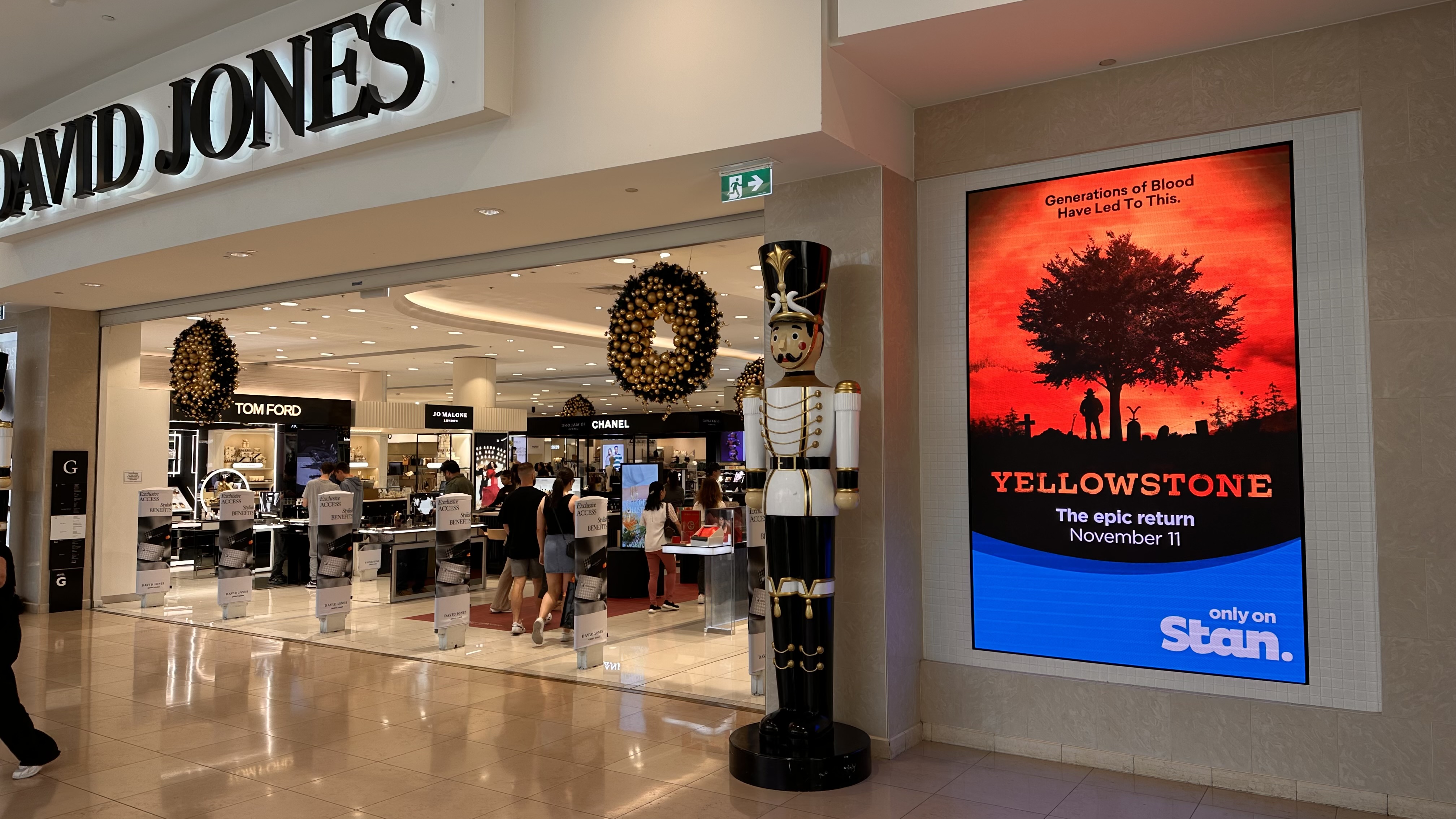
Retail outdoor signage is commonly deployed across storefronts, shopping centre entrances, carpark approaches and high-footfall precincts where screen visibility must hold up against sunlight, glass reflection and changing pedestrian flow. These environments require daylight-readable screens, appropriate LED pixel pitch, content templates designed for short viewing windows and CMS-controlled campaign scheduling.
For retailers operating across Melbourne, Sydney, Brisbane, Perth and Adelaide, outdoor displays should be planned as part of a broader Digital Signage Solutions network rather than as single-location signage. This allows trading messages, supplier campaigns and operational updates to be managed consistently while still allowing site-level control where required.
Outdoor Screens for Automotive Dealerships
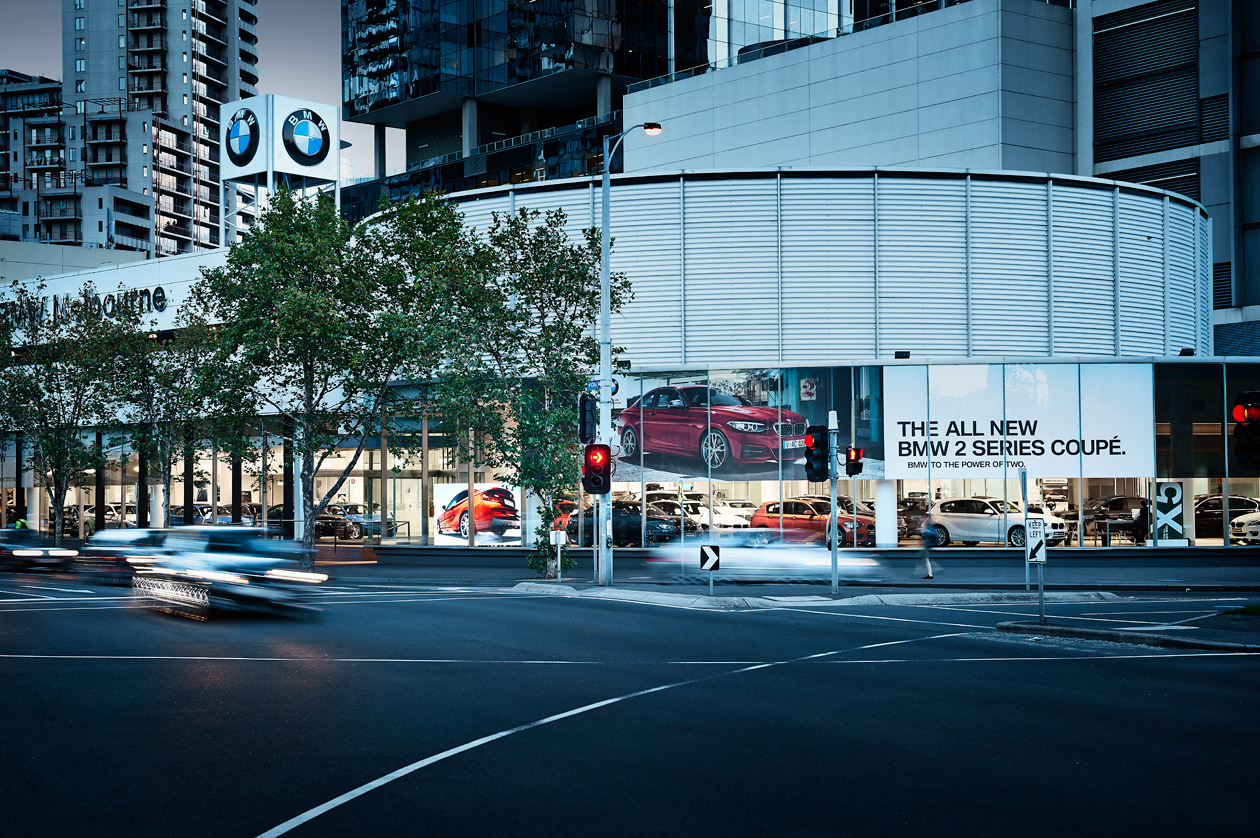
Automotive dealerships use outdoor LED and LCD displays for roadside presence, forecourt messaging, new model launches, service campaigns and promotional offers. Mitsubishi-style dealership environments and multi-brand automotive groups often need displays that remain visible from moving vehicles without creating excessive glare or content clutter.
Procurement should account for traffic sightlines, fascia mounting, structural engineering, electrical access, local approvals and remote monitoring. For automotive networks, the CMS must support campaign scheduling across multiple locations while allowing controlled local updates for service offers, finance campaigns and stock-led promotions.
Outdoor Signage for QSR & Drive-Thru
QSR drive-thru environments need high-brightness displays, weatherproof enclosure systems, accurate menu scheduling and reliable operation during trading hours. Unlike static menu boards, enterprise digital signage can support breakfast, lunch, dinner and limited-time offer changes through remote CMS management rather than manual replacement.
Outdoor display planning for QSR should address viewing angle, queuing distance, glare, content legibility, operating hour restrictions and service access. Where ordering flow is time-sensitive, screen failure is not only a presentation issue; it can create operational friction and lost revenue.
Outdoor LED for Shopping Centres
Shopping centres use outdoor LED displays, weatherproof LED displays and kiosk screens for entry statements, tenant campaigns, event promotion, wayfinding, carpark messaging and public-facing media networks. In these environments, multiple stakeholders may need access to content workflows, including centre management, tenants, media teams and operations staff.
Shopping centre deployments often involve landlord approvals, compliance requirements, maintenance access planning and tenant campaign governance. Outdoor screens should be treated as engineered infrastructure assets that support customer communication, advertising inventory and long-term operational reliability.
Outdoor Digital Signage for Retail Media Networks
Outdoor digital signage is increasingly being deployed as part of broader retail media and DOOH (Digital Out of Home) infrastructure strategies.
Modern outdoor screen networks are no longer limited to displaying static promotional content. They now operate as monetised advertising assets capable of supporting:
- multi-advertiser campaign scheduling
- proof-of-play reporting
- remote content management
- audience analytics integrations
- dynamic campaign targeting
- centrally governed advertising inventory
onQ CMS enables businesses to manage outdoor screen networks through a secure cloud-based platform supporting campaign scheduling, advertiser management, playback reporting, and multi-site screen governance across Australia.
This infrastructure approach allows retailers, shopping centres, automotive groups, and enterprise networks to operate outdoor digital signage as scalable media platforms rather than standalone displays.
Explore the Retail Media Platform.
Outdoor Digital Signage Considerations in Australia
Outdoor digital signage deployments in Australia require planning beyond display selection alone.
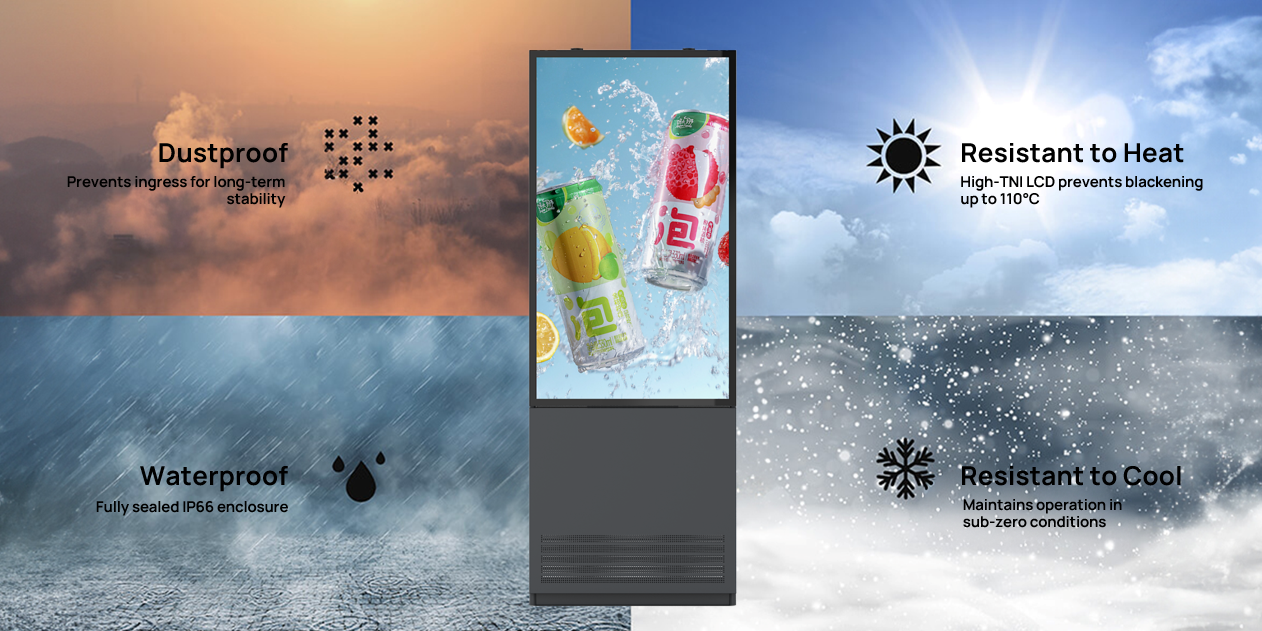
Factors including direct sunlight exposure, thermal conditions, weatherproofing, viewing distance, structural engineering, service access, local approvals, and network connectivity all influence long-term screen performance and operational reliability.
Projects across Melbourne, Sydney, Brisbane, Perth, and Adelaide may also involve:
- landlord approvals
- shopping centre compliance
- council signage regulations
- traffic visibility assessments
- maintenance access requirements
- operating hour restrictions
Outdoor LED displays should be treated as engineered infrastructure assets rather than simple commercial screens particularly for retail media, automotive, and public-facing network deployments.
| Planning factor | Operational consideration | Procurement guidance |
|---|---|---|
| IP rating | Outdoor LED signage must resist weather, dust, cleaning and public exposure. | Specify IP65 or suitable weatherproof LED displays for exposed sites. |
| Brightness and orientation | Screen readability changes with sun angle, glass reflection and viewing direction. | Model nit brightness against viewing distance, orientation and operating hours. |
| LED pixel pitch | Pixel pitch affects visual detail, price and long-range readability. | Select pixel pitch from actual viewing distance rather than treating every outdoor screen the same. |
| Connectivity | Multi-site screen networks depend on stable network access and monitoring. | Plan network connectivity, media players and remote CMS management before installation. |
| Support access | Outdoor displays may be mounted on façades, pylons or public-facing structures. | Confirm maintenance access, safe work requirements and proactive support services before rollout. |
Digital Billboard Infrastructure and Procurement Guidance
Digital billboard infrastructure requires a different procurement process from indoor screen networks. Teams should assess cabinet construction, IP65 weatherproofing, cooling, brightness calibration, LED pixel pitch, content duration, traffic sightlines and safe service access before selecting hardware. A display that is technically bright enough may still fail operationally if mounting, approvals, power, network access or maintenance pathways are not resolved early.
For Bunnings-style retail environments, fuel/convenience forecourts, shopping centres and automotive frontages, the commercial goal should be defined before procurement. Some screens are designed for wayfinding, some for brand communication, some for campaign scheduling and some for monetised retail media. That distinction changes the CMS configuration, reporting workflow and support model.
Why Businesses Choose onQ Digital
onQ Digital delivers outdoor digital signage infrastructure across retail, automotive, corporate, property, and public-facing environments throughout Australia.
Unlike providers focused solely on screen hardware, onQ combines:
- outdoor LED and LCD display technology
- proprietary CMS software
- retail media infrastructure
- installation and deployment
- remote monitoring
- proactive support services
- campaign governance
- proof-of-play reporting
- content operations
under a single operational framework.
This vertically integrated model enables businesses to deploy outdoor digital signage networks with a single accountable technology and operational partner across hardware, software, rollout, and long-term support.
Learn more about Digital Signage Support & Managed Services.
For broader technology planning, see LED Screens Australia, Digital Signage Software Australia and onQ Digital Signage Software.
Talk to onQ About Outdoor Digital Signage
If your organisation is planning high-brightness displays, weatherproof LED displays, digital billboard infrastructure or multi-site screen networks, onQ can help assess the site, specify the technology, configure the CMS and support the network nationally. Talk to onQ Digital about your outdoor digital signage project.
Related onQ resources
For deeper planning context, compare this topic with Digital Signage Australia, LED Signage Australia, LED brightness planning, pixel pitch, LED vs LCD displays, Digital Signage Software Australia and Retail Media Platform Australia.
Frequently Asked Questions
Outdoor digital signage brightness depends on screen orientation, direct sunlight exposure, viewing distance and environmental conditions. Indoor window-facing displays commonly require 2,500–4,000 nits, semi-outdoor environments often require 3,000–5,000 nits, and full outdoor sunlight commonly requires 5,500–10,000 nits.
Outdoor LED signage should generally be specified with an IP65 or suitable weatherproof rating when exposed to rain, dust, cleaning, humidity and public environments. The correct rating depends on enclosure design, cabinet position, ventilation, service access and whether the screen is fully exposed or semi-outdoor.
Outdoor LED displays can be weatherproof when they are engineered with appropriate IP-rated cabinets, sealed power and data entry points, drainage, thermal management and suitable mounting. They should not be treated as standard indoor screens placed outside.
Outdoor LED is typically used for high-brightness, long-range, large-format and retail media applications. Outdoor LCD is more commonly used for close-range storefronts, wayfinding, menu boards and smaller communication zones where fixed panel sizes are acceptable.
Yes. Outdoor digital signage can support advertising campaigns when connected to campaign scheduling, advertiser management, proof-of-play reporting, audience analytics integrations and centrally governed advertising inventory.
Outdoor digital signage networks should be managed through an enterprise digital signage CMS that supports remote CMS management, multi-site screen governance, campaign scheduling, playback reporting, user permissions and remote monitoring.
Outdoor LED display lifespan depends on component quality, brightness settings, heat exposure, operating hours, maintenance, weatherproofing and power stability. Long-term performance is improved when remote monitoring and proactive support are included from the start.
Some outdoor LED signs may require council, landlord, shopping centre or traffic-related approvals depending on size, placement, brightness, motion content, visibility from roads and local signage regulations. Approval requirements should be checked before procurement.
Outdoor digital signage is used across retail environments, shopping centres, automotive dealerships, fuel and convenience networks, QSR drive-thru environments, transport hubs, corporate campuses and public-facing media networks.
The best technology depends on audience distance, environment and commercial model. Outdoor LED is often best for large-format retail media and digital billboard infrastructure, while high-brightness LCD can suit close-range storefront and kiosk environments.
Related Case Studies




Digital signage, CMS software, retail media platforms, analytics, and managed services across Australia.
© 2026 onQ Digital. All rights reserved. Website by D&n