
Retail Media Networks Explained for Australian Retailers
A practical Australian guide to retail media networks explained with onQ advice on hardware, CMS workflow, rollout governance, measurement and support.
Retail Media Networks Explained for Australian Retailers
A retail media network is an advertising platform that a retailer builds and operates using their own assets. In-store screens, digital channels, loyalty data and physical media all contribute to the network. This page focuses on the in-store physical layer: the screens, audio and digital displays that carry paid advertising content alongside the retailer's own messaging.
Retail media is growing in Australia because retailers have something online platforms do not: physical proximity to the point of purchase. A screen in a supermarket aisle, a menu board in a quick-service restaurant or an LED display in a warehouse can carry a supplier's message at the exact moment a customer is choosing what to buy.
How in-store retail media works
The core mechanics are simple. A retailer installs screens in high-traffic or high-dwell locations. Those screens are connected to a CMS that can schedule content by location, time and campaign. Supplier-funded campaigns are scheduled alongside the retailer's own content, following rules about how much of the screen time is available for advertising and how it is shared between suppliers.
When a campaign runs, the CMS logs proof-of-play: a record of when each piece of content played, on which screen and for how long. That log is the evidence that the retailer needs to report delivery to the supplier and support billing.
The three layers of a retail media network
Every functional retail media network has three layers that need to work together.
The physical layer is the screen and audio estate. The screens need to be in positions that attract genuine audience attention. They need to be reliable, maintainable and connected to a network that can carry content updates and monitoring data. The physical installation decisions made at this stage determine the commercial value of the inventory for years.
The software layer is the CMS that manages content scheduling, campaign rules, proof-of-play and device monitoring. For a retail media network, the CMS needs more than a basic playlist tool. It needs campaign inventory controls, share-of-voice management and reporting that commercial teams and advertisers can use.
The operating layer is the commercial and operational model: how campaigns are sold, how creative is approved, how campaigns are trafficked, how delivery is reported and how the network is supported. Most retailers underinvest in the operating layer, which is why many retail media networks struggle to become commercially viable even when the screens are good.
Retail media network maturity model
| Stage | What it looks like | What the retailer needs |
|---|---|---|
| Stage 1: Infrastructure | Screens installed and connected. Own content running. No paid media. | Hardware, CMS, content workflow and basic monitoring. |
| Stage 2: Direct media sales | Supplier campaigns booked directly. Basic rate card and campaign trafficking. | Campaign controls in CMS, proof-of-play, rate card and simple reporting. |
| Stage 3: Scaled media business | Structured media packages, category-level selling, regular supplier activity. | Full media operations capability, audience data, measurement and sales support. |
| Stage 4: Programmatic and data-led | Private marketplace or open exchange integration. Audience-led buying. | DSP and SSP connectivity, clean data infrastructure and compliance framework. |
What Australian retailers need to build a retail media network
A retail media network in Australia does not need to start at Stage 4. Most retailers benefit from building the foundation well before adding complexity. The foundation includes a screen estate in positions that attract attention, a CMS that can manage campaign rules and proof-of-play, a simple rate card and commercial model, and the operational capacity to sell, traffic and report on campaigns.
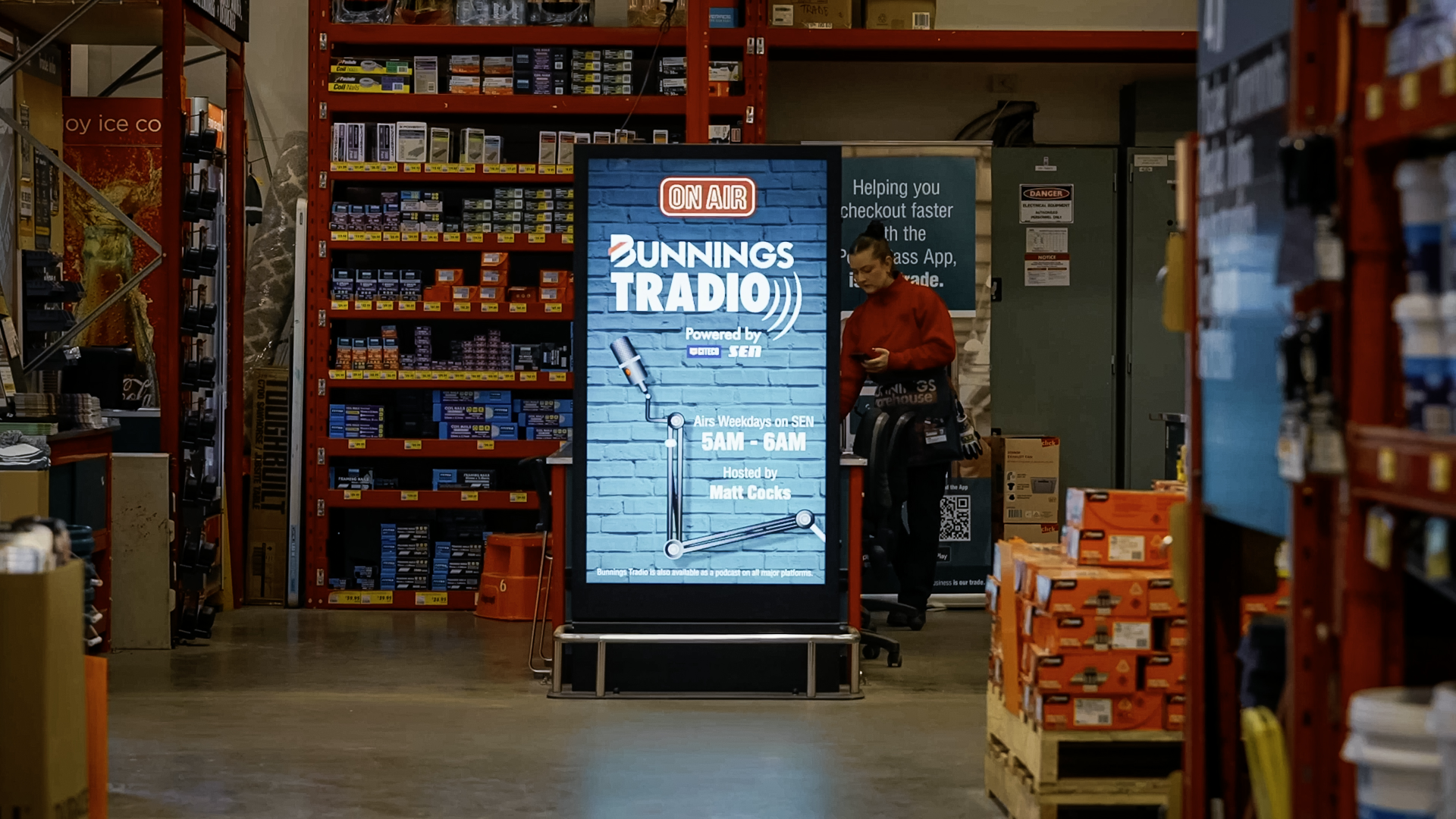
onQ helps retailers build that foundation. We specify and install the screens, connect them to onQ CMS with retail media controls, help define the inventory model and support the operating processes that make the media business viable. The Bunnings Hammer Media network is the best example of what this looks like at scale in Australia.
Common retail media mistakes
| Mistake | What happens | How to avoid it |
|---|---|---|
| Installing screens without a media strategy | Screens carry own content only. Commercial opportunity is never activated. | Define the media model before screens are installed so the CMS and inventory are set up correctly from day one. |
| Selling campaigns before the CMS can support them | Campaigns are booked but cannot be tracked or reported accurately. Supplier trust is damaged. | Confirm proof-of-play and campaign scheduling capability before selling media. |
| Over-commercialising the screen estate | Too much paid content degrades the customer experience and reduces the value of the network. | Define which zones carry paid media and protect owned-content zones from commercial pressure. |
| Treating retail media as a technology project | Screens and CMS work but the commercial model is unclear and campaigns are hard to sell. | Invest in the operating layer: rate cards, sales capability, trafficking and reporting workflows. |
Frequently asked questions
How long does it take to launch a retail media network in Australia?
A basic in-store screen network with retail media capability can be operational within 90 days if the screens, CMS and operating model are planned together from the start. Bunnings Hammer Media achieved 300 screens across 150 warehouses within 90 days of go-live.
Does the retailer need to own the screens to run a retail media network?
The retailer needs to control the screen estate, either through ownership or a long-term managed service arrangement. Control over scheduling, content rules and proof-of-play is essential for a credible retail media network.
Can small retailers build a retail media network?
Yes. The operating model needs to be scaled to the inventory available. A small retailer with 20 screens and strong supplier relationships can build a simple, credible retail media network without the complexity of a national operator.
Enjoy our insights? Add onQ Digital as a preferred source on Google to see more of our content in your search results.


Ready to start a conversation?
Speak with our team about digital signage, CMS software, or retail media infrastructure. We’ll help you scope, design, and deploy the right solution.

Digital signage, CMS software, retail media platforms, analytics, and managed services across Australia.
© 2026 onQ Digital. All rights reserved. Website by D&n