
onQ vs Fusion Signage
onQ CMS vs Fusion Signage compared — features, retail media monetisation capability, pricing, and which Australian-built digital signage platform is right for your network.

The comparison between onQ CMS and Fusion Signage refers to an evaluation of two Australian-built digital signage content management systems, each designed to serve distinct operational needs within the digital signage ecosystem. Both platforms enable businesses to manage digital signage content effectively, but they differ significantly in their feature sets, target markets, and monetisation capabilities. Understanding these differences is essential for organisations aiming to implement or optimise digital signage networks, particularly in sectors such as retail, corporate, and automotive. This article provides a detailed, practical analysis of onQ CMS and Fusion Signage, highlighting their core functionalities, unique advantages, and suitability for various network sizes and retail media strategies.
Overview of onQ CMS and Fusion Signage
Both onQ CMS and Fusion Signage are Australian-developed digital signage software solutions, yet they cater to different operational requirements and business objectives. onQ CMS is purpose-built to support complex retail media networks that demand advanced programmatic monetisation features. It tightly integrates content management with retail media campaign logic, programmatic supply-side platform (SSP) connectivity, and in-store audio management. This makes it especially suited for large-scale retail environments where maximising advertising revenue through digital signage is a strategic priority.
Fusion Signage, by contrast, is designed with simplicity and ease of use in mind, targeting small to medium-sized digital signage networks that require reliable content scheduling and playback without the complexity of retail media monetisation. Its clean, intuitive interface enables users with minimal technical expertise to manage multiple screens efficiently. Fusion Signage focuses on essential digital signage functions, making it a cost-effective option for organisations prioritising straightforward content delivery over advanced advertising capabilities.
Key Features and Functional Comparison
When selecting a digital signage platform, it is critical to evaluate features that influence network management, content delivery, monetisation potential, and integration capabilities. The following sections provide a comprehensive feature-by-feature comparison of onQ CMS and Fusion Signage.
Content Scheduling and Playlists
Both platforms offer robust tools for content scheduling and playlist creation, enabling users to automate and control the timing and sequence of content across multiple screens. This functionality is foundational for maintaining dynamic and engaging digital signage networks. Users can schedule time-specific promotions, display rotating advertisements, and ensure content relevance throughout the day. However, onQ CMS extends this capability by allowing content scheduling to be dynamically adjusted based on retail media campaign logic, enabling a more targeted and monetisable content strategy.
Multi-Site Screen Management
Multi-site management is a standard requirement for organisations operating digital signage networks across multiple locations. Both onQ CMS and Fusion Signage support centralised control dashboards that allow administrators to monitor and update content across dispersed screens efficiently. This capability ensures brand consistency and operational efficiency. onQ CMS, however, provides enhanced administrative controls designed for large-scale deployments, including granular user permissions and real-time monitoring of network health.

API and POS Integrations
Integration with external systems such as point-of-sale (POS) platforms and other APIs is vital for delivering personalised, context-aware content that responds to real-time sales data and customer behaviour. onQ CMS offers comprehensive API and POS integrations, enabling seamless data exchange that enhances content relevance and retail media effectiveness. This capability supports dynamic messaging that can adapt to inventory levels, promotions, and customer demographics. Fusion Signage offers limited API integration, sufficient for basic content updates, but lacks the depth required for sophisticated retail media environments.
Proof-of-Play Reporting
Proof-of-play reporting provides verifiable data on content playback, a crucial feature for advertisers and network operators to ensure transparency, support billing, and optimise campaigns. Both onQ CMS and Fusion Signage include proof-of-play functionality, logging content playback events for accountability. onQ CMS’s reporting tools are tailored for retail media, offering detailed analytics that track campaign performance, audience engagement, and monetisation metrics. Fusion Signage’s reporting is more basic, focusing on playback confirmation without advertising-specific insights.
Retail Media Campaign Logic
This is a defining feature that sets onQ CMS apart from Fusion Signage. onQ CMS incorporates advanced retail media campaign logic, including audience targeting, campaign scheduling based on shopper behaviour, and programmatic ad insertion. These tools support the management of complex advertising campaigns that dynamically adjust content based on real-time data and monetisation goals. Fusion Signage does not provide retail media campaign logic, limiting its use to straightforward content management without the ability to monetise through programmatic advertising.
Programmatic SSP Integration
onQ CMS integrates with a programmatic supply-side platform (SSP) that connects to over 35 demand-side platforms (DSPs), enabling automated buying and selling of advertising inventory within retail media networks. This integration facilitates dynamic monetisation opportunities for digital signage owners, allowing them to maximise revenue through real-time ad auctions and targeted campaigns. Fusion Signage does not support programmatic SSP integration, making it unsuitable for businesses looking to capitalise on programmatic retail media advertising.

In-Store Audio Management
onQ CMS includes in-store audio management features that allow synchronisation of audio content with digital signage displays. This capability enhances the overall customer experience by delivering coordinated audiovisual messaging, which is particularly effective in retail environments where immersive brand experiences drive engagement. Fusion Signage focuses solely on visual content management and does not provide integrated audio management, limiting its ability to deliver multi-sensory customer experiences.
Australian-Owned Support and Hardware Services
Both onQ CMS and Fusion Signage are supported by Australian-based teams, ensuring local expertise, responsive service, and familiarity with domestic market requirements. However, onQ Digital Group extends its offering beyond software by providing hardware supply and installation services. This includes LED video walls, LED MIP displays, freestanding LED units, outdoor LED billboards, and transparent LED solutions. This end-to-end capability supports comprehensive digital signage deployments tailored to retail, corporate, and automotive sectors. Fusion Signage does not offer hardware supply or installation services, focusing exclusively on software.
Use Cases and Industry Applications
Practical application examples illustrate how onQ CMS and Fusion Signage serve different business needs and operational contexts.
onQ CMS in Retail Media Networks
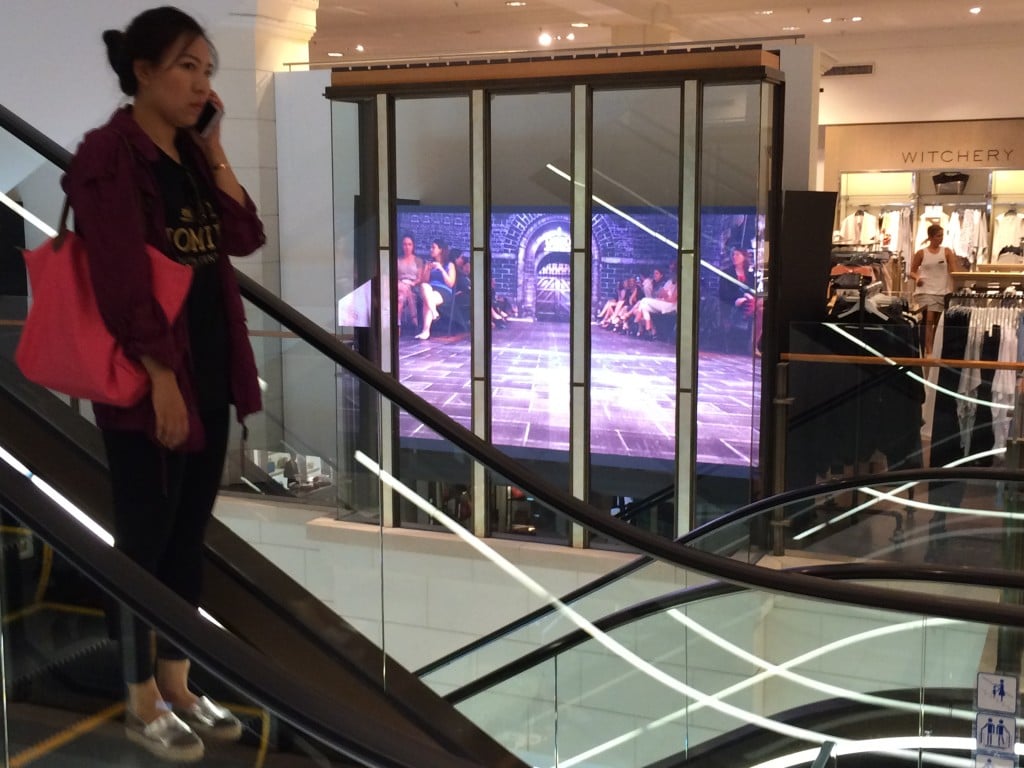
onQ CMS is optimally designed for retail environments where programmatic monetisation and advanced campaign management are critical. Retailers such as department stores, shopping centres, and automotive dealerships benefit from its integrated retail media campaign logic and SSP connectivity. This allows for dynamic advertising that is targeted, automated, and monetised in real time, maximising revenue from digital signage assets.
Moreover, onQ CMS’s ability to synchronise in-store audio with visual content enhances shopper engagement, creating immersive experiences that reinforce brand messaging. onQ Digital Group’s expertise in deploying LED signage, including large-format video walls and outdoor LED billboards, complements the CMS capabilities by enabling retailers to build impactful, scalable digital signage networks.
The platform’s API and POS integrations facilitate data-driven content personalisation, aligning messaging with sales data, inventory levels, and customer behaviour. This real-time responsiveness is essential for retailers seeking to optimise marketing spend and improve customer experience through digital signage.
Fusion Signage for Small to Medium Networks
Fusion Signage is well suited for organisations requiring straightforward digital signage software without the complexity of retail media monetisation. Small to medium-sized businesses, corporate offices, educational institutions, and community organisations may find Fusion Signage’s ease of use, affordability, and essential content management features ideal for their needs.
Its clean interface allows users with minimal technical expertise to manage content effectively across multiple screens, making it a practical choice for networks that prioritise reliable content delivery over advanced advertising features. However, for organisations aiming to grow into retail media or requiring richer integrations and monetisation options, Fusion Signage’s limited capabilities may necessitate migration to a more comprehensive platform such as onQ CMS as business needs evolve.
How to Choose Between onQ CMS and Fusion Signage
Selecting the appropriate digital signage CMS involves careful consideration of several factors, including network size, monetisation goals, integration requirements, and budget constraints.
If your organisation is building or managing a retail media network that demands programmatic monetisation, real-time campaign management, and integrated audio-visual content delivery, onQ CMS is the clear choice. Its advanced retail media features, comprehensive API integrations, and support for large-scale LED signage deployments provide a scalable, monetisable solution built for growth.
Conversely, if your digital signage needs are limited to content scheduling and playback across a smaller network without the necessity for retail media monetisation or complex integrations, Fusion Signage offers a user-friendly and cost-effective CMS option. It enables efficient content management without the overhead of advanced programmatic advertising capabilities.
Additionally, consider the level of local support and hardware services. onQ Digital Group’s end-to-end offerings, including hardware supply, installation, and ongoing maintenance, make onQ CMS a comprehensive choice for organisations seeking a single provider for both software and hardware needs. This integrated approach simplifies project management and ensures system compatibility.
Frequently Asked Questions
What is the primary difference between onQ CMS and Fusion Signage?
The primary difference lies in their purpose and feature set. onQ CMS is tailored for retail media networks requiring programmatic monetisation and integrated campaign management, while Fusion Signage is designed for straightforward content management across small to medium networks without retail media capabilities.
Can Fusion Signage support programmatic advertising?
No, Fusion Signage does not support programmatic SSP integration or retail media campaign logic. It is focused on content scheduling and playback without monetisation features.
Does onQ CMS integrate with point-of-sale systems?
Yes, onQ CMS offers comprehensive API and POS integrations, enabling data-driven content personalisation and enhanced retail media effectiveness.
Is hardware supply and installation available with both platforms?
Only onQ CMS, through onQ Digital Group, provides hardware supply and installation services, including LED video walls, outdoor LED billboards, and other LED signage solutions. Fusion Signage does not offer hardware services.
Which platform is better for small businesses?
For small businesses with simple digital signage needs and no retail media monetisation requirements, Fusion Signage is a cost-effective and easy-to-use option. For businesses planning to expand or monetise their signage networks, onQ CMS offers more advanced features and scalability.
Contact onQ Digital Group for Expert Digital Signage Solutions
Choosing the right digital signage CMS is a critical step in building an effective and monetisable network. onQ Digital Group combines expert knowledge in digital signage strategy, LED display solutions, and content management through onQ CMS to deliver tailored solutions that meet your business objectives. Whether you require programmatic retail media capabilities, large-scale LED signage installations, or comprehensive network optimisation, onQ Digital Group provides end-to-end support from consultation to deployment and ongoing maintenance.
Contact onQ Digital Group today to discuss your digital signage project and discover how onQ CMS can help you unlock the full potential of your network with advanced retail media features and Australian-owned support.
Enjoy our insights? Add onQ Digital as a preferred source on Google to see more of our content in your search results.
Commonly asked Questions
onQ CMS is designed as an enterprise retail media platform with advanced features like programmatic SSP integration, proof-of-play reporting, POS and API data connections, and audience analytics for large-scale multi-site networks. Fusion Signage focuses on cloud-based content scheduling and playlist management suited to smaller or single-site digital signage deployments. Thus, onQ CMS supports complex retail media monetisation, while Fusion Signage targets simpler screen management needs.
Fusion Signage is an Australian-founded company headquartered in Brisbane, Queensland. It provides a cloud-based digital signage CMS platform primarily used by small to medium businesses across Australia for content scheduling and screen management, supporting simpler digital signage deployments.


Ready to start a conversation?
Speak with our team about digital signage, CMS software, or retail media infrastructure. We’ll help you scope, design, and deploy the right solution.

Digital signage, CMS software, retail media platforms, analytics, and managed services across Australia.
© 2026 onQ Digital. All rights reserved. Website by D&n