
Digital Signage for Shopping Centres and Retail Precincts
A practical Australian guide to digital signage for shopping centres with onQ advice on hardware, CMS workflow, rollout governance, measurement and support.
Digital Signage for Shopping Centres and Retail Precincts
Digital signage in shopping centres and retail precincts serves three distinct purposes: helping the centre communicate with customers, supporting tenant campaigns, and generating advertising revenue through retail media. These three goals can all run from the same screen network when the content management structure is planned correctly.
This page covers how digital signage works in shopping centre and retail precinct environments, the display formats typically used, and what an effective centre screen network looks like.
Centre communication and wayfinding
Shopping centres use digital signage for trading hours, event announcements, centre directory updates, safety messaging and seasonal campaigns. These are owned content uses, where the centre controls what plays and when. A content management system allows these updates to be made centrally without printing new materials or visiting individual screens.
Wayfinding is a specific centre communication use case. Digital directory screens in centre courts, car park entries and lift lobbies give customers a consistently updated map and directory. When connected to the CMS, store changes and new tenants can be reflected in the directory without a separate update process.
Tenant campaign displays
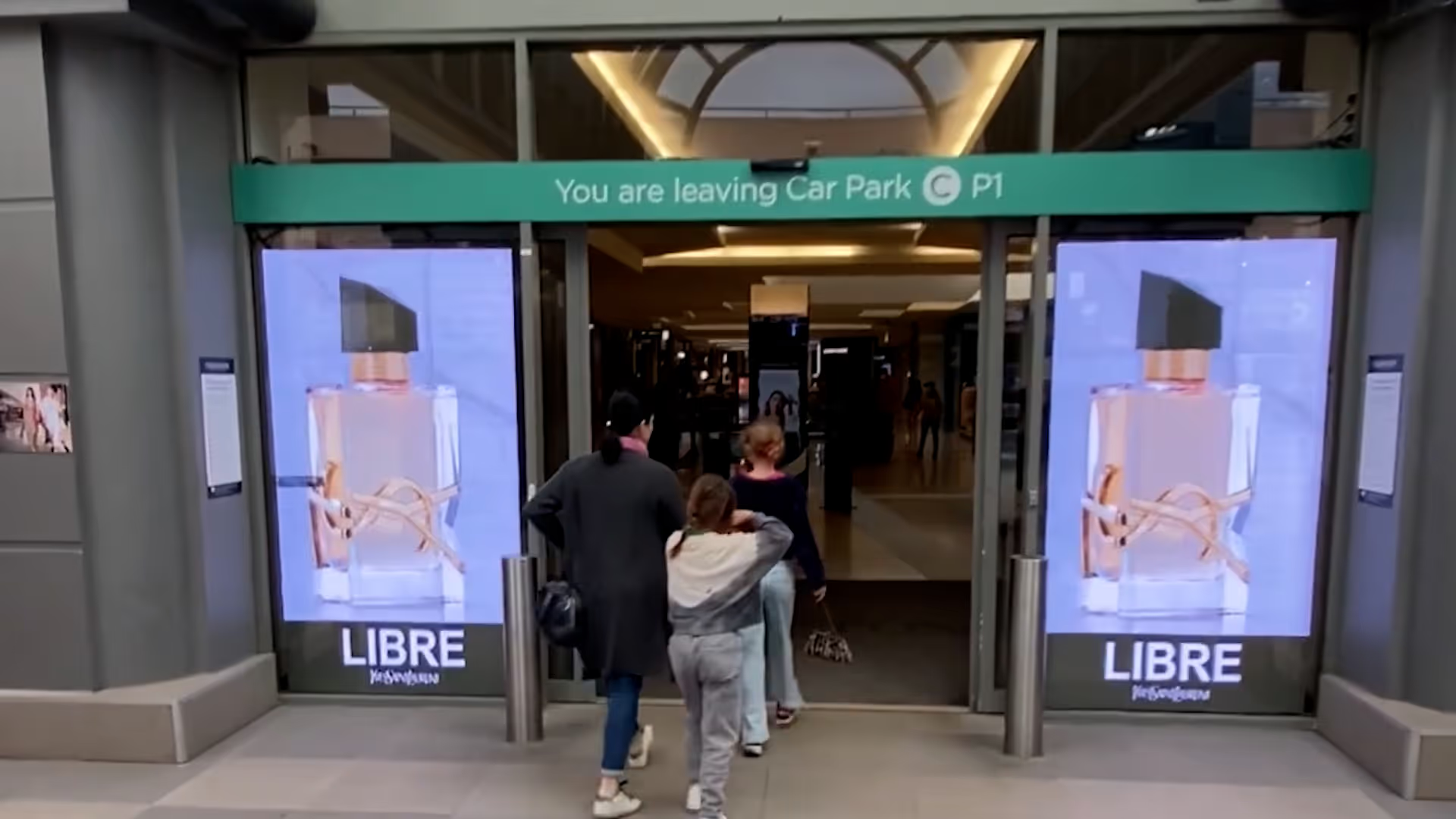
Major tenants and specialty retailers increasingly use centre-facing digital screens to run their own campaign content. This may be an LED video wall at the shopfront, a transparent LED window display, or screens inside the tenancy that are visible from the mall.
onQ works with both centre management and individual tenants on digital signage that supports the tenant's campaign needs while meeting centre installation requirements. For tenant installs, the process includes landlord approval coordination, compliance with the centre's fitout rules and integration with the centre's CMS or a separate tenant CMS where appropriate.
Retail media and advertising revenue
Shopping centres with digital screens in high-dwell areas can monetise those screens as advertising inventory. A food court LED wall, an atrium screen or a centre court display that carries supplier-funded campaigns alongside centre content becomes a retail media asset that generates revenue.
onQ helps centre owners and operators define which screen positions are suitable for media inventory, structure the CMS with campaign controls and proof-of-play, and support the development of a media selling model. Bunnings Hammer Media demonstrates what a scaled retail media network looks like when the screen infrastructure, software and operating model are planned together from the start.
LED and LCD formats used in shopping centre digital signage
| Location | Recommended format | Primary purpose |
|---|---|---|
| Food court feature wall | LED video wall | Centre media, brand campaigns, retail media inventory. |
| Centre court or main atrium | LED video wall or large LCD array | Events, seasonal campaigns, major brand moments. |
| Mall corridor or lift lobby | Freestanding LCD or LED totem | Wayfinding, tenant promotions, centre communications. |
| Shopfront window (tenant) | Transparent LED film or panels | Brand and campaign content while preserving store visibility. |
| Car park entry | Outdoor LED sign | Centre hours, events and advertising. |
| Service counter or kiosk | Commercial LCD | Wait-time information, service messaging and promotions. |
What makes an effective centre screen network
An effective centre screen network has clear content ownership, a CMS that can manage multiple zones and user types, screens in positions that attract genuine attention, and a support model that keeps the network live during trading hours.
Content should serve the audience at each screen position. A food court display has a different audience and dwell time from a car park entry sign. A tenant shopfront serves the shopper moving past, not the customer already inside. The content structure should reflect these differences rather than running the same playlist everywhere.
Frequently asked questions
Can digital signage in a shopping centre generate advertising revenue?
Yes. Screens in high-dwell areas such as food courts, centre courts and main atriums can carry supplier-funded campaigns alongside centre content when connected to a CMS with campaign controls and proof-of-play reporting.
Does onQ work with shopping centre management and tenants?
Yes. onQ works with both centre management teams and individual tenants on digital signage specification, installation and CMS connection. The process accounts for centre approval requirements and fitout rules.
What CMS does onQ use for shopping centre screen networks?
onQ uses the onQ CMS platform, which supports multi-zone content scheduling, user permissions, device monitoring, proof-of-play and retail media campaign controls for shopping centre environments.
Enjoy our insights? Add onQ Digital as a preferred source on Google to see more of our content in your search results.



Ready to start a conversation?
Speak with our team about digital signage, CMS software, or retail media infrastructure. We’ll help you scope, design, and deploy the right solution.

Digital signage, CMS software, retail media platforms, analytics, and managed services across Australia.
© 2026 onQ Digital. All rights reserved. Website by D&n