
What Is Retail Media?
A clear explanation of retail media and in-store digital media networks, including how retailers monetise screen inventory and how brands reach shoppers at the point of purchase.

What is retail media?
Retail media is advertising sold through channels that a retailer owns and controls. It includes digital advertising on the retailer's website and app, promoted search results in the retailer's online store, loyalty-targeted messages, and physical in-store media such as digital screens, audio and sampling programmes.
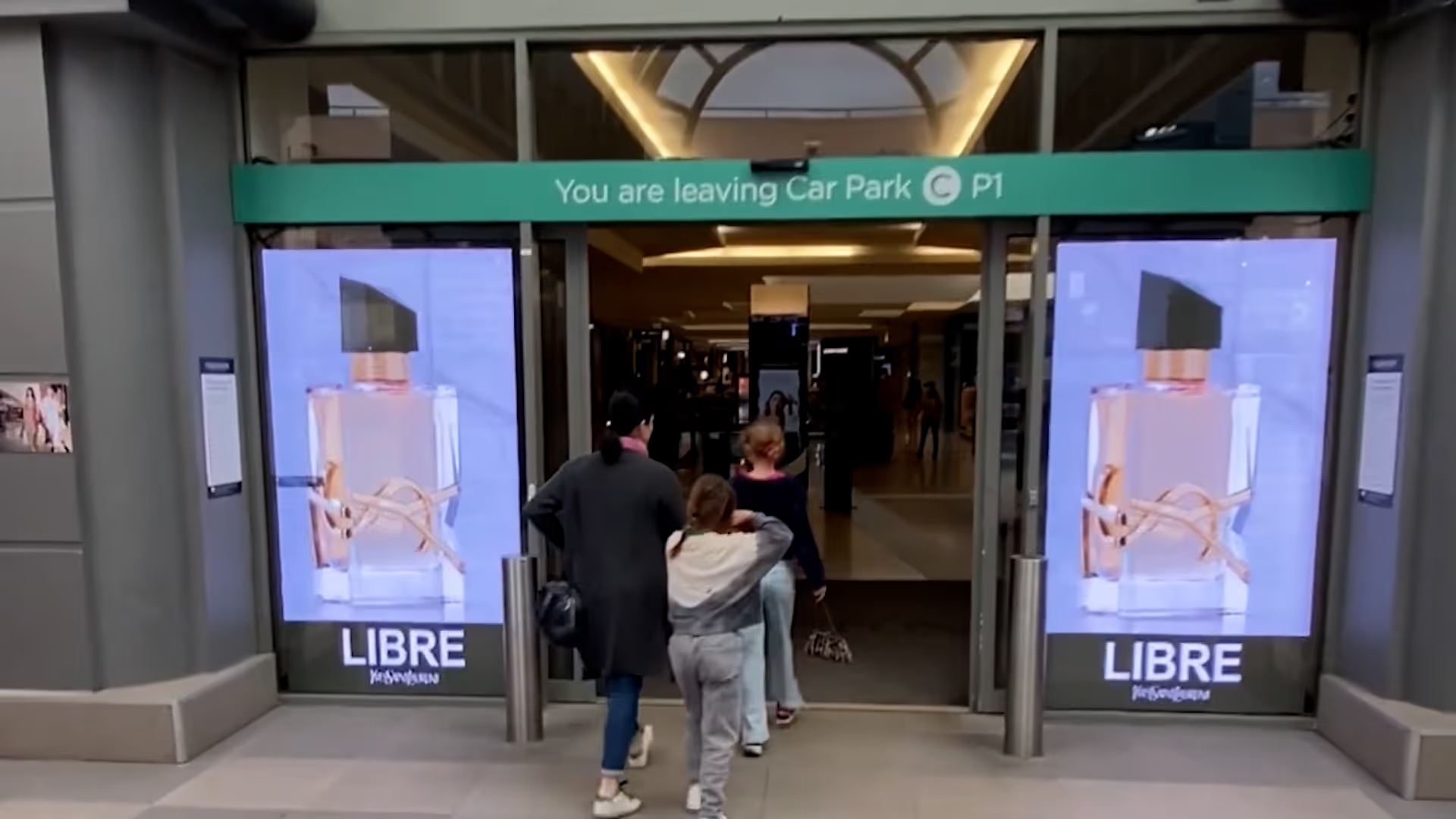
The in-store layer of retail media is the focus of this page. In-store retail media uses digital screens, LED displays, audio and other physical formats inside stores to carry paid advertising content alongside the retailer's own messaging. When a customer walks past an LED screen in a supermarket aisle and sees a supplier's campaign, that is in-store retail media in action.
Why retail media is growing in Australia
Retail media is growing because retailers have something digital advertising platforms do not: direct access to shoppers at the point of purchase. A screen in a store reaches a person who has already decided to shop. A screen near a product category reaches someone who may be deciding between brands in that category right now. That proximity to the purchase moment makes in-store retail media valuable to suppliers.
At the same time, retailers are looking for new revenue streams that do not depend on margin. Media revenue from supplier-funded campaigns can improve profitability without requiring more sales volume. Bunnings Hammer Media, Woolworths Cartology, Coles 360 and others have demonstrated that Australian retailers can build significant media businesses from their existing assets.
The components of an in-store retail media network
An in-store retail media network has three components that need to work together: physical inventory, software and operations.
Physical inventory is the screens, audio and display formats in the store. Not all positions are equal. A screen near the entrance drives awareness. A screen in a category aisle supports consideration. A screen at checkout reinforces a decision already being made. The value of each screen depends on its position, dwell time and the number of customers who see it.
Software is the CMS that manages content scheduling, campaign rules, proof-of-play and device monitoring. For retail media, the CMS needs campaign controls beyond basic playlists. It needs share-of-voice management, campaign dates, store lists and reporting that both the retailer and the supplier can use.
Operations is everything else: selling campaigns, setting rates, approving creative, trafficking content into the CMS, monitoring delivery and reporting results. This layer is where most retail media networks succeed or fail. The screens and the software can be excellent, but without an operational model that makes campaigns easy to buy and easy to verify, the network will not reach its commercial potential.
Retail media vs digital out-of-home advertising
| Factor | Retail media | Digital out-of-home |
|---|---|---|
| Location | Inside the retailer's store or on the retailer's own assets. | Public or shared spaces, streets, transport hubs and venues. |
| Audience context | Shoppers actively engaged in a shopping trip. | General public in transit or public spaces. |
| Inventory owner | The retailer. | Outdoor advertising companies or venue operators. |
| Data available | Retailer's own first-party shopper and purchase data. | Third-party audience estimates based on location and footfall. |
| Campaign targeting | Can be targeted by category, store cluster, trading period or shopper segment. | Typically targeted by location, time and demographic estimate. |
| Proof of impact | Proof-of-play reporting can link screen activity to purchase data where both are available. | Proof-of-play reporting links to audience estimates rather than purchase data. |
What retailers need to start a retail media network
A retailer does not need a fully developed programmatic platform to start a retail media network. The essentials are screen inventory in positions that attract attention, a CMS that can manage campaign rules and proof-of-play, a basic rate card, and the operational capacity to sell and report on campaigns.
onQ helps retailers build that foundation. We specify and install the screens, connect them to onQ CMS with the campaign controls a retail media business needs, and support the operating model that makes the network commercially viable. From there, the retailer can grow the network, add more sophisticated targeting and measurement, and eventually open programmatic inventory as the business matures.
Frequently asked questions
Is retail media the same as shopper marketing?
They overlap but are not the same. Shopper marketing is a broader term covering any activity that influences a purchase decision in the retail environment. Retail media specifically refers to the paid advertising products that a retailer sells to suppliers across owned channels.
Can any retailer build a retail media network?
Yes, at an appropriate scale. A small retailer with strong supplier relationships and a modest screen estate can build a simple retail media business without the complexity of a national operator. The operating model needs to match the size of the inventory.
Does a retailer need first-party data to run retail media?
First-party data strengthens the value proposition for suppliers but is not required to start. Proof-of-play reporting from the screen network is the minimum evidence suppliers need. Audience data and purchase linkage add value as the network matures.
Enjoy our insights? Add onQ Digital as a preferred source on Google to see more of our content in your search results.
Commonly asked Questions
Retail media refers to advertising sold directly by retailers or venue operators to brands, delivered through in-venue channels such as digital signage, in-store audio, and owned digital platforms. Unlike traditional advertising, retail media offers precise brand governance and purchase-proximity impact by targeting shoppers at the point of decision within the physical environment. This approach enhances relevance and measurability of advertising campaigns in retail settings.
A retail media network is the infrastructure and commercial system enabling retailers or venue operators to sell advertising across their physical and digital assets. Typically, this involves a network of digital signage screens managed through a CMS platform integrated with a programmatic supply-side platform for automated ad sales. onQ Digital specialises in building and operating retail media networks for Australian retailers, delivering centralised control and monetisation capabilities.
Revenue generated by a retail media network varies based on screen network size, foot traffic, advertising demand, and monetisation sophistication. onQ Digital’s programmatic platform connects to over 35 DSPs via a real-time bidding auction engine, delivering CPM uplifts of 30 to 80% compared to traditional waterfall models. Leading Australian retail media networks generate millions annually in incremental advertising revenue by leveraging their existing digital signage infrastructure effectively.


Ready to start a conversation?
Speak with our team about digital signage, CMS software, or retail media infrastructure. We’ll help you scope, design, and deploy the right solution.

Digital signage, CMS software, retail media platforms, analytics, and managed services across Australia.
© 2026 onQ Digital. All rights reserved. Website by D&n