
The Science Behind Retail Media: Why Digital Signage, Motion Content and In-Store Screens Are Becoming One of Retail's Most Powerful Advertising Channels
A research-led guide to why in-store screens, motion content, digital signage and retail media networks are becoming powerful advertising channels, with sources and research references included.

The Science Behind Retail Media: Why Digital Signage, Motion Content and In-Store Screens Are Becoming One of Retail’s Most Powerful Advertising Channels
Retail media has rapidly become one of the fastest-growing sectors in global advertising.
What started as sponsored products and ecommerce advertising has evolved into something much larger — a full-scale transformation of how retailers monetise customer attention across both digital and physical environments.
Today, retailers increasingly view their stores as media networks.
Every screen, aisle, service counter, checkout area, showroom, waiting zone and storefront display now represents a potential advertising asset capable of generating measurable commercial outcomes.
As investment in retail media accelerates globally, one question continues to dominate discussions among retailers, agencies and brands:
Does in-store digital signage actually work?
Recent industry research suggests the answer is increasingly yes.
A growing body of evidence now shows that digital signage, motion content, LED displays and in-store retail media networks can significantly improve:
- brand awareness
- ad recall
- customer attention
- purchase intent
- conversion rates
- point-of-purchase influence
The data is becoming difficult to ignore.
Retail Media Is Moving Closer To The Point Of Purchase
One of the most important developments in advertising is the shift toward media channels that influence customers immediately before a purchase decision.
Historically, advertising often occurred far away from the point of sale.
Brands invested heavily in:
- television
- radio
- outdoor advertising
- digital display advertising
to generate awareness and consideration.
Retail media changes that model.
Instead of influencing consumers days or weeks before a purchase decision, retail media places advertising directly inside the shopping environment where decisions are actively being made.
According to standards and research published by the Interactive Advertising Bureau (IAB) and IAB Europe, in-store retail media is rapidly emerging as a major growth channel because it combines advertising exposure with immediate purchase opportunity.
Retailers increasingly recognise that stores are not simply transactional environments — they are high-value media environments.
As a result, investment in:
- digital screens
- in-store advertising
- audience analytics
- proof-of-play reporting
- retail media platforms
continues to accelerate.
Recent IAB Europe research also highlights growing investment across both on-site and off-site retail media channels as retailers expand advertising opportunities beyond traditional ecommerce environments.
Large-Scale Research Shows Digital Signage Drives Sales
One of the most significant retail media studies published in recent years analysed:
- 237 advertising campaigns
- approximately 30 million shoppers
- real-world retail environments
- point-of-sale digital signage networks
The findings were substantial.
Researchers found that in-store digital signage increased the likelihood of customers purchasing advertised products by an average of 8.1%.
Importantly, this was not based on surveys or theoretical modelling.
The study measured actual shopper behaviour across real retail environments and real advertising campaigns.
Researchers also found stronger performance for:
- new products
- lower-priced products
- popular brands
- emotional creative
- busy retail environments
The research provides some of the strongest empirical evidence to date that in-store digital signage can directly influence purchasing behaviour at scale.
For retailers, this finding is extremely important.
An 8.1% increase in purchase likelihood can represent millions of dollars in incremental revenue across large retail networks.
For brands, it reinforces the value of advertising closer to the point of purchase where consumer attention and purchase intent are highest.
Motion Content Dramatically Outperforms Static Advertising
Not all digital signage content performs equally.
A growing body of DOOH and retail media research shows that motion-based creative consistently outperforms static advertising formats.
Research conducted by Vistar Media in partnership with JCDecaux and Omnicom Media Group found:
- motion creative delivered a 33% uplift in ad recall
- motion creative generated a 50% increase in brand awareness
- 3D motion creative was 67% more effective at driving top-of-mind awareness
Even traditional static DOOH creative performed strongly, generating a 38% uplift in aided recall.
However, motion content consistently delivered the strongest results.
These findings reinforce why retailers and advertisers increasingly invest in:
- LED video walls
- dynamic digital signage
- animated creative
- immersive storefront displays
- 3D content experiences
rather than relying solely on static printed signage.
Why Motion Content Captures More Attention
Attention has become one of the most valuable currencies in modern advertising.
Consumers are exposed to thousands of messages every day across:
- mobile devices
- websites
- streaming platforms
- social media
- retail environments
Capturing attention is increasingly difficult.
Research from Vertical Impression found:
- video content generated 11% more attention than static content
- even simple motion creative delivered an 8% attention lift
The implication is clear.
Advertisers do not necessarily need complex 3D creative to improve performance.
Even relatively simple animated content can materially increase audience attention and engagement compared with static messaging.
For retailers operating in-store screen networks, this creates a significant opportunity to increase advertising effectiveness through better creative execution.
Large-Format LED Displays Deliver Exceptional Visibility
The rise of premium LED technology is closely connected to the growth of retail media.
Modern LED displays offer:
- seamless presentation
- ultra-high brightness
- large-format storytelling
- architectural integration
- premium visual quality
These characteristics make LED particularly effective for:
- shopping centres
- supermarkets
- automotive showrooms
- convenience stores
- airports
- entertainment venues
- retail media networks
Research highlighted by The Media Leader found that premium large-format DOOH generated approximately five times more attention than traditional digital formats.
This reinforces the growing demand for:
- LED video walls
- transparent LED displays
- immersive digital storefronts
- premium retail media infrastructure
as retailers compete for customer attention in increasingly crowded environments.
Dwell Time Is Becoming More Important Than Impressions
Historically, advertising effectiveness was often measured using impression volume.
However, modern retail media increasingly focuses on:
- attention
- dwell time
- opportunity-to-see
- engagement duration
because not all impressions are equal.
A customer waiting:
- in a service centre
- in a pharmacy queue
- in a dealership lounge
- at a checkout line
may spend significantly longer viewing content than a consumer quickly walking past a display.
As retail media networks mature, advertisers increasingly value environments where dwell time is longer and attention quality is higher.
This is particularly relevant for:
- automotive dealerships
- health clinics
- pharmacies
- gyms
- waiting areas
- shopping centres
where customers often spend several minutes within view of advertising screens.
Longer dwell environments frequently create stronger advertising opportunities than high-traffic environments with very limited exposure time.
Retail Media Is Becoming A Core Revenue Channel For Retailers
Retail media is no longer viewed simply as an advertising experiment.
Increasingly, it is becoming a strategic revenue stream.
Retailers now generate advertising revenue through:
- sponsored products
- ecommerce placements
- digital signage networks
- in-store screens
- audio advertising
- storefront displays
- loyalty ecosystems
Industry forecasts continue to project strong retail media growth globally.
IAB Europe research shows retail media investment continues expanding across:
- on-site media
- off-site media
- in-store environments
- omnichannel advertising ecosystems
At the same time, industry standards around:
- measurement
- impressions
- proof-of-play
- attribution
- audience reporting
continue to mature.
The result is a rapidly professionalising media channel capable of attracting larger advertising budgets from major brands.
Why Retailers Are Investing In Digital Signage Infrastructure
The growth of retail media is directly driving investment in digital signage infrastructure.
Retailers increasingly require:
- enterprise CMS platforms
- proof-of-play reporting
- audience analytics
- campaign scheduling
- remote monitoring
- API integrations
- multi-location governance
because modern retail media networks require far more than simply displaying content on screens.
Successful retail media ecosystems increasingly combine:
- hardware
- software
- analytics
- content management
- advertising workflows
- audience measurement
into a single integrated platform.
This is why retailers are increasingly investing in:
- LED video walls
- transparent LED
- enterprise CMS platforms
- retail media operating systems
- audience analytics platforms
rather than standalone digital displays.
The Rise Of Automotive Retail Media
One of the fastest-growing opportunities in retail media is automotive.
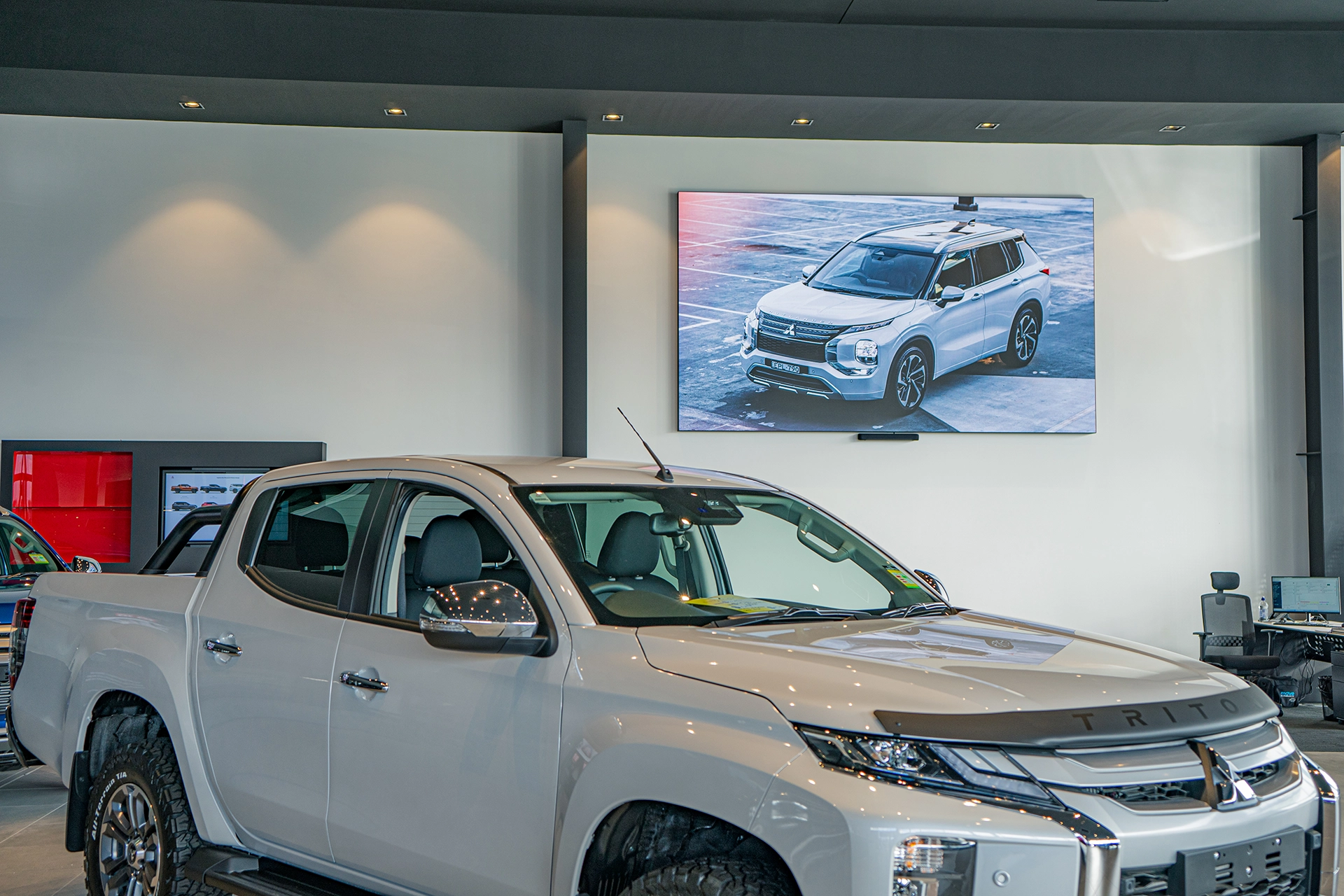
Modern dealerships increasingly deploy:
- LED video walls
- transparent LED displays
- showroom digital signage
- customer engagement screens
- service-lane displays
to support:
- vehicle launches
- EV education
- finance promotions
- aftersales campaigns
- manufacturer advertising
Dealerships are increasingly becoming media environments in their own right.
As EV adoption accelerates, dealerships require more sophisticated communication infrastructure capable of educating customers while supporting premium brand experiences.
This is creating new demand for:
- enterprise CMS platforms
- retail media workflows
- audience analytics
- proof-of-play reporting
within automotive environments.
The Future Of Retail Media Is Data, Attention And Experience
The future of retail media will likely be defined by three factors:
1. Attention
Advertisers increasingly care about:
- visibility
- engagement
- dwell time
- opportunity-to-see
rather than simple impression counts.
2. Data
Audience analytics, proof-of-play reporting and attribution will continue becoming more important as advertisers demand greater accountability.
3. Experience
Premium visual environments increasingly outperform traditional advertising formats.
LED displays, motion content, transparent LED and immersive storytelling create experiences that static advertising simply cannot replicate.
As retail media continues evolving, the retailers that successfully combine:
- digital infrastructure
- audience insights
- premium creative
- enterprise governance
- advertising measurement
will be best positioned to unlock the next generation of in-store advertising revenue.
Conclusion
The evidence supporting retail media and digital signage continues to grow.
Research now demonstrates that:
- digital signage can increase purchase likelihood by 8.1%
- motion content significantly improves attention and recall
- 3D creative can dramatically improve brand awareness
- premium digital environments outperform many traditional advertising formats
- retailers increasingly view stores as monetisable media networks
For retailers, brands and advertisers, the message is increasingly clear:
The store is no longer just a place where transactions happen.
It is becoming one of the most valuable advertising environments in modern commerce.
Sources & Research References
The insights, statistics and research referenced throughout this article are based on studies and industry publications from leading retail media, digital signage, advertising and DOOH organisations.
Vistar Media, JCDecaux & Omnicom Media Group Research
3D Motion Creative Is 67% More Effective at Driving Brand Awareness in DOOH Campaigns
Key findings:
- 33% uplift in ad recall from motion creative
- 50% increase in brand awareness
- 67% higher top-of-mind awareness from 3D creative
- 38% uplift in aided recall from static DOOH
Journal of Marketing Research
The Impact of In-Store Digital Signage on Consumer Purchasing Behaviour
https://journals.sagepub.com/doi/10.1177/00222429251351578
Key findings:
- Analysis of 237 campaigns
- Approximately 30 million shoppers studied
- Digital signage increased purchase likelihood by 8.1%
Vertical Impression
Does Movement Matter? Testing Video vs Static in DOOH
https://www.verticalimpression.com/post/does-movement-matter-testing-video-vs-static-in-dooh
Key findings:
- Video generated 11% more attention
- Motion creative delivered an 8% attention lift compared with static content
IAB Europe
Retail Media Definitions & Measurement Standards
https://iabeurope.eu/wp-content/uploads/retail-media-in-store-overview.pdf
This report outlines:
- retail media definitions
- in-store retail media frameworks
- measurement standards
- audience and advertising methodologies
IAB Europe Retail Media Report
Attitudes to Retail Media Report
https://iabeurope.eu/knowledge_hub/iab-europes-attitudes-to-retail-media-report-2025
Key insights:
- Continued retail media investment growth
- Increased advertiser adoption
- Expansion of omnichannel retail media ecosystems
The Media Leader
Large Format DOOH Garners Five Times More Attention Than Digital Formats
Key findings:
- Premium large-format DOOH generated significantly higher attention levels than traditional digital advertising formats
Calton Data Experience
Why Dwell Time Analysis Is Important in DOOH Advertising
Key insights:
- Dwell time is becoming increasingly important in advertising effectiveness measurement
- Opportunity-to-see and exposure duration are becoming critical retail media metrics
Additional Industry Research
JCDecaux Research & Thought Leadership
Omnicom Media Group
https://www.omnicommediagroup.com
Vistar Media Retail Media & DOOH Research
IAB Europe Retail Media Hub
Key Statistics Referenced
| Statistic | Source |
|---|---|
| 33% uplift in ad recall from motion creative | Vistar Media / JCDecaux / Omnicom |
| 50% increase in brand awareness from motion content | Vistar Media / JCDecaux / Omnicom |
| 67% higher top-of-mind awareness from 3D creative | Vistar Media / JCDecaux / Omnicom |
| 38% uplift in aided recall from static DOOH | Vistar Media / JCDecaux / Omnicom |
| 8.1% increase in purchase likelihood from digital signage | Journal of Marketing Research |
| 11% higher attention from video content | Vertical Impression |
| 8% attention lift from motion creative | Vertical Impression |
| Up to 5x higher attention from premium large-format DOOH | The Media Leader |
| Growing importance of dwell time and opportunity-to-see metrics | Calton Data Experience |
| Continued retail media investment growth across Europe and globally | IAB Europe |
Disclaimer
Statistics and research findings referenced in this article are sourced from third-party industry studies, peer-reviewed academic research, media measurement organisations and advertising industry reports. Results may vary depending on retail environment, campaign execution, audience demographics, creative quality, screen placement and measurement methodology.
Enjoy our insights? Add onQ Digital as a preferred source on Google to see more of our content in your search results.


Ready to start a conversation?
Speak with our team about digital signage, CMS software, or retail media infrastructure. We’ll help you scope, design, and deploy the right solution.

Digital signage, CMS software, retail media platforms, analytics, and managed services across Australia.
© 2026 onQ Digital. All rights reserved. Website by D&n