
The Hidden Cost of Printed Posters: Why Retailers Are Switching to Digital ePoster Networks
Printed posters carry hidden costs in printing, freight, store labour, compliance and waste. Learn how digital ePoster networks powered by an enterprise CMS cut costs, improve campaign speed and unlock retail media revenue.

A Complete Guide to Total Cost of Ownership, Retail Media and the Future of Multi-Site Communications
Introduction
For decades, printed posters have been one of the primary ways retailers communicate promotions, supplier campaigns, seasonal offers and brand messaging to customers. They are familiar, relatively inexpensive to produce individually and simple to install.
However, when viewed across an enterprise network of 50, 500 or 5,000 locations, printed signage quickly becomes one of the most expensive and operationally intensive marketing channels within the business.
Every campaign requires design, approvals, printing, packaging, freight, store labour, installation, compliance monitoring and eventual disposal. Multiply those activities across multiple campaigns per month and hundreds of locations, and the hidden costs become substantial.
At the same time, retailers are under increasing pressure to:
- Reduce operational costs.
- Improve sustainability outcomes.
- Execute campaigns faster.
- Deliver consistent branding across every location.
- Unlock new supplier-funded revenue streams.
- Modernise legacy processes through automation.
As a result, many organisations are replacing printed collateral with centrally managed digital ePoster networks powered by full-colour electronic paper technology and enterprise content management systems (CMS).
This article explores the true cost of printed signage, compares traditional and digital approaches, and explains why leading retailers are embracing ePoster technology as part of their broader digital transformation strategy.
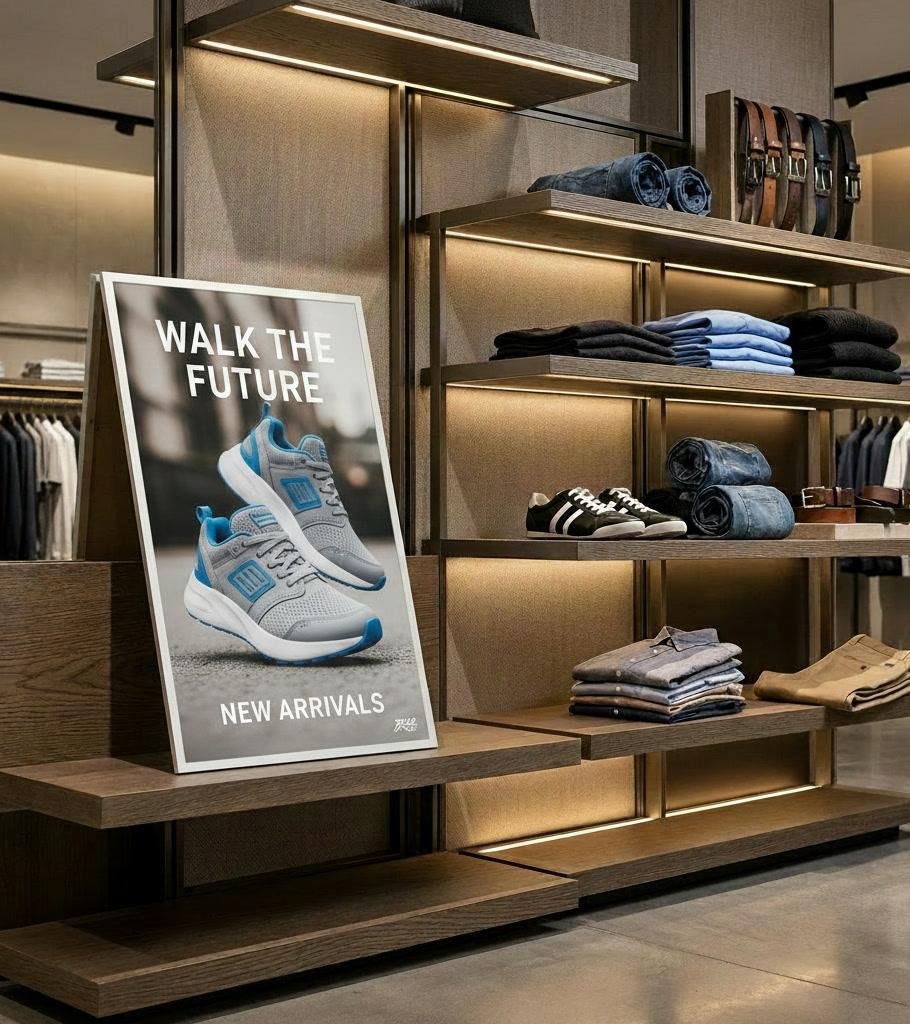
The Hidden Costs of Printed Signage
Printing costs are only the beginning.
The real expense lies in the operational processes required to deploy physical collateral across a distributed retail network.
Creative Development
Every campaign requires:
- Artwork creation
- Internal reviews
- Supplier approvals
- Resizing for multiple formats
- Version control
Even minor pricing changes may require the entire process to restart.
Printing
Each campaign incurs direct production costs including:
- Commercial printing
- Colour management
- Special finishes
- Large-format production
- Short-run jobs for local variations
These costs recur with every campaign refresh.
Packaging and Distribution
Printed materials must then be:
- Collated
- Packed
- Labelled
- Shipped
- Delivered to every location
Freight costs increase significantly for national retailers operating across Australia.
Store Labour
Once delivered, store teams must:
- Locate materials
- Remove previous posters
- Install new collateral
- Dispose of old signage
- Confirm completion
For organisations with hundreds of stores, this represents thousands of labour hours annually.
Compliance Risk
One of marketing’s biggest challenges is execution consistency.
Common issues include:
- Posters arriving late
- Campaigns installed after launch
- Incorrect locations used
- Materials misplaced
- Old promotions left on display
Without physical audits, head office often has limited visibility.
Waste
Once a promotion ends, most printed collateral becomes waste.
This creates ongoing disposal costs while conflicting with broader sustainability initiatives.
A Typical Total Cost of Ownership Example
Consider a retailer with:
- 500 stores
- 2 promotional poster changes per month
- Average of 4 posters per location
The annual process involves:
- 48,000 posters printed
- 48,000 posters packed and distributed
- Thousands of labour hours replacing collateral
- Significant freight expenditure
- Ongoing compliance management
- Disposal of expired materials
Many enterprise retailers spend hundreds of thousands of dollars each year supporting these repetitive workflows.
What Is an ePoster?
An ePoster is a digital display based on electronic paper (ePaper) technology.
Unlike LCD or LED displays that continuously consume power to illuminate pixels, electronic paper retains an image even when not actively refreshing.
The result is:
- Exceptional readability
- A paper-like appearance
- Excellent visibility under ambient light
- Minimal energy usage
- Long operating life
Modern full-colour ePaper displays provide a compelling replacement for printed promotional material while maintaining the familiar visual characteristics customers expect.
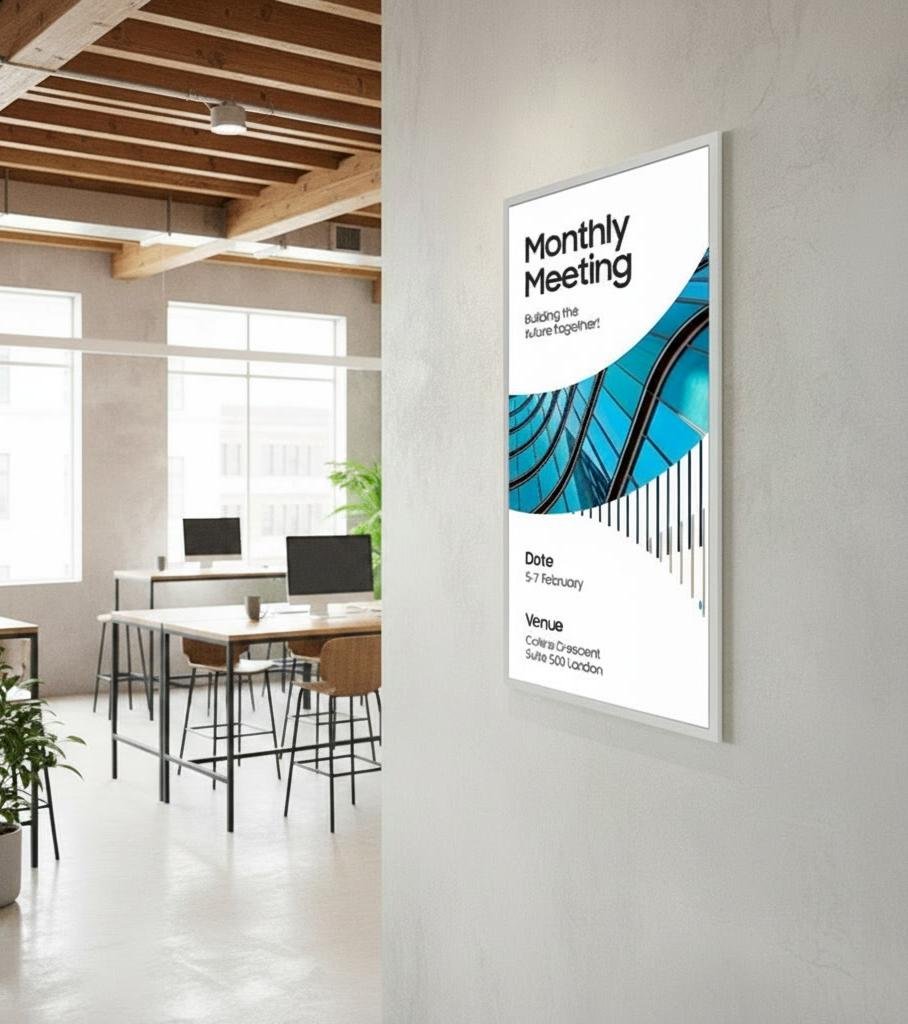
Why the CMS Matters More Than the Hardware
Many organisations focus exclusively on display specifications.
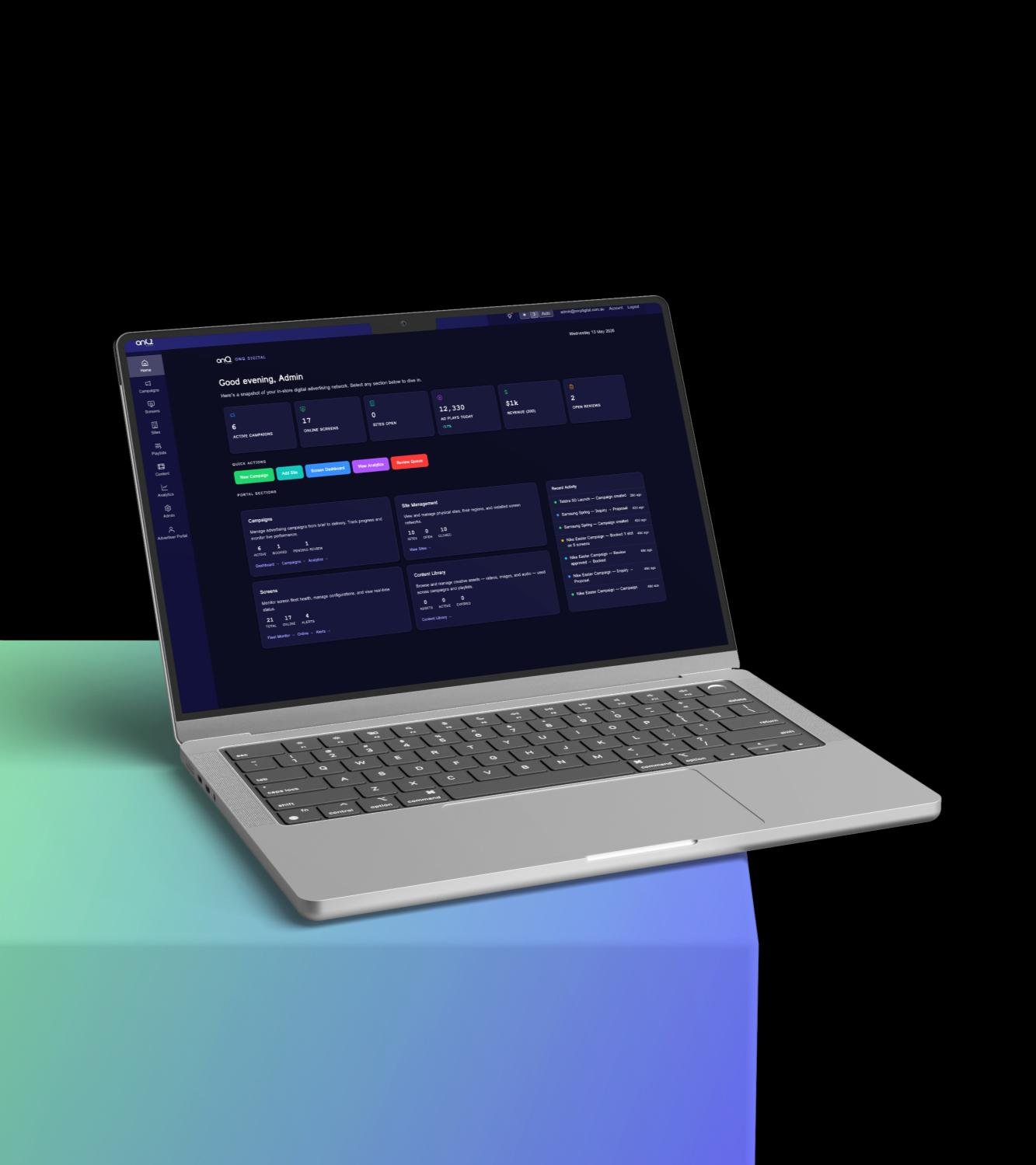
In reality, the CMS is where the majority of long-term value is created.
A modern enterprise CMS enables teams to:
- Upload creative assets once
- Schedule campaigns in advance
- Publish instantly across one or thousands of locations
- Group stores by region or category
- Manage permissions
- Reuse approved templates
- Maintain content libraries
- Monitor deployments centrally
Without a CMS, digital hardware becomes another isolated endpoint.
With a CMS, every display becomes part of an enterprise communications network.
One Platform for Every Display Type
Historically, retailers have operated multiple disconnected systems.
One vendor manages digital signage.
Another manages kiosks.
Another manages menu boards.
Another provides electronic paper displays.
This fragmentation increases complexity and training requirements.
Modern enterprise platforms allow organisations to manage:
- LED displays
- LCD displays
- Window signage
- Interactive touchscreens
- Retail media networks
- Electronic paper displays
from one central interface.
The result is simplified operations, reduced administration and greater campaign consistency.
The Business Case for Instant Updates
Traditional posters require physical logistics.
Digital ePosters require only a content upload.
Need to:
- Correct pricing?
- Extend a promotion?
- Launch a supplier campaign?
- Pause discontinued products?
Updates can be distributed immediately without waiting for production or freight.
This agility is particularly valuable during peak retail periods.
Improving Marketing Compliance
Digital deployment significantly reduces campaign execution risk.
Instead of relying on stores to manually replace collateral, head office can coordinate deployments centrally.
With enterprise reporting, organisations gain greater confidence that campaigns are delivered consistently across locations.
Sustainability Benefits
Many retailers have ambitious ESG objectives.
Replacing disposable printed materials with reusable digital infrastructure may contribute to:
- Lower paper consumption
- Reduced transport requirements
- Less packaging waste
- Reduced disposal volumes
- Fewer repeat production cycles
Although sustainability outcomes depend on deployment patterns and operational practices, digital communications can reduce reliance on repetitive physical printing.
Retail Media Is Changing the Economics
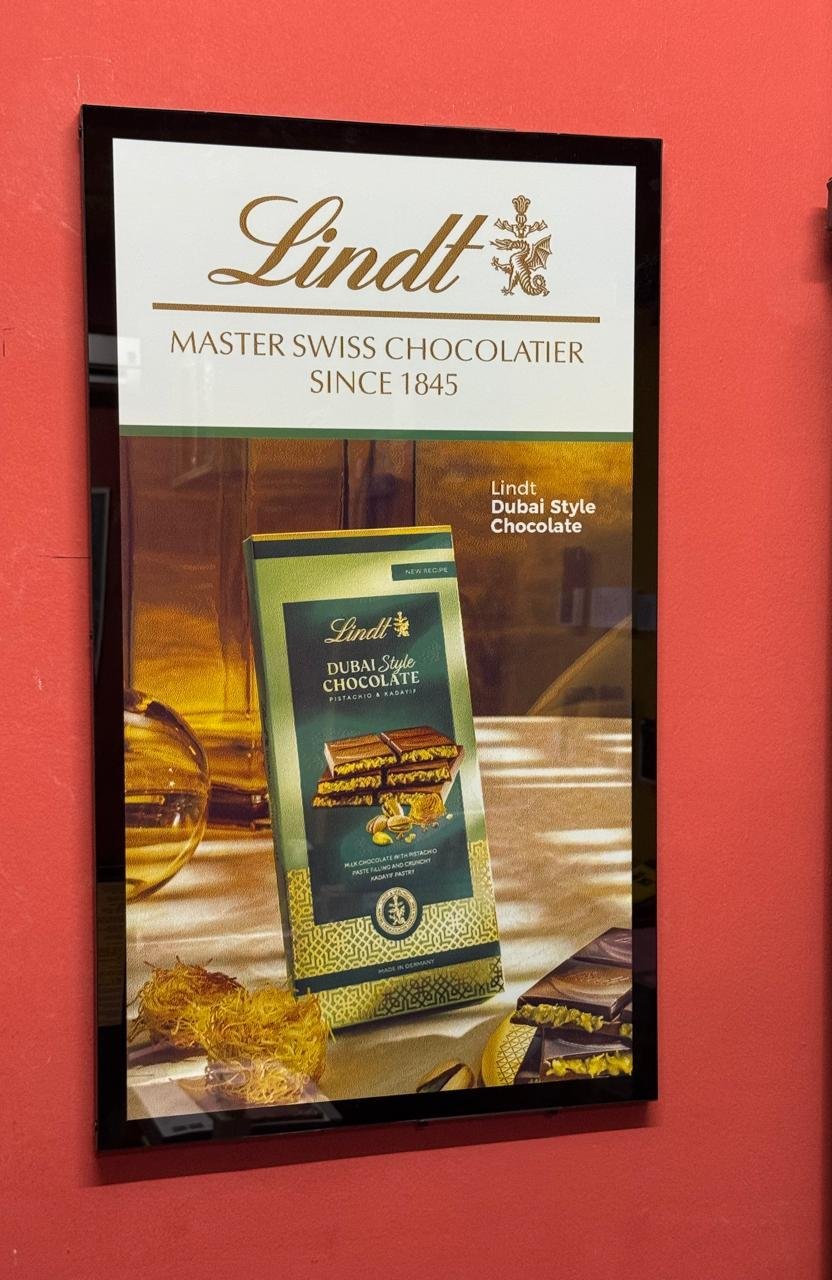
Retailers increasingly recognise that their physical stores represent valuable advertising inventory.
Suppliers want to reach customers close to the point of purchase.
Digitally connected ePoster networks enable:
- Product launches
- Sponsored campaigns
- Seasonal advertising
- Brand partnerships
- Category ownership
- Local promotions
Rather than acting solely as marketing collateral, digital displays become strategic media assets.
From Cost Centre to Profit Centre
Printed posters create recurring operational expenditure.
Digital ePoster networks create opportunities to support:
- Internal communications
- Customer engagement
- Supplier-funded advertising
- Promotional flexibility
- Future monetisation strategies
For many organisations, this transforms signage from an unavoidable cost into a long-term strategic capability.
Comparing Print and Digital
| Category | Printed Posters | Digital ePoster |
|---|---|---|
| Campaign updates | Reprint required | Instant remote updates |
| Freight | Required | Not required |
| Store labour | Manual replacement | Remote publishing |
| Sustainability | Single use | Reusable |
| Compliance | Difficult to verify | Centrally managed |
| Speed | Days or weeks | Minutes |
| Supplier campaigns | Static | Dynamic and flexible |
| Scalability | Labour intensive | Enterprise ready |

Industry Applications
Pharmacy
Health campaigns, seasonal promotions, OTC advertising and supplier-funded initiatives.
Grocery
Promotional pricing, loyalty campaigns and local store messaging.
Hardware
Tool launches, supplier partnerships and category promotions.
Automotive
Service offers, vehicle campaigns and finance messaging.
Fashion
Window merchandising, seasonal launches and brand storytelling.
Hospitality
Menus, specials and venue communications.
Enterprise Rollouts
Successful deployments typically include:
- Pilot locations
- Standardised hardware
- Central CMS governance
- User permissions
- Content approval workflows
- National rollout planning
- Ongoing monitoring and support
This approach reduces risk while ensuring consistent customer experiences.
Frequently Asked Questions
Are ePosters always powered?
Some models contain rechargeable batteries while others require mains power depending on the application.
Can content be scheduled?
Yes. Enterprise CMS platforms allow campaigns to be published immediately or scheduled in advance.
Can stores have different content?
Absolutely. Content can be targeted by store, region, state or custom groups.
Is training required?
Modern CMS platforms are designed for marketing teams and generally require minimal training.
Can ePosters coexist with digital signage?
Yes. One of the biggest advantages of enterprise platforms is the ability to manage LED, LCD and ePaper devices from the same CMS.
Choosing the Right Technology Partner
When evaluating solutions, ask:
- Can one CMS manage every display type?
- Is the platform enterprise-ready?
- Is there Australian-based support?
- Does the vendor provide deployment and ongoing management?
- Can the platform scale nationally?
- Does it support future retail media initiatives?
The answers often determine the long-term success of the investment.
Looking Ahead
The future of retail communications is increasingly digital, connected and data-driven.
Artificial intelligence is accelerating content production.
Retail media is creating new revenue opportunities.
Cloud platforms are simplifying campaign management.
Electronic paper is reducing dependence on repetitive print cycles.
Together, these technologies are reshaping how retailers communicate with customers.
Conclusion
Printed posters have served retailers well, but they come with hidden operational costs that compound across large store networks.
Digital ePoster technology offers an alternative that enables faster campaign deployment, improved consistency, greater flexibility and reduced reliance on manual processes.
When integrated with an enterprise CMS capable of managing LED displays, LCD screens and electronic paper devices from a single platform, retailers gain more than a replacement for print—they gain a scalable communications infrastructure that supports marketing, operations and future retail media initiatives.
The question is no longer whether retailers should digitise their poster networks.
It is how quickly they can adopt a platform that reduces complexity today while preparing them for the next generation of in-store customer engagement.
Enjoy our insights? Add onQ Digital as a preferred source on Google to see more of our content in your search results.

Ready to start a conversation?
Speak with our team about digital signage, CMS software, or retail media infrastructure. We’ll help you scope, design, and deploy the right solution.

Digital signage, CMS software, retail media platforms, analytics, and managed services across Australia.
© 2026 onQ Digital. All rights reserved. Website by D&n