LED Signage for Shopping Centres

May 12, 2026
LED Signage for Shopping Centres by onQ Digital Group

Made you look

A guide to LED signage for shopping centres, covering tenant promotions, wayfinding, retail media, outdoor visibility, CMS control and installation planning.
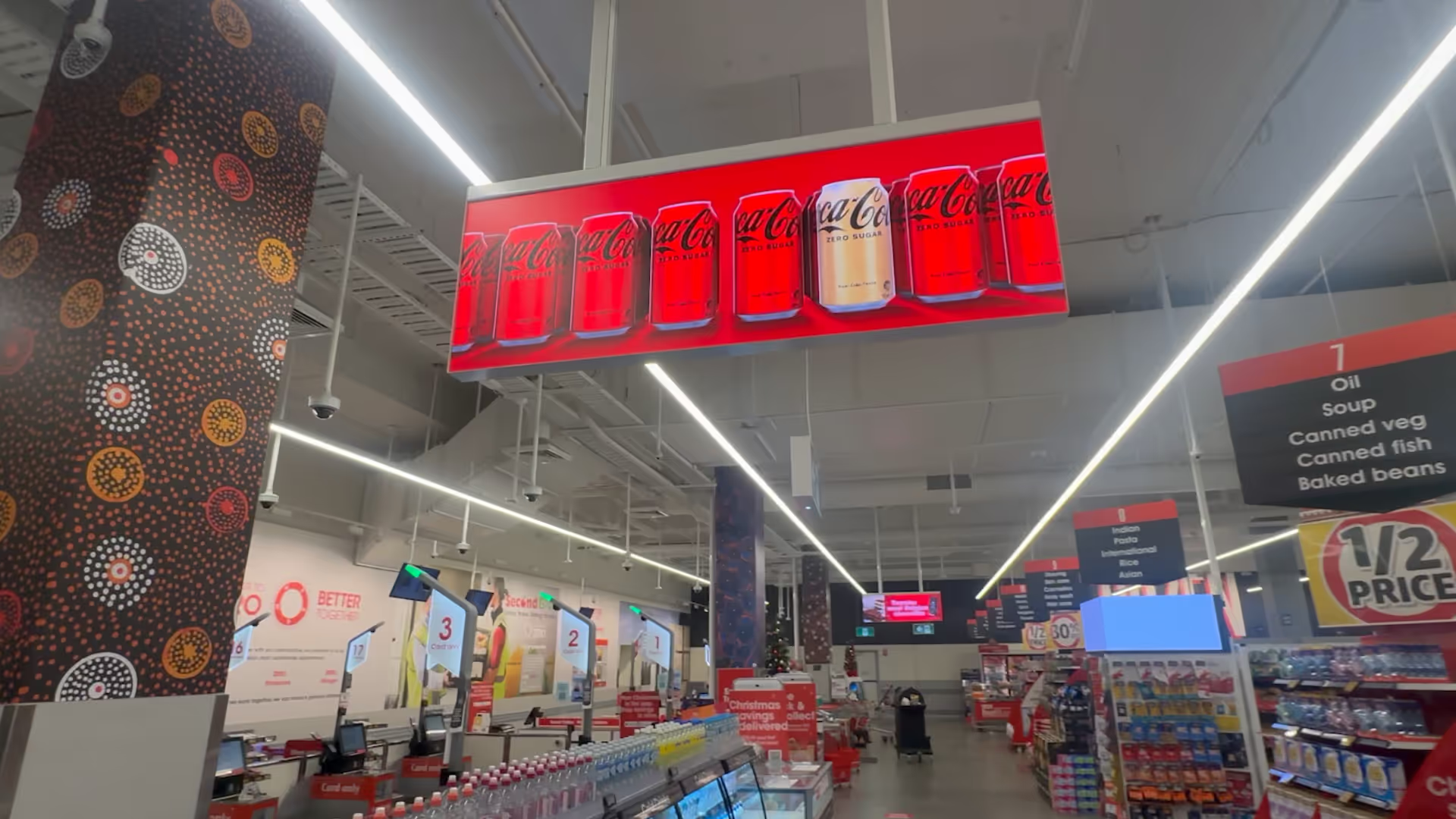
 

Why led signage for shopping centres matters


LED Signage for Shopping Centres gives shopping centre owners, managers and retail media teams a more flexible way to communicate with customers, visitors and commercial partners. Unlike static banners and fixed signage, LED signs can be updated instantly, scheduled around trading patterns and connected to a CMS that manages multiple locations at once.

Shopping centre LED signage now serves three distinct commercial purposes. The first is operational: giving centre management a reliable way to publish trading hours, wayfinding, safety messaging and event content. The second is tenant-facing: helping anchor stores and specialty retailers run better-looking campaign content without relying on printed POS. The third is media-focused: turning the centre’s screen estate into a monetised advertising channel for brand partners and suppliers.

LED screen types used in shopping centres

Shopping centre environments use different LED display formats depending on the location, audience and content purpose.

Indoor LED video walls are the highest-impact format. They suit centre courts, anchor store feature walls, food court feature zones and entertainment precincts. A well-specified LED wall at a centre entry or food court can become a commercial media asset while also improving the ambient environment for visitors.

Freestanding LED posters and totems are used in high-foot-traffic areas like mall corridors, lift lobbies and car park entries. They are flexible, movable and easy to incorporate into existing centre layouts without structural changes.

Transparent LED film and panels suit shopfront windows, glass partitions, atrium glazing and feature walls where the display needs to carry content without fully blocking views or natural light. Transparent LED is increasingly used by fashion and lifestyle tenants in flagship positions.

Outdoor LED billboards and facades serve car park entries, roadside-facing walls and centre exterior zones. These require weather-rated enclosures, high-brightness panels and planned maintenance access.

How onQ delivers LED signage for shopping centres

onQ manages LED signage rollouts for centre owners, centre managers and major retail tenants. The approach covers five stages: site assessment, hardware specification, installation, CMS configuration and ongoing support.

Site assessment reviews the physical location, sightlines, ambient light, power access, structural constraints and any centre management or landlord requirements. Shopping centres have strict rules around installation methods, trading-hours access and sign-off procedures, and onQ accounts for these from the start.

Hardware specification matches the display type, pixel pitch, brightness and cabinet format to the actual site conditions rather than defaulting to a standard product. A food court LED wall has different requirements from an outdoor entrance sign or an in-tenancy transparent LED window.

Installation is managed around centre trading hours. onQ coordinates with centre management, tenants and building services to install displays cleanly and without disruption to nearby retailers or visitors.

CMS configuration connects each LED display to the onQ CMS platform. For centre management, this means a single interface for scheduling content across all screens. For tenants, it means campaign updates can be made without relying on manual site visits or printed materials.

Ongoing support includes remote device monitoring, fault response and content assistance. Shopping centre LED signs are often in high-visibility locations, so fast fault detection and response is part of the operating model.

LED signage for retail tenants inside shopping centres

Major retail tenants increasingly specify LED displays as part of their shop fit or refurbishment. A well-placed LED wall or transparent LED window can lift visual impact at the shopfront, reduce reliance on printed campaign materials and create a stronger brand environment inside the store.

onQ works with individual tenants on LED display specification and installation, including coordination with centre management on installation approvals and programming access. Tenant LED signage can be connected to the same CMS that manages centre-wide content, or to a dedicated CMS setup for the retail group if they have screens across multiple centre locations.

Retail media and LED signage revenue for shopping centres

Shopping centre LED signage is one of the most direct ways to build a physical retail media network. Screens in high-dwell areas like food courts and centre courts attract significant audience exposure. When connected to a CMS with proof-of-play reporting and campaign controls, these screens can carry supplier-funded campaigns alongside centre-owned content.

onQ can help centre owners and operators define which screen zones are suitable for advertising inventory, set up the CMS with appropriate campaign rules and proof-of-play logging, and support the development of a rate card and media selling model. The result is an LED network that generates revenue rather than being treated purely as an operational cost.

Specification considerations for shopping centre LED

FactorWhat to considerPixel pitchMatch pixel pitch to typical viewing distance. A food court LED wall viewed from 5-10 metres needs a different pitch from a corridor LED poster viewed at 2-3 metres.BrightnessShopping centres often have high ambient light, especially near skylights and entrances. Specify brightness to suit the location, not just indoor averages.Service accessMaintenance technicians need safe access to LED displays in busy trading environments. Front-service configurations reduce disruption.Centre approvalsMost shopping centres require landlord or centre management approval for signage installations. Plan for this in the project timeline.Content formatLED walls need content designed for the display dimensions. Standard campaign assets often need reformatting before they work well at large scale.

Factor What to consider
Pixel pitch Match pixel pitch to typical viewing distance. A food court LED wall viewed from 5–10 metres needs a different pitch from a corridor LED poster viewed at 2–3 metres.
Brightness Shopping centres often have high ambient light, especially near skylights and entrances. Specify brightness to suit the location, not just indoor averages.
Service access Maintenance technicians need safe access to LED displays in busy trading environments. Front-service configurations reduce disruption.
Centre approvals Most shopping centres require landlord or centre management approval for signage installations. Plan for this in the project timeline.
Content format LED walls need content designed for the display dimensions. Standard campaign assets often need reformatting before they work well at large scale.

Frequently asked questions

Can onQ install LED signage in any shopping centre?

onQ can work in most shopping centres across Australia, subject to centre management approvals and access requirements. The team manages the approval process as part of the project.

Can the LED screens be connected to a retail media network?

Yes. Shopping centre LED displays can be connected to a CMS with campaign scheduling, proof-of-play and retail media controls, allowing the centre to sell advertising inventory to brand partners and tenants.

How long does an LED signage installation take?

Timeline depends on display size, structural requirements and centre access rules. A standard LED wall installation typically takes one to three days of on-site work, with additional time for planning, approvals and commissioning.

Digital Signage

LED Signage for Shopping Centres

A guide to LED signage for shopping centres, covering tenant promotions, wayfinding, retail media, outdoor visibility, CMS control and installation planning.

LED Signage for Shopping Centres by onQ Digital Group


Why led signage for shopping centres matters


LED Signage for Shopping Centres gives shopping centre owners, managers and retail media teams a more flexible way to communicate with customers, visitors and commercial partners. Unlike static banners and fixed signage, LED signs can be updated instantly, scheduled around trading patterns and connected to a CMS that manages multiple locations at once.

Shopping centre LED signage now serves three distinct commercial purposes. The first is operational: giving centre management a reliable way to publish trading hours, wayfinding, safety messaging and event content. The second is tenant-facing: helping anchor stores and specialty retailers run better-looking campaign content without relying on printed POS. The third is media-focused: turning the centre’s screen estate into a monetised advertising channel for brand partners and suppliers.

LED screen types used in shopping centres

Shopping centre environments use different LED display formats depending on the location, audience and content purpose.

Indoor LED video walls are the highest-impact format. They suit centre courts, anchor store feature walls, food court feature zones and entertainment precincts. A well-specified LED wall at a centre entry or food court can become a commercial media asset while also improving the ambient environment for visitors.

Freestanding LED posters and totems are used in high-foot-traffic areas like mall corridors, lift lobbies and car park entries. They are flexible, movable and easy to incorporate into existing centre layouts without structural changes.

Transparent LED film and panels suit shopfront windows, glass partitions, atrium glazing and feature walls where the display needs to carry content without fully blocking views or natural light. Transparent LED is increasingly used by fashion and lifestyle tenants in flagship positions.

Outdoor LED billboards and facades serve car park entries, roadside-facing walls and centre exterior zones. These require weather-rated enclosures, high-brightness panels and planned maintenance access.

How onQ delivers LED signage for shopping centres

onQ manages LED signage rollouts for centre owners, centre managers and major retail tenants. The approach covers five stages: site assessment, hardware specification, installation, CMS configuration and ongoing support.

Site assessment reviews the physical location, sightlines, ambient light, power access, structural constraints and any centre management or landlord requirements. Shopping centres have strict rules around installation methods, trading-hours access and sign-off procedures, and onQ accounts for these from the start.

Hardware specification matches the display type, pixel pitch, brightness and cabinet format to the actual site conditions rather than defaulting to a standard product. A food court LED wall has different requirements from an outdoor entrance sign or an in-tenancy transparent LED window.

Installation is managed around centre trading hours. onQ coordinates with centre management, tenants and building services to install displays cleanly and without disruption to nearby retailers or visitors.

CMS configuration connects each LED display to the onQ CMS platform. For centre management, this means a single interface for scheduling content across all screens. For tenants, it means campaign updates can be made without relying on manual site visits or printed materials.

Ongoing support includes remote device monitoring, fault response and content assistance. Shopping centre LED signs are often in high-visibility locations, so fast fault detection and response is part of the operating model.

LED signage for retail tenants inside shopping centres

Major retail tenants increasingly specify LED displays as part of their shop fit or refurbishment. A well-placed LED wall or transparent LED window can lift visual impact at the shopfront, reduce reliance on printed campaign materials and create a stronger brand environment inside the store.

onQ works with individual tenants on LED display specification and installation, including coordination with centre management on installation approvals and programming access. Tenant LED signage can be connected to the same CMS that manages centre-wide content, or to a dedicated CMS setup for the retail group if they have screens across multiple centre locations.

Retail media and LED signage revenue for shopping centres

Shopping centre LED signage is one of the most direct ways to build a physical retail media network. Screens in high-dwell areas like food courts and centre courts attract significant audience exposure. When connected to a CMS with proof-of-play reporting and campaign controls, these screens can carry supplier-funded campaigns alongside centre-owned content.

onQ can help centre owners and operators define which screen zones are suitable for advertising inventory, set up the CMS with appropriate campaign rules and proof-of-play logging, and support the development of a rate card and media selling model. The result is an LED network that generates revenue rather than being treated purely as an operational cost.

Specification considerations for shopping centre LED

FactorWhat to considerPixel pitchMatch pixel pitch to typical viewing distance. A food court LED wall viewed from 5-10 metres needs a different pitch from a corridor LED poster viewed at 2-3 metres.BrightnessShopping centres often have high ambient light, especially near skylights and entrances. Specify brightness to suit the location, not just indoor averages.Service accessMaintenance technicians need safe access to LED displays in busy trading environments. Front-service configurations reduce disruption.Centre approvalsMost shopping centres require landlord or centre management approval for signage installations. Plan for this in the project timeline.Content formatLED walls need content designed for the display dimensions. Standard campaign assets often need reformatting before they work well at large scale.

Factor What to consider
Pixel pitch Match pixel pitch to typical viewing distance. A food court LED wall viewed from 5–10 metres needs a different pitch from a corridor LED poster viewed at 2–3 metres.
Brightness Shopping centres often have high ambient light, especially near skylights and entrances. Specify brightness to suit the location, not just indoor averages.
Service access Maintenance technicians need safe access to LED displays in busy trading environments. Front-service configurations reduce disruption.
Centre approvals Most shopping centres require landlord or centre management approval for signage installations. Plan for this in the project timeline.
Content format LED walls need content designed for the display dimensions. Standard campaign assets often need reformatting before they work well at large scale.

Frequently asked questions

Can onQ install LED signage in any shopping centre?

onQ can work in most shopping centres across Australia, subject to centre management approvals and access requirements. The team manages the approval process as part of the project.

Can the LED screens be connected to a retail media network?

Yes. Shopping centre LED displays can be connected to a CMS with campaign scheduling, proof-of-play and retail media controls, allowing the centre to sell advertising inventory to brand partners and tenants.

How long does an LED signage installation take?

Timeline depends on display size, structural requirements and centre access rules. A standard LED wall installation typically takes one to three days of on-site work, with additional time for planning, approvals and commissioning.

next steps

Ready to start a conversation?

Speak with our team about digital signage, CMS software, or retail media infrastructure. We’ll help you scope, design, and deploy the right solution.