
LED Screens for Automotive Dealerships
A guide to LED screens for automotive dealerships, including showroom impact, campaign control, customer experience and dealer network consistency.
Why led screens for automotive dealerships matters
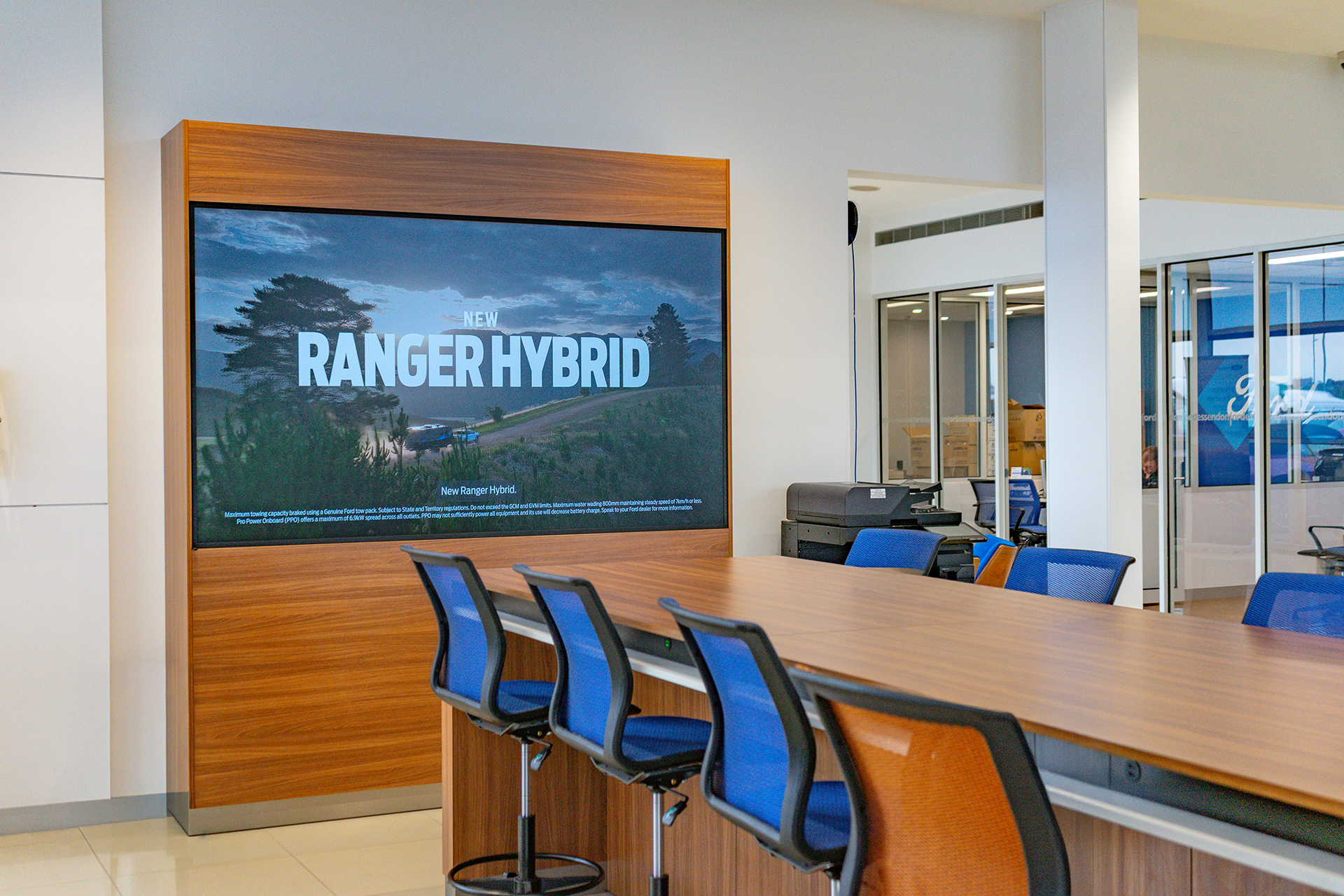
LED Screens for Automotive Dealerships gives dealership groups and showroom teams a more flexible way to communicate with customers, support vehicle launches and reinforce brand standards. Unlike static displays or printed POS, LED screens can carry motion content, update instantly and be managed centrally across a dealer network.
Automotive LED signage now serves two main purposes inside dealerships. The first is brand presentation: giving manufacturers and dealers a consistent way to show vehicle content, campaign material and brand films in the showroom. The second is operational: providing service areas, customer lounges and reception zones with useful, updateable information that helps move customers through the experience.
LED screen formats used in automotive dealerships
Automotive environments use different LED display formats depending on the zone and audience.
Indoor LED video walls are the most common choice for showroom feature areas. A large LED wall at the end of a vehicle display bay, behind a reception desk or at the entrance can carry brand films, model campaigns and event content. The absence of bezel lines makes LED walls feel more architectural than a grid of LCD screens.
Freestanding LED totems and posters are used in forecourts, vehicle handover areas and service waiting zones. They are flexible, movable and easy to incorporate without structural changes.
Outdoor LED signs suit forecourt-facing positions, roadside brand pylons and drive-through service lane indicators. These require weather-rated enclosures, high brightness and planned maintenance access.
Smaller LED panels and displays suit reception counters, service advisor desks and customer lounge areas where a full video wall is not appropriate but a standard LCD screen feels too domestic.
How onQ delivers LED screens for automotive dealerships
onQ works with dealer groups, manufacturer partners and individual dealerships to specify, install and support LED screens. The approach covers site assessment, hardware specification, installation, CMS configuration and ongoing support.
Site assessment reviews the showroom layout, sightlines, ambient light, power access and any brand standards set by the manufacturer. OEM brand guidelines often specify display dimensions, brightness levels and content formats, and onQ accounts for these during specification.
Hardware specification matches the display type, pixel pitch and brightness to the site and the brand environment. A prestige dealership has different requirements from a volume brand, and a rural dealership has different access and support needs from a metro flagship.
Installation is managed to minimise disruption to trading. onQ coordinates with the dealership, building services and any OEM or fitout requirements to install displays cleanly and on schedule.
CMS configuration connects each display to the onQ CMS. For dealer groups, this means a single platform for managing content across multiple locations. Individual dealerships can receive central content from the group while retaining the ability to add local messaging within approved zones.
Ongoing support includes remote monitoring, fault response and content assistance. Dealership LED screens are prominent in the customer environment, so fast fault detection and a clear response process are part of the operating model.
LED screens for multi-site dealer networks
Managing LED screens consistently across a dealer network requires more than a standard installation. Content needs to reflect current campaigns and model launches. Hardware needs to meet brand standards while being maintainable at each site. Support needs to be responsive without requiring dealer staff to troubleshoot screens themselves.
onQ supports dealer networks by establishing a hardware standard that works across different site sizes and layouts, configuring the CMS with a content structure that allows central control with local flexibility, and providing a support model that covers monitoring and response across the full network.
BMW Brighton and BMW Southbank are examples of showroom LED displays where consistent brand presentation and CMS-connected content management were key requirements. The same approach applies across any dealer group where multiple sites need to operate to a shared standard.
Specification considerations for dealership LED screens
| Factor | What to consider |
|---|---|
| OEM brand standards | Most manufacturer brands specify minimum display dimensions, brightness requirements and content format guidelines. Confirm these before specifying hardware. |
| Pixel pitch and viewing distance | Showroom LED walls are often viewed from 3-8 metres. Match pixel pitch to typical viewing distances rather than defaulting to the smallest available. |
| Ambient light | Automotive showrooms often have large glazed frontages and high ambient light. Specify brightness to match the showroom conditions. |
| Service access | Dealerships need LED displays to stay live. Front-service configurations and clear maintenance plans reduce downtime and service cost. |
| Content management | Dealer networks need to balance national OEM campaigns with local promotions and event content. Plan the CMS structure before installation. |
Frequently asked questions
Can onQ work with OEM brand requirements?
Yes. onQ has experience specifying LED screens to manufacturer brand standards across prestige and volume automotive brands. The hardware specification and installation process accounts for OEM guidelines from the start.
Can LED screens across multiple dealerships be managed from one platform?
Yes. The onQ CMS supports multi-site content management, allowing dealer groups to push national campaigns to all locations while allowing individual sites to carry local content within approved zones.
How long does an LED screen installation take at a dealership?
Timeline depends on display size, site conditions and any OEM fitout requirements. Most standard showroom LED wall installations take one to two days of on-site work, with additional time for planning and commissioning.
Enjoy our insights? Add onQ Digital as a preferred source on Google to see more of our content in your search results.


Ready to start a conversation?
Speak with our team about digital signage, CMS software, or retail media infrastructure. We’ll help you scope, design, and deploy the right solution.

Digital signage, CMS software, retail media platforms, analytics, and managed services across Australia.
© 2026 onQ Digital. All rights reserved. Website by D&n