
Programmatic Retail Media Explained for Physical Stores
Explore programmatic retail media in physical stores, covering DSPs, SSPs, RTB, PMPs, brand safety, and reporting to optimise in-store advertising effectiveness.
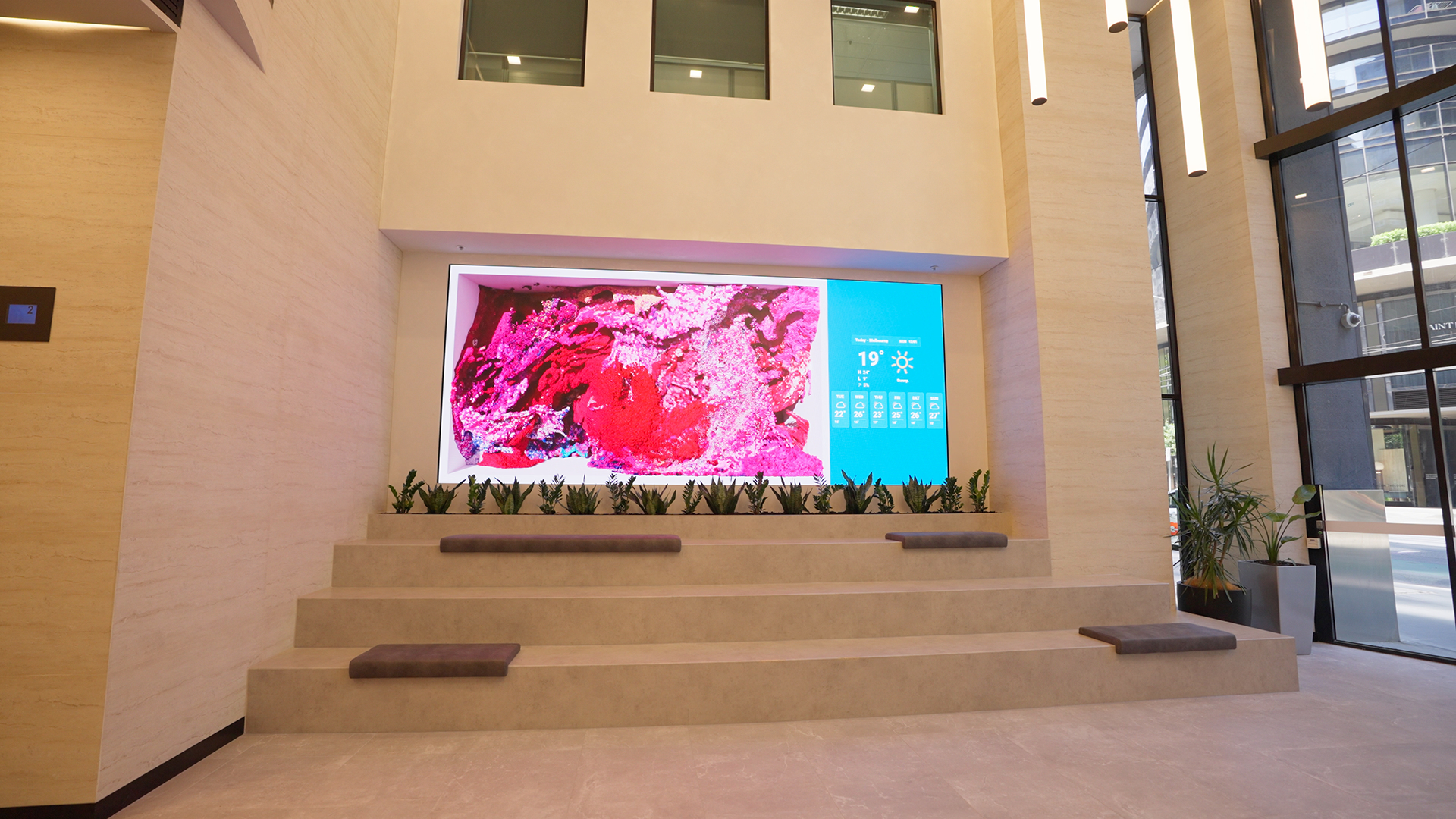
Understanding Programmatic Retail Media in Physical Stores
Definition: Programmatic retail media is the automated buying and selling of retailer-owned media inventory through connected advertising technology. For physical stores, it can connect in-store screens or other channels to controlled demand sources while preserving retailer rules for brand safety, category suitability, pacing, reporting and customer experience.
Programmatic retail media is transforming how brands engage consumers in physical stores. By leveraging automation and real-time data, retailers and advertisers can deliver relevant messages through digital signage and other in-store media channels, improving shopper experience and driving sales.
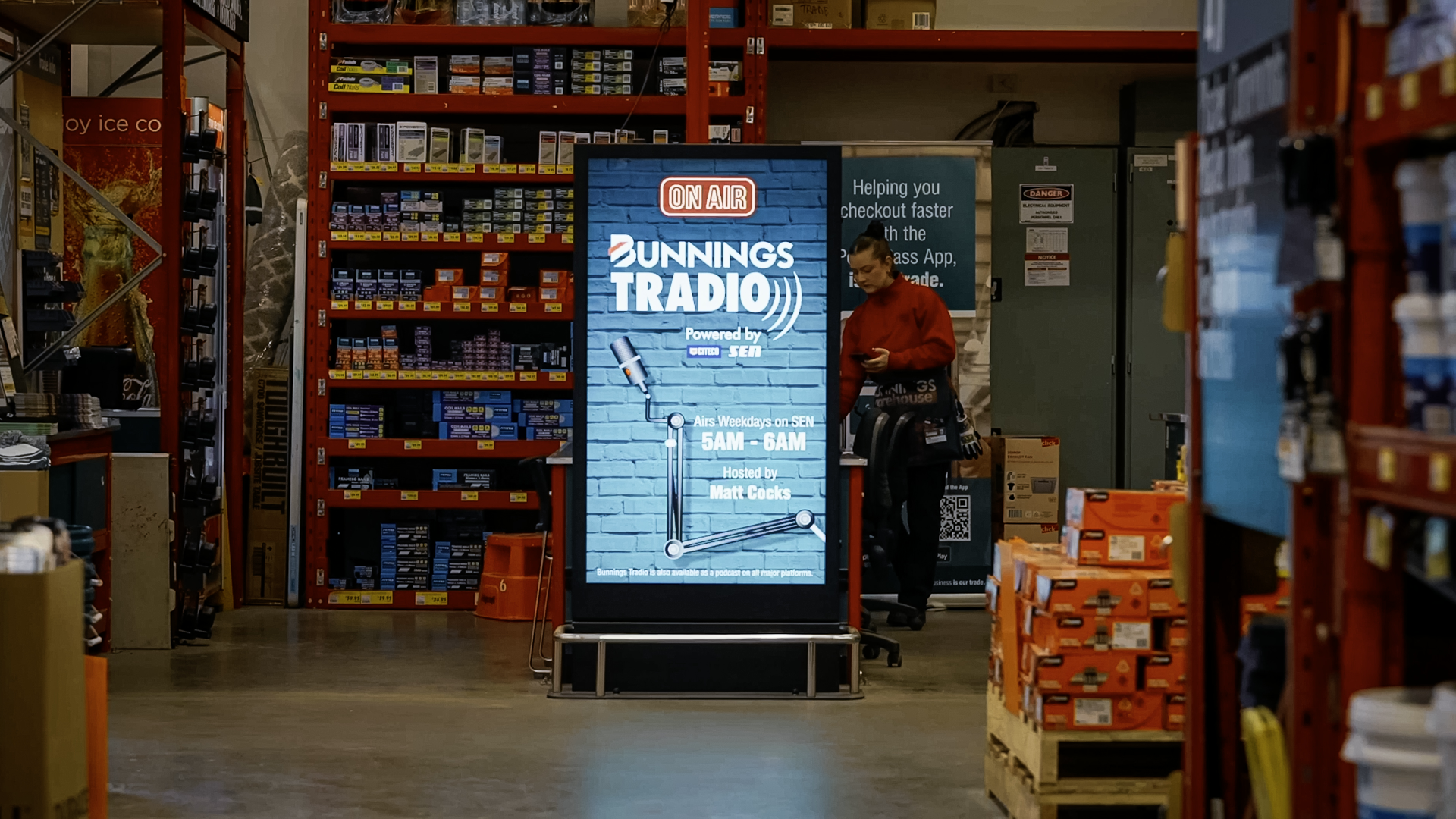
Key Components of Programmatic Retail Media
Demand-Side Platforms (DSPs)
DSPs are central to programmatic retail media, enabling advertisers to purchase digital ad inventory across multiple retail locations efficiently. In a physical store context, DSPs facilitate the targeting of specific audiences based on shopper behaviour, location, and time, automating bids for available ad space on digital signage or other retail media.
Advertisers can set campaign parameters such as budget, audience segments, and performance goals. The DSP then uses algorithms to optimise ad placements in real time, ensuring maximum return on investment.
Supply-Side Platforms (SSPs)
SSPs serve retailers by managing and selling their available advertising inventory programmatically. They connect retail media assets—such as digital signage networks—to multiple DSPs, increasing competition and yield for ad space.
Retailers benefit from SSPs by maximising revenue from their media assets while maintaining control over which ads appear in their stores, ensuring alignment with store brand values and shopper experience.
Real-Time Bidding (RTB)
RTB is the auction mechanism that occurs within programmatic retail media, where DSPs bid in real time for available ad impressions managed by SSPs. This process happens in milliseconds, allowing for dynamic pricing based on demand and audience value.
RTB enables efficient allocation of advertising space, ensuring that the highest-value ads are displayed to shoppers at the right moment, optimising both retailer revenue and advertiser impact.
Private Marketplaces (PMPs)
PMPs are invitation-only programmatic marketplaces where premium retail media inventory is offered to select advertisers. These marketplaces provide increased transparency, brand safety, and often better pricing terms compared to open auctions.
Retailers use PMPs to maintain tighter control over the quality and relevance of ads displayed in their stores, while advertisers gain access to exclusive inventory and enhanced targeting capabilities.

Brand Safety in Programmatic Retail Media
Maintaining brand safety is paramount in physical retail environments. Retailers and advertisers must ensure that ads displayed on digital signage networks uphold brand values and do not conflict with the store environment or customer expectations.
Programmatic platforms incorporate brand safety measures such as content verification, placement controls, and blacklists to prevent inappropriate or competing ads from appearing. This protects both the retailer’s reputation and the advertiser’s brand integrity.

Direct vs Programmatic Retail Media Buying
Direct buying involves advertisers negotiating and purchasing ad space directly from retailers, often resulting in fixed pricing and manual campaign management. While direct deals provide certainty over placements, they lack the flexibility and data-driven optimisation that programmatic offers.
Programmatic retail media buying automates the process, enabling dynamic bidding, audience targeting, and real-time optimisation. This results in more efficient campaigns that can adapt to shopper behaviour and store conditions, delivering improved outcomes.
| Aspect | Direct Buying | Programmatic Buying |
|---|---|---|
| Pricing | Fixed | Dynamic, auction-based |
| Targeting | Limited | Advanced, data-driven |
| Flexibility | Low | High |
| Reporting | Basic | Detailed, real-time |
| Automation | Manual | Automated |
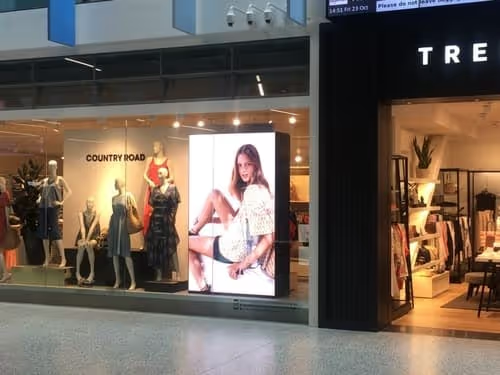
Reporting and Analytics in Programmatic Retail Media
Effective reporting is essential for measuring campaign performance and optimising future efforts. Programmatic retail media platforms provide detailed analytics on impressions, engagement, audience demographics, and conversion metrics.
Retailers using onQ CMS can integrate digital signage software with programmatic platforms to access comprehensive reporting dashboards. This integration enables seamless monitoring of campaign delivery across multiple store locations and digital assets.
Data insights facilitate informed decision-making, allowing advertisers to adjust targeting, creative content, and scheduling for maximum impact.
| Metric | Description | Benefit |
|---|---|---|
| Impressions | Number of times an ad is displayed | Measures reach |
| Engagement Rate | Percentage of viewers interacting with the ad | Indicates ad relevance |
| Conversion Rate | Shoppers taking desired action post-ad | Assesses campaign effectiveness |
| Audience Demographics | Data on viewer age, gender, etc. | Enables precise targeting |
Integrating Programmatic Retail Media with Digital Signage
Digital signage plays a crucial role in programmatic retail media by providing the physical display infrastructure to deliver targeted ads. onQ Digital Group’s expertise in digital signage software and hardware integration supports seamless programmatic campaign execution.
Retailers can leverage indoor LED video walls, outdoor large format LED displays, and other digital assets to reach shoppers effectively. The integration of programmatic platforms with digital signage networks enables dynamic content updates based on real-time data, enhancing shopper engagement.
Reporting expectations for automated demand
Programmatic buyers still need reporting that reflects the physical nature of the channel. A retailer should be able to show where the campaign was eligible to run, which screens delivered playback, what timeframes were covered and whether any exclusions or operational interruptions applied. This helps buyers understand the difference between in-store media and standard web inventory.
For private marketplace activity, reporting should be even clearer. The buyer may accept more controlled access and negotiated pricing because the inventory is premium. In return, the retailer should provide delivery evidence, screen context and a consistent explanation of how impressions or audience opportunity were estimated.
Retailers should also decide how much inventory is genuinely available for automated buying. Some screens may be reserved for house content, safety messages or direct supplier packages. Others may be suitable for controlled programmatic access during specific dayparts. Defining these rules before launch helps the retailer protect premium placements while still creating scalable demand opportunities.
Frequently Asked Questions
What is programmatic retail media?
Programmatic retail media is the automated buying and selling of advertising space within physical retail environments, using data-driven technology to target and optimise ads in real time.
How do DSPs and SSPs work together?
DSPs allow advertisers to buy ad space programmatically, while SSPs help retailers manage and sell their inventory. Together, they facilitate real-time bidding and ad delivery in retail media networks.
What advantages does programmatic buying offer over direct buying?
Programmatic buying offers greater targeting precision, automation, real-time optimisation, and detailed reporting, making campaigns more efficient and effective compared to direct buying.
How is brand safety maintained in programmatic retail media?
Platforms use content verification, placement controls, and blacklists to ensure ads align with brand values and avoid inappropriate or conflicting content in retail environments.
Can programmatic retail media be used with existing digital signage?
Yes, programmatic platforms can integrate with existing digital signage software and hardware, enabling dynamic ad delivery across various display types in stores.
What reporting capabilities are available?
Programmatic retail media offers detailed metrics including impressions, engagement rates, conversions, and audience demographics, often accessible via integrated dashboards.
Is programmatic retail media suitable for all store types?
While highly effective in many retail settings, suitability depends on factors like store size, foot traffic, and existing digital infrastructure.
How does onQ CMS support programmatic retail media?
onQ CMS provides robust digital signage software that integrates with programmatic platforms, enabling centralised management, scheduling, and reporting of in-store digital campaigns.
What has to be true before programmatic makes sense
Programmatic retail media should not be the first step for every physical network. Before introducing automated demand, the retailer needs stable inventory definitions, reliable playback, screen monitoring, content governance and reporting that can withstand advertiser scrutiny. Without those foundations, programmatic demand may simply expose weaknesses in the network faster than direct sales would.
The CMS and delivery layer remain central. Even when campaign demand arrives through programmatic pipes, the physical screen network still needs a system to receive, schedule, prioritise and verify content. onQ CMS capabilities such as screen grouping, scheduling, playlist control and proof-of-play provide the operating foundation that helps an in-store network behave like a media channel rather than a collection of disconnected displays.
How to think about direct and programmatic together
Direct sales and programmatic retail media are not opposites. Direct packages often suit strategic suppliers, seasonal campaigns, category sponsorships and high-touch retail partnerships. Programmatic can help with broader demand, controlled access, private marketplace deals and more automated campaign execution. Many retailers will ultimately use a hybrid model rather than choosing only one route.
The sequence matters. Direct selling helps a retailer learn which screen zones are valuable, which categories perform, and what reporting buyers expect. Programmatic can then extend that demand model, but only if the retailer has clear floor prices, exclusion rules, creative standards and reporting definitions.
Physical store constraints
Unlike web inventory, physical screens have fixed locations, trading hours, dwell patterns and operational roles. A screen near a checkout has a different context from a large LED wall in a food court or an aisle-end display. Programmatic retail media must respect those differences. The platform connected to /digital-signage-software should allow the retailer to protect premium inventory, restrict unsuitable categories and maintain control over the in-store experience.
Enjoy our insights? Add onQ Digital as a preferred source on Google to see more of our content in your search results.



Ready to start a conversation?
Speak with our team about digital signage, CMS software, or retail media infrastructure. We’ll help you scope, design, and deploy the right solution.

Digital signage, CMS software, retail media platforms, analytics, and managed services across Australia.
© 2026 onQ Digital. All rights reserved. Website by D&n