
LED Screen Sizes and Configurations for Retail, Corporate and Outdoor
Learn how to plan LED screen sizes and configurations for retail, corporate and outdoor environments based on viewing distance and content needs.

LED screen sizes and configurations
LED screens are available in a wide range of sizes and configurations. Unlike LCD displays, which are limited to standard panel dimensions, LED screens can be built to almost any width, height or aspect ratio. This flexibility makes LED suitable for spaces where standard screen sizes do not fit the architecture.
This page covers LED screen size options by format, how pixel pitch affects the right viewing distance, and the configuration choices that matter most for retail, corporate and outdoor environments.
Indoor LED screen sizes
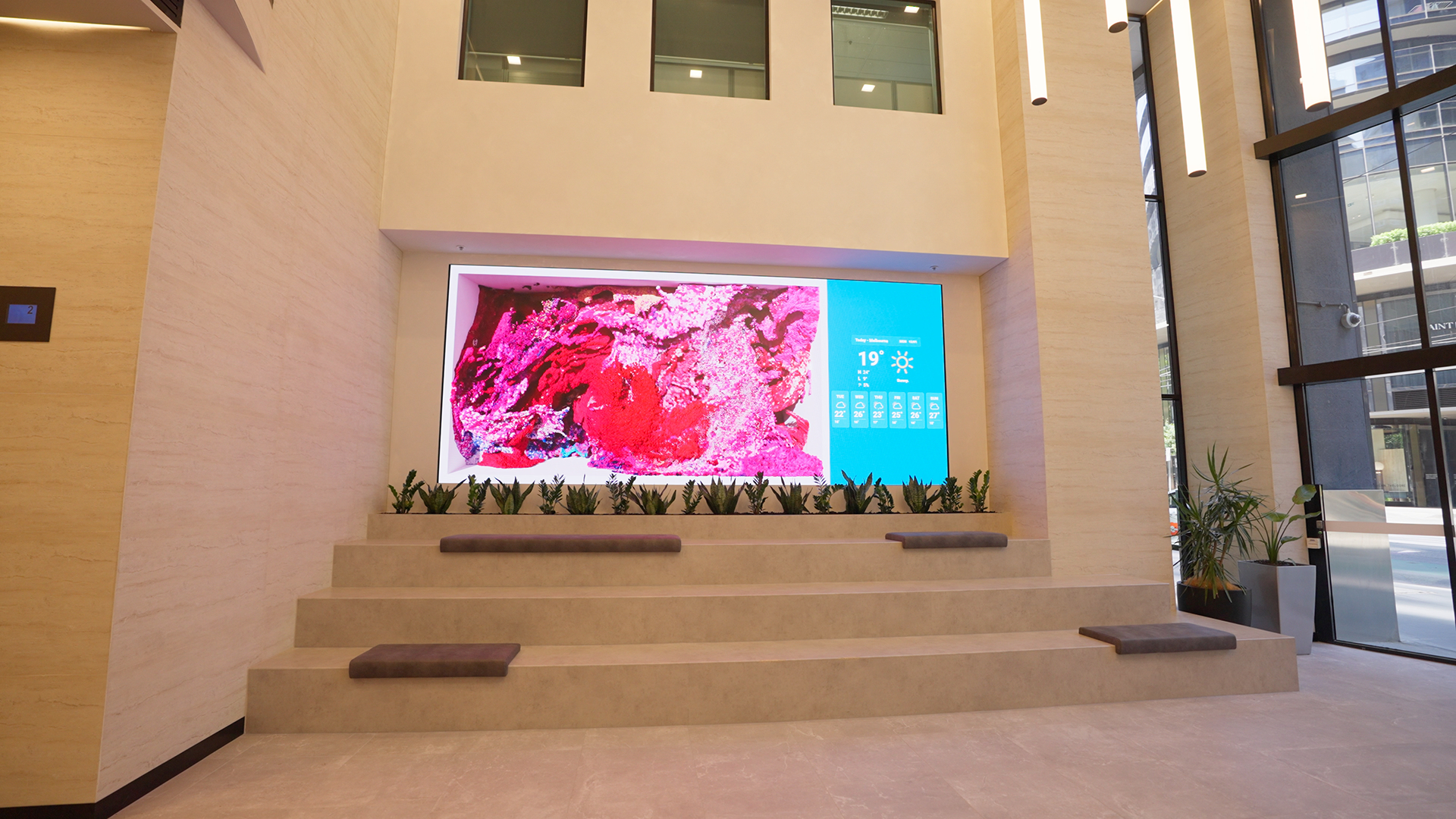
Indoor LED video walls are built from modular cabinets, which means the total display size is determined by how many cabinets are assembled. Common indoor cabinet sizes are 500mm x 500mm or 600mm x 337.5mm, and walls are built by stacking cabinets in rows and columns.
This approach means an indoor LED wall can be almost any size, from a small feature display of 1.5m x 1m to a large lobby wall of 6m x 3m or beyond. The final dimensions are constrained by the wall space, structural load and power available, rather than by fixed panel sizes as with LCD.
Common indoor LED screen configurations for retail and corporate environments include 16:9 landscape (matching standard video content), wide ultrawide formats for reception walls and brand moments, portrait configurations for narrow walls or column-wrapped displays, and custom aspect ratios to match specific joinery or architectural features.
Pixel pitch and viewing distance
| Pixel pitch | Recommended minimum viewing distance | Typical application |
|---|---|---|
| P1.2 to P1.5 | 1.5 to 2 metres | Close-range retail, luxury display, reception counters. |
| P1.8 to P2.0 | 2 to 3 metres | Retail flagship walls, corporate lobbies viewed at medium range. |
| P2.5 to P3.0 | 3 to 4 metres | General retail feature walls, showroom displays, food court screens. |
| P3.9 to P4.0 | 4 to 6 metres | Large format retail walls, event LED, venue features. |
| P6 to P8 | 6 to 10 metres | Outdoor-adjacent, large atriums, stadium or arena environments. |
| P10 and above | 10 metres and beyond | Outdoor billboards, road-facing signs, large venue perimeter displays. |
Outdoor LED screen sizes and configurations
Outdoor LED screens are built to larger scales because they are viewed from greater distances. A roadside LED billboard may be 6m x 3m or larger, while an outdoor venue sign may be a narrower 2m x 4m portrait format. Outdoor LED uses larger pixel pitches because fine detail is not legible at long viewing distances.
Outdoor LED screens need weather-rated enclosures, high-brightness panels and structural mounting that meets wind and load requirements. The physical size and weight of outdoor LED cabinets means that structural engineering and installation planning are more involved than for indoor displays.
Freestanding LED poster sizes
Freestanding LED posters are available in standard sizes, typically around 0.75m x 2.0m in portrait format. They are suitable for retail aisles, hospitality entrances and exhibition environments where a movable display is needed. Some formats are double-sided, allowing content to be viewed from both directions in a corridor or open-floor environment.
Frequently asked questions
What is the most common indoor LED screen size for retail?
Retail LED walls typically range from 2m x 1.5m for smaller feature displays to 4m x 2.5m or larger for flagship walls. The right size depends on the wall space, viewing distance and content format.
Can LED screens be built to custom sizes?
Yes. LED video walls are assembled from modular cabinets and can be built to almost any width, height or aspect ratio. Custom configurations are common for architectural installations where standard aspect ratios do not fit the space.
What pixel pitch should I specify for a retail LED wall?
For a retail wall viewed at 3 to 5 metres, a pixel pitch of P2.5 to P3.9 is usually appropriate. For closer viewing at 1.5 to 2 metres, P1.2 to P1.8 gives better resolution. onQ reviews the specific viewing distances during site assessment before specifying pixel pitch.
Enjoy our insights? Add onQ Digital as a preferred source on Google to see more of our content in your search results.


Ready to start a conversation?
Speak with our team about digital signage, CMS software, or retail media infrastructure. We’ll help you scope, design, and deploy the right solution.

Digital signage, CMS software, retail media platforms, analytics, and managed services across Australia.
© 2026 onQ Digital. All rights reserved. Website by D&n