
Retail Media Network vs Retail Media Platform vs Retail Media CMS
Explore the distinctions between retail media networks, platforms, and retail media CMS. Understand how terminology impacts strategy and discover onQ Digital Group’s integrated approach.

Understanding Retail Media: Network, Platform, and CMS
Definition: A retail media CMS is the content and campaign control layer that manages creative assets, playlists, screen groups, approvals, scheduling and proof-of-play for retail media activity. It differs from a retail media network, which is the commercial channel, and from a platform, which connects CMS, inventory, measurement and sales workflows.
In the evolving landscape of retail technology, terms such as retail media network, retail media platform, and retail media CMS are often used interchangeably. However, each has distinct meanings and implications for retailers, advertisers, and technology providers. This article clarifies these terms and explores their roles within the retail digital signage ecosystem, highlighting how onQ Digital Group’s integrated solutions support effective retail media management.

Key Terminology and Why It Matters
Retail media has become a critical component of modern retail strategies, leveraging digital signage and data-driven advertising to influence shopper behaviour at the point of sale. Understanding the distinctions between a retail media network, platform, and CMS is essential for selecting the right technology stack and maximising return on investment.
The terminology shapes expectations and guides decision-making. For example, a retail media network implies a broader ecosystem of connected screens and advertising opportunities, while a retail media CMS focuses on the operational control of content delivery. Misunderstanding these differences can lead to misaligned strategies and underutilised technology.
Retail Media Network
A retail media network is a collection of digital screens and media assets distributed across multiple retail locations, often managed centrally to deliver consistent advertising and promotional content. Networks enable advertisers to reach shoppers at scale within a retail environment.
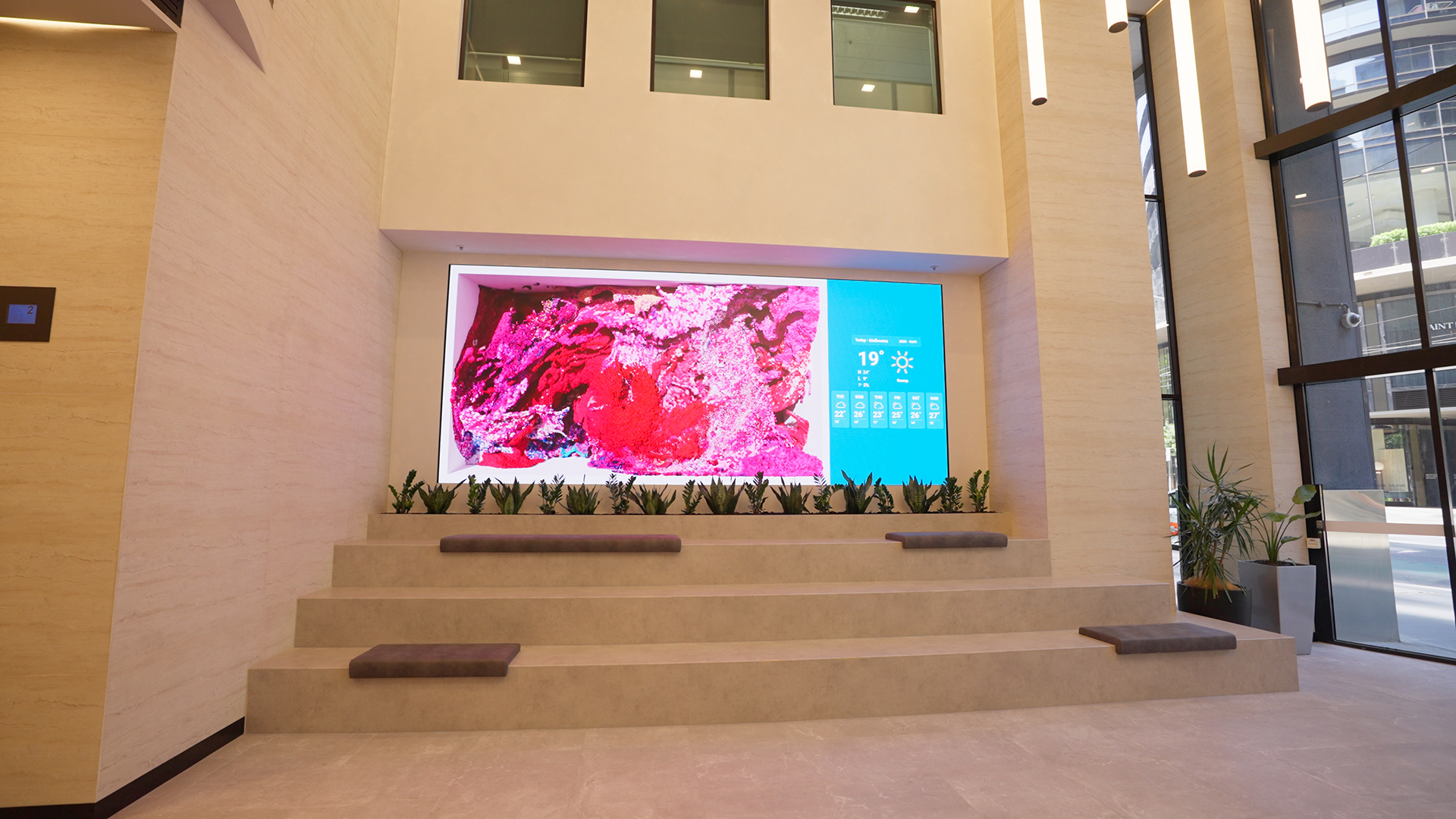
For example, the David Jones Chatswood digital signage network managed by onQ Digital Group is a retail media network that connects multiple digital displays within the store to promote products, campaigns, and brand messaging effectively.
Retail Media Platform
The retail media platform is the software infrastructure that supports the operation of retail media networks. It includes tools for media buying, audience targeting, analytics, and campaign management. Platforms enable advertisers and retailers to plan, execute, and measure retail media campaigns.
Retail Media CMS
The retail media CMS is the specialised content management system designed to create, schedule, and distribute digital content across retail media networks. It focuses on content authoring, playlist management, and device-level control, ensuring that the right content is displayed at the right time and place.
onQ Digital Group’s CMS capabilities integrate seamlessly with digital signage hardware and software, providing retailers with granular control over content delivery while supporting dynamic media and real-time updates.

Comparison Table: Retail Media Network vs Platform vs CMS
| Aspect | Retail Media Network | Retail Media Platform | Retail Media CMS |
|---|---|---|---|
| Definition | Physical and digital infrastructure of screens and media assets across retail locations | Software tools for media buying, targeting, and analytics | Content management system for scheduling and delivering digital content |
| Primary Function | Deliver advertising at scale within retail environments | Manage campaigns, audience data, and performance metrics | Create, schedule, and control content playback on devices |
| Users | Retailers, advertisers, network operators | Advertisers, media planners, retail marketing teams | Content managers, digital signage operators |
| Key Features | Screen network, hardware, connectivity | Campaign management, targeting, reporting | Content authoring, playlist management, device control |
| Example | David Jones Chatswood digital signage network | Programmatic retail media buying platform | onQ Digital Group’s retail media CMS |
Examples in Practice
To illustrate these concepts, consider the following examples from onQ Digital Group’s portfolio.
David Jones Chatswood Digital Signage Network
This retail media network consists of multiple digital screens strategically positioned throughout the store. The network delivers curated content managed through an integrated retail media CMS, enabling timely promotions and dynamic messaging tailored to shopper behaviour.
Country Road Retail Digital Signage Installation
The Country Road installation demonstrates the use of onQ’s retail media CMS to manage content across in-store digital displays, ensuring consistent brand messaging and seamless content updates aligned with marketing campaigns.
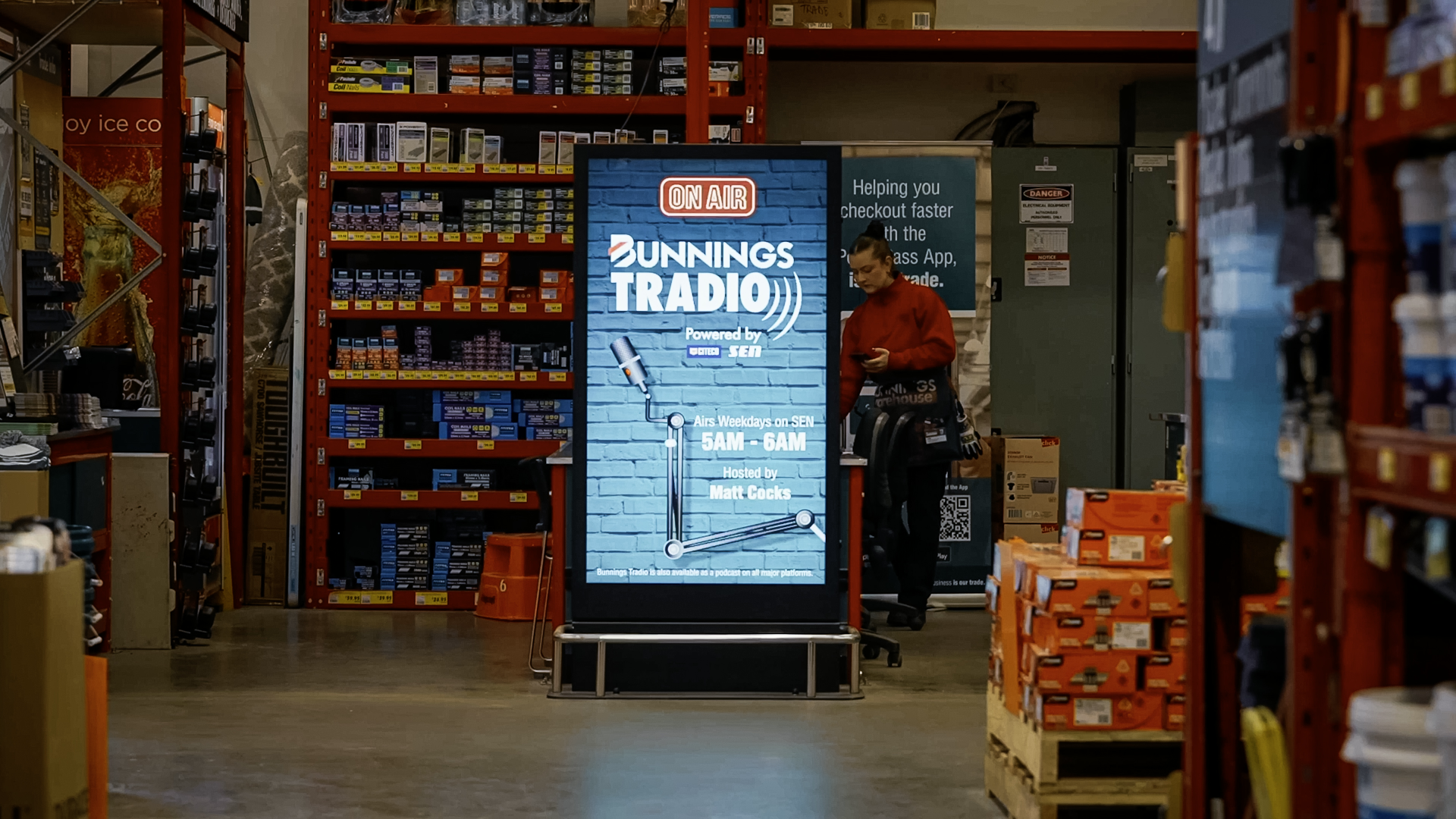
Bunnings Retail Media and Digital Signage Network
Bunnings’ extensive retail media network utilises a retail media platform integrated with onQ’s CMS to coordinate content delivery across hundreds of locations, facilitating targeted advertising and operational efficiency.
How the onQ Stack Supports Retail Media CMS
onQ Digital Group’s technology stack is designed to support the full spectrum of retail media needs, from hardware installation to content management and campaign execution. The retail media CMS component enables retailers to:
Schedule and update content remotely across multiple sites, integrate with digital signage software for seamless playback, and manage device health and performance. This integration with onQ’s digital signage software, detailed at /digital-signage-software and /services/digital-signage-software, ensures a reliable and scalable solution.
The CMS supports dynamic content capabilities such as real-time pricing updates, promotional overlays, and audience-triggered messaging, enhancing shopper engagement and advertising effectiveness.
Comparison Table: onQ Retail Media CMS Features vs Typical CMS
| Feature | onQ Retail Media CMS | Typical CMS |
|---|---|---|
| Content Scheduling | Advanced scheduling with location and time targeting | Basic scheduling, often limited to web content |
| Device Management | Integrated device health monitoring and control | Not usually included |
| Dynamic Content Support | Real-time content updates based on data feeds | Static or manual updates |
| Integration | Seamless integration with digital signage hardware and software | Limited or no integration with signage systems |
| Analytics | Content performance and playback reporting | General website analytics |
Frequently Asked Questions
What is the main difference between a retail media network and a retail media platform?
A retail media network refers to the physical and digital infrastructure of screens and media assets across retail locations, while a retail media platform is the software that manages campaign planning, audience targeting, and analytics.
How does a retail media CMS improve content management?
A retail media CMS provides specialised tools for creating, scheduling, and delivering digital content tailored for retail environments, enabling precise control over what is displayed and when.
Can onQ Digital Group’s CMS integrate with existing digital signage systems?
Yes, onQ’s retail media CMS is designed to integrate seamlessly with various digital signage hardware and software, ensuring smooth content delivery and device management.
Why is terminology important in retail media?
Clear terminology helps retailers and advertisers select appropriate technologies and align strategies effectively, avoiding confusion and optimising investment.
Is a retail media platform necessary to operate a retail media network?
While a retail media network can exist without a platform, using a platform enhances campaign management, targeting, and measurement, improving overall effectiveness.
What types of content can be managed with a retail media CMS?
Retail media CMS can manage a wide range of content including promotional videos, dynamic pricing, product information, and real-time updates tailored to shopper behaviour.
How does onQ support multi-location retail media management?
onQ’s CMS enables centralised content scheduling and remote updates across multiple retail sites, ensuring consistent messaging and efficient operations.
Can retail media CMS handle dynamic and real-time content changes?
Yes, retail media CMS platforms like onQ’s support dynamic content capabilities, allowing real-time updates triggered by data feeds or audience interactions.
How the terminology changes decisions
The distinction between network, platform and CMS changes how a retailer scopes the project, allocates budget and measures success. A network decision is usually commercial: which screens, stores, suppliers and campaign packages can become a media product. A platform decision is operational and technical: which systems connect the inventory, content workflow, measurement layer and sales process. A CMS decision is more focused: how the retailer will control what appears on the screen estate every day.
These terms are often used interchangeably, but that creates practical risk. If a retailer buys only a CMS while expecting a complete media sales engine, it may still need to define rate cards, inventory hierarchy, reporting templates and governance rules. If it focuses only on the commercial network without a reliable CMS, the sales team may promise campaigns that store operations cannot deliver consistently.
Where onQ CMS fits in the stack
onQ CMS fits into the content and delivery control layer. It helps teams organise screens by location, group displays into campaign zones, schedule creative, manage content approval, and report whether planned content played. In a retail media model, those capabilities support the bridge between the retailer’s physical screen estate and the advertiser’s need for accountable media delivery.
The broader retail media stack still needs commercial packaging and measurement discipline. A retailer may use /digital-signage-software to understand the retail media platform layer, while /services/digital-signage-software gives context on the CMS-led screen network foundation. The best outcome is not a naming exercise; it is a clear operating model where each layer has a defined role.
Questions to resolve before procurement
Before choosing technology, retailers should decide who owns the media product, who approves campaign content, what reporting advertisers receive, and how operational content competes with paid content. These answers determine whether the immediate priority is a CMS upgrade, a platform integration, a measurement layer, or the commercial launch of a retail media network.
Enjoy our insights? Add onQ Digital as a preferred source on Google to see more of our content in your search results.



Ready to start a conversation?
Speak with our team about digital signage, CMS software, or retail media infrastructure. We’ll help you scope, design, and deploy the right solution.

Digital signage, CMS software, retail media platforms, analytics, and managed services across Australia.
© 2026 onQ Digital. All rights reserved. Website by D&n