
Retail Media Monetisation Models for Australian Retailers
Explore key retail media monetisation models suited to Australian retailers, including direct, programmatic, hybrid approaches, rate cards, campaign packages, and governance essentials.

Understanding Retail Media Monetisation in Australia
Definition: Retail media monetisation is the commercial model a retailer uses to turn owned channels into advertising revenue. In-store monetisation can include direct supplier packages, category sponsorships, programmatic demand, hybrid trading, seasonal campaigns and data-informed rate cards, all governed by rules that protect the shopper experience and retailer brand.
Australian retailers are increasingly leveraging retail media monetisation to diversify revenue streams and enhance shopper engagement. This article explores the predominant monetisation models, including direct, programmatic, and hybrid approaches, alongside practical insights into rate cards, campaign packages, and governance frameworks. The discussion also references onQ Digital Group’s CMS capabilities that support seamless management and optimisation of retail media campaigns.
Direct Retail Media Monetisation
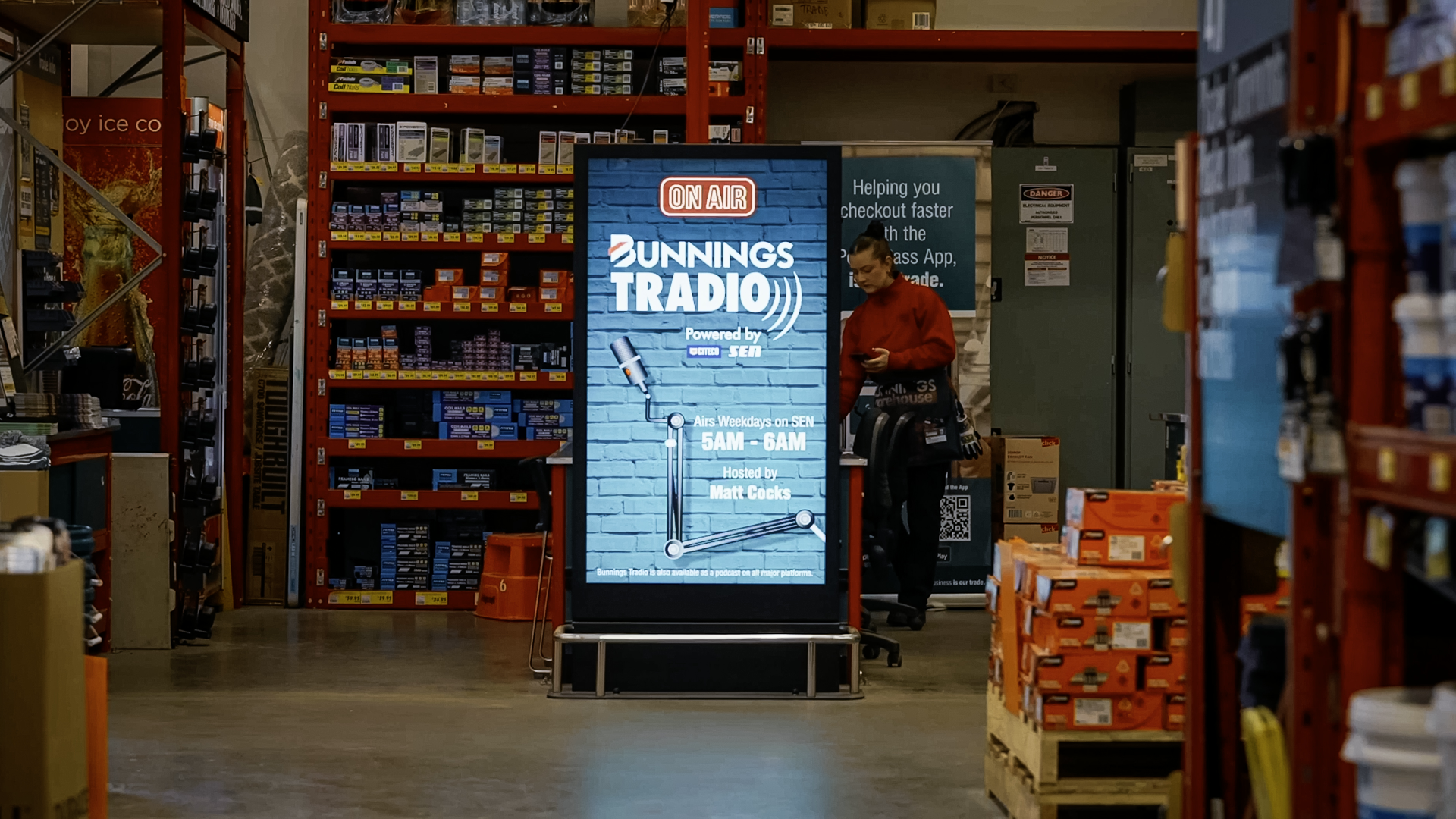
Direct retail media monetisation involves selling advertising space directly to brands or agencies. This traditional approach allows retailers to maintain control over inventory, pricing, and campaign scheduling. For Australian retailers with established brand relationships, direct sales offer the advantage of customised campaigns tailored to specific store formats or customer segments.
Direct models typically require dedicated sales teams and robust CRM systems to manage client interactions and contracts. onQ Digital Group’s CMS can facilitate this by streamlining campaign management, enabling retailers to track bookings, creative assets, and performance metrics efficiently.
Advantages and Challenges
Direct monetisation offers premium pricing opportunities and closer client collaboration. However, it can be resource-intensive and less scalable, especially for retailers with extensive networks or smaller teams.

Programmatic Retail Media Monetisation
Programmatic retail media monetisation leverages automated technology platforms to sell and deliver advertising inventory in real time. This model enables dynamic pricing based on demand and audience data, increasing efficiency and reach.
Australian retailers adopting programmatic solutions benefit from granular targeting capabilities, optimised campaign delivery, and reduced manual workload. onQ Digital Group’s CMS integrates with programmatic platforms to support real-time bidding and inventory management, ensuring seamless execution.
Considerations for Implementation
Programmatic requires investment in technology and data infrastructure. Retailers must ensure data privacy compliance and maintain transparency with advertisers regarding inventory quality and audience metrics.
Hybrid Monetisation Models
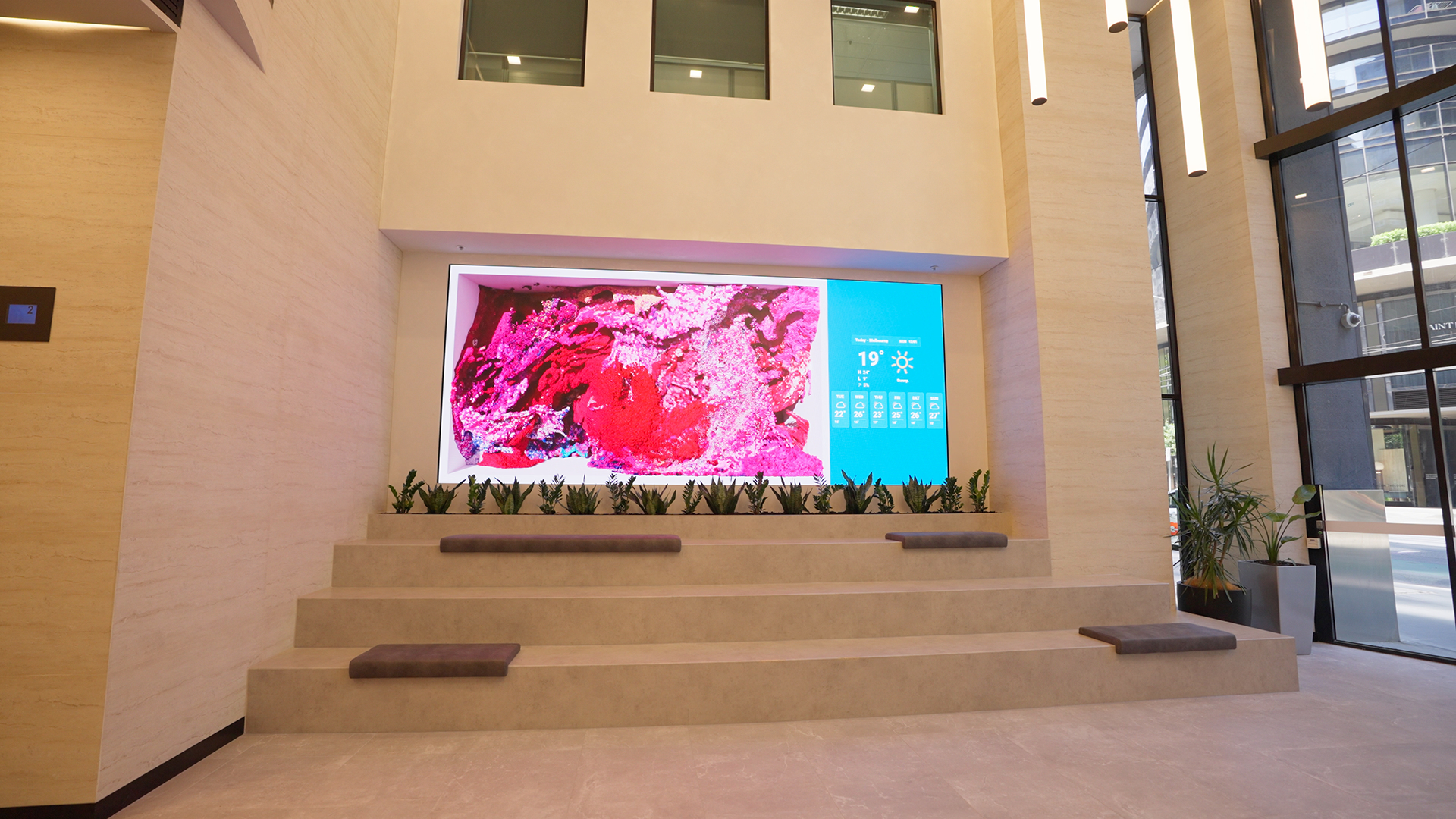
Hybrid models combine direct and programmatic approaches, allowing retailers to capitalise on the strengths of both. For example, premium inventory may be sold directly to key clients, while remnant or lower-demand slots are monetised programmatically.
This flexibility can maximise revenue and improve fill rates. onQ Digital Group’s CMS supports hybrid monetisation by enabling retailers to segment inventory and manage multiple sales channels concurrently.

Rate Cards and Pricing Strategies
Rate cards establish standard pricing for retail media inventory, typically based on factors such as location, screen size, audience reach, and campaign duration. Australian retailers should develop transparent and competitive rate cards that reflect market demand and operational costs.
Adjustments may be applied for peak periods, exclusivity, or creative complexity. A well-structured rate card simplifies negotiations and ensures consistency across sales teams.
| Inventory Type | Typical Pricing Basis | Factors Influencing Price |
|---|---|---|
| In-store digital signage | CPM (cost per mille) or fixed rate | Location, screen size, foot traffic |
| Online retail media | CPC (cost per click) or CPM | Audience targeting, engagement rates |
| LED video walls | Fixed rate per campaign | Duration, exclusivity, creative complexity |
Campaign Packages
Campaign packages bundle inventory and services to provide advertisers with comprehensive solutions. These may include a mix of digital signage placements, online ads, content production, and reporting.
Australian retailers can tailor packages to advertiser objectives, combining high-impact placements with targeted messaging. onQ Digital Group’s CMS enables easy assembly and management of campaign packages, tracking deliverables and performance metrics.
| Package Type | Components | Typical Use Case |
|---|---|---|
| Brand Awareness | Multiple digital screens, social media ads, video content | New product launches |
| Promotional | In-store signage, targeted online ads, time-limited offers | Seasonal sales |
| Cross-channel | Digital signage, e-commerce banners, email marketing | Multi-platform campaigns |
Governance and Compliance
Effective governance is crucial to ensure retail media monetisation complies with legal, ethical, and operational standards. Australian retailers must adhere to privacy laws, advertising standards, and contractual obligations.
Governance frameworks should cover data management, content approval processes, and performance reporting. onQ Digital Group’s CMS supports compliance by enabling audit trails, access controls, and automated content checks.
Starting small without limiting future growth
Australian retailers do not need to launch every monetisation model at once. A practical first step may be a small number of direct supplier packages across proven screen zones. Once the team understands delivery effort, buyer response and reporting requirements, the model can expand into more categories, seasonal packages or programmatic partnerships.
This staged approach reduces risk. It gives the retailer time to refine creative standards, approval workflows, rate card assumptions and campaign reporting. It also helps internal stakeholders see retail media as an operating model, not just a one-off advertising experiment layered onto existing screens.
The commercial model should also account for the internal cost of delivery. Creative checks, scheduling, reporting, support and account management all require time. A rate card that ignores operational cost may look attractive but fail to scale. Sustainable monetisation balances advertiser value, retailer margin and the practical effort required to run each campaign well.
For many Australian retailers, the most useful commercial starting point is a simple package menu with clear inclusions, exclusions and reporting promises. This gives suppliers confidence while allowing the retailer to learn which categories, formats and seasons create repeatable demand.
The model should remain simple enough for sales teams to explain and robust enough for operations teams to deliver. That balance is what turns a screen estate into a repeatable media business.
Frequently Asked Questions
What is retail media monetisation?
Retail media monetisation is the process by which retailers generate revenue by selling advertising opportunities on their owned media platforms, such as digital signage or online channels, to brands and partners.
How does programmatic retail media differ from direct sales?
Programmatic retail media uses automated platforms for real-time buying and selling of advertising inventory, while direct sales involve manual negotiation and contract management between retailers and advertisers.
Can Australian retailers use both direct and programmatic models?
Yes, many retailers adopt hybrid models combining direct sales for premium inventory with programmatic methods for remnant inventory to maximise revenue and efficiency.
What factors influence retail media pricing in Australia?
Pricing depends on inventory type, location, audience reach, campaign duration, and market demand, among other factors. Transparent rate cards help standardise pricing.
How do campaign packages benefit advertisers?
Campaign packages offer bundled media placements and services, providing advertisers with integrated solutions that enhance reach and impact across multiple channels.
What governance considerations are important for retail media?
Governance must ensure compliance with privacy regulations, advertising standards, and contractual terms, supported by robust data management and content approval processes.
How does onQ Digital Group’s CMS support retail media monetisation?
onQ’s CMS streamlines campaign management, integrates with programmatic platforms, facilitates hybrid sales models, and supports governance through audit trails and access controls.
Is retail media monetisation scalable for large Australian retailers?
Yes, with appropriate technology and governance frameworks, retail media monetisation can scale effectively across extensive store networks and digital platforms.
Turning screen networks into media products
Retail media monetisation works best when the retailer packages inventory in a way that buyers can understand. Instead of selling individual screens one by one, the retailer can create packages based on store groups, categories, shopper missions, dayparts or campaign objectives. This makes the product easier to price, sell, deliver and report.
The packaging should reflect the real-world value of the environment. A high-dwell waiting area, a premium entry LED screen and a checkout display do not have the same role. Rate cards should recognise differences in visibility, dwell time, audience context, creative format and scarcity. Over time, proof-of-play and analytics can help refine those rates with evidence rather than assumptions.
Governance as a revenue enabler
Governance is sometimes seen as a restriction, but it is also what makes retail media monetisation sustainable. Clear rules for category conflicts, private-label protection, creative standards, emergency overrides and local exclusions allow commercial teams to sell with confidence. They also protect the customer experience, which is the asset that makes retail media valuable in the first place.
onQ CMS capabilities support this governance by giving retailers control over which campaigns run on which screens, when content appears, and how delivery is confirmed. The CMS does not replace the commercial model, but it gives the model an operational foundation.
What to measure for commercial growth
Retailers should track more than revenue. They should monitor fill rate, campaign renewal, category demand, proof-of-play completion, screen uptime, creative compliance and operational effort. These metrics show whether the model is scalable. A campaign that earns revenue but requires excessive manual work may not be profitable at scale.
The practical path is to start with a manageable set of packages, prove delivery through /digital-signage-software workflows, and then expand into more advanced direct, programmatic or hybrid models once the operating rhythm is stable.
Enjoy our insights? Add onQ Digital as a preferred source on Google to see more of our content in your search results.


Ready to start a conversation?
Speak with our team about digital signage, CMS software, or retail media infrastructure. We’ll help you scope, design, and deploy the right solution.

Digital signage, CMS software, retail media platforms, analytics, and managed services across Australia.
© 2026 onQ Digital. All rights reserved. Website by D&n