
Retail Media Measurement: Proof-of-Play, Impressions and Attention
Explore retail media measurement essentials including proof-of-play, impressions, and attention. Understand measurement hierarchy, IAB standards, dwell time, privacy, and analytics integration.

Understanding Retail Media Measurement
Definition: Retail media measurement is the framework used to prove that campaigns were delivered, estimate the audience opportunity, and assess the quality of exposure. In-store measurement usually combines proof-of-play, screen uptime, impressions modelling, dwell time, attention signals and privacy-safe analytics to help retailers and advertisers understand campaign value.
Retail media measurement is a critical aspect of modern retail marketing, especially as digital signage and retail media networks become more prevalent. Accurate measurement enables retailers and advertisers to assess the reach and engagement of their campaigns, optimise content delivery, and provide transparent reporting.
Measurement Hierarchy in Retail Media
The measurement hierarchy organises the different levels of retail media metrics, from the most basic to the most advanced. This hierarchy helps stakeholders understand the value and reliability of each metric when evaluating campaign performance.
Proof-of-Play
Proof-of-play is the foundational level of retail media measurement. It confirms that the intended content was displayed on the digital signage at the scheduled time and location. Proof-of-play data is typically collected through content management systems such as onQ's digital signage software, which logs playback events and timestamps.
This metric is essential for verifying contractual obligations and serves as the baseline for further measurement. However, proof-of-play alone does not indicate if the audience actually viewed or engaged with the content.
Impressions
Impressions estimate the number of times an advertisement was potentially seen by an audience. This metric is derived from factors such as foot traffic, screen visibility, and dwell time. Impressions move beyond proof-of-play by incorporating audience data, often collected via sensors or third-party analytics.
Impression data helps advertisers understand the scale of their campaign exposure within retail environments. However, impressions do not guarantee attention or engagement, merely the opportunity for the audience to view the content.
Attention and Engagement
Attention measurement captures the quality of audience engagement with retail media content. This involves assessing whether viewers actually looked at the screen, for how long, and their level of focus. Technologies such as eye-tracking sensors and dwell time analytics enable this advanced measurement.
Attention metrics provide deeper insights into campaign effectiveness by distinguishing passive exposure from active engagement. This data supports optimisation strategies and justifies investment in retail media campaigns.
IAB Concepts and Standards in Retail Media Measurement
The Interactive Advertising Bureau (IAB) provides industry guidelines and standards that shape retail media measurement practices. These standards ensure consistency, transparency, and comparability across campaigns and platforms.
The IAB's Digital Out-of-Home (DOOH) Measurement Guidelines outline definitions for proof-of-play, impressions, and audience measurement methodologies. They emphasise the importance of third-party verification and privacy compliance.
Adhering to IAB concepts helps retailers and advertisers maintain credibility and trust with stakeholders, while facilitating integration with broader digital marketing ecosystems.

Integrating Proof-of-Play, Dwell and Attention Metrics
Combining proof-of-play, dwell time, and attention data forms a comprehensive view of retail media campaign performance. Each metric contributes unique insights that support data-driven decision-making.
| Metric | Definition | Measurement Method | Insight Provided |
|---|---|---|---|
| Proof-of-Play | Verification content was displayed | Playback logs from CMS | Accountability and scheduling accuracy |
| Impressions | Estimated number of views | Foot traffic sensors, cameras | Potential audience reach |
| Attention | Active viewer engagement | Eye-tracking, dwell analytics | Quality of audience interaction |
Retailers can leverage platforms such as onQ's analytics services to collect, process, and interpret these metrics, enabling continuous optimisation of retail media networks.

Privacy Considerations in Retail Media Measurement
Privacy is a paramount concern in retail media measurement, particularly when collecting audience data. Compliance with Australian privacy laws and regulations, such as the Privacy Act 1988 and the Australian Privacy Principles (APPs), is mandatory.
Measurement technologies must ensure data is anonymised, aggregated, and used solely for the purpose of improving retail media effectiveness. Transparent communication with consumers about data collection practices fosters trust and mitigates privacy risks.
Retail Media Measurement in Practice: Case Examples
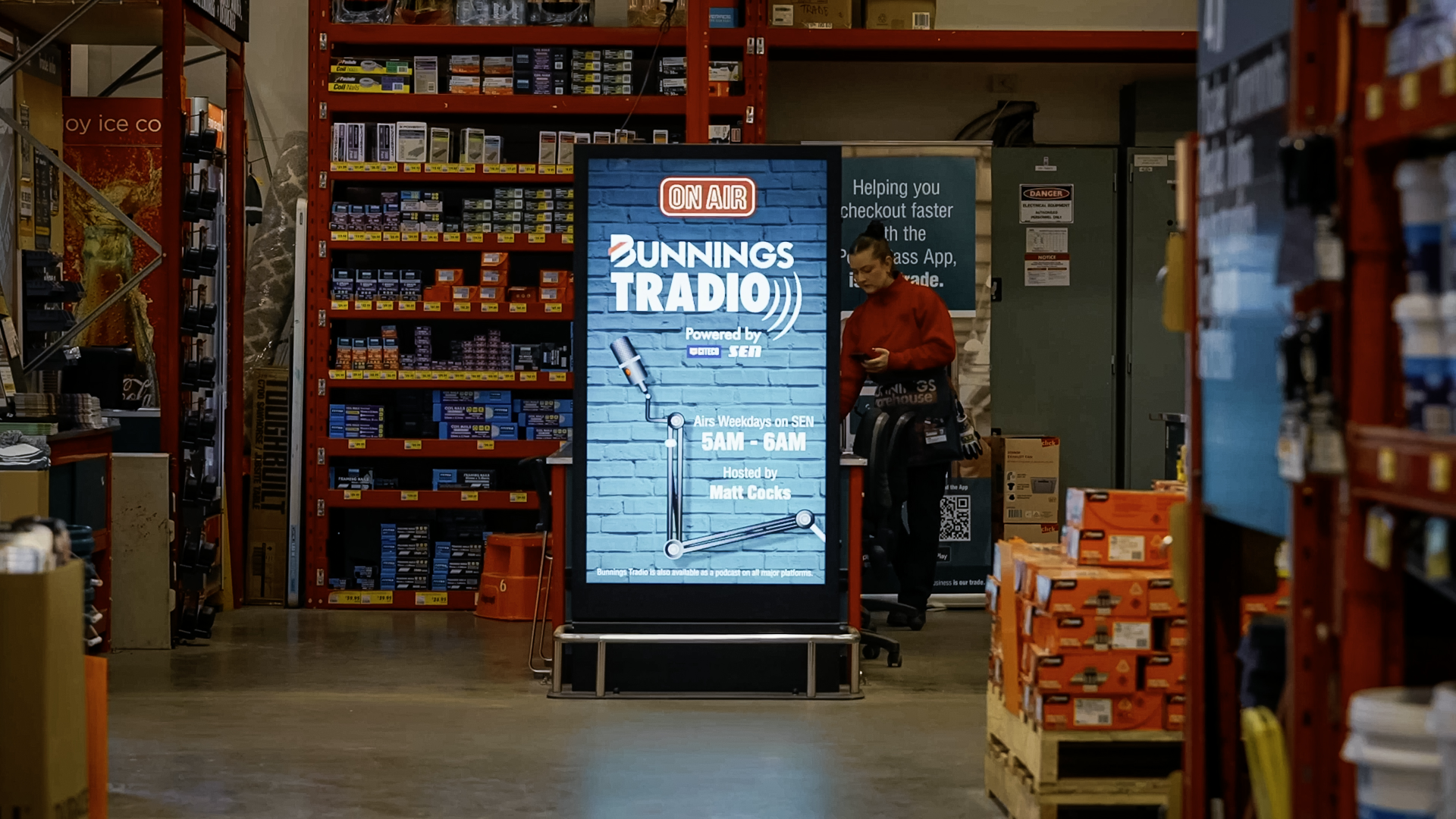
onQ Digital Group has implemented retail media measurement solutions across various Australian retail environments. For example, the Bunnings retail media and digital signage network utilises proof-of-play and impression data to optimise advertising schedules and content relevance.
Similarly, the David Jones Chatswood digital signage network integrates attention metrics to refine creative messaging and placement, enhancing shopper engagement.
| Retailer | Measurement Focus | Technology Used | Outcome |
|---|---|---|---|
| Bunnings | Proof-of-play, Impressions | CMS logs, Foot traffic sensors | Improved scheduling accuracy |
| David Jones Chatswood | Attention, Dwell Time | Eye-tracking sensors, Analytics platform | Enhanced audience engagement |
| Country Road | Proof-of-play, Privacy-compliant data | Secure CMS, Aggregated analytics | Trusted reporting and optimisation |
Using measurement to improve the network
Measurement should not only serve the advertiser report. It should also help the retailer improve the network over time. If certain screens show lower uptime, they may need maintenance, connectivity upgrades or a different support model. If some zones attract stronger dwell, they may deserve premium packaging or a different creative strategy.
Retail media measurement can also guide content planning. Shorter messages may suit fast-moving entry zones, while longer creative can work in waiting areas or service counters. When delivery data and audience context are reviewed together, the retailer can improve both commercial performance and customer experience.
The measurement model should be reviewed after every major campaign cycle. If advertisers repeatedly ask for a metric that is not available, the retailer can decide whether to add a new measurement source or clarify the report. If a metric creates confusion, it should be renamed, explained or removed. Measurement maturity is an operating discipline, not a one-time setup task.
A practical measurement roadmap should also identify what can be reported immediately and what requires future investment. Many retailers can begin with proof-of-play, uptime and location-based delivery summaries, then add stronger audience modelling or attention analytics once the network has stable operating data.
Frequently Asked Questions About Retail Media Measurement
What is proof-of-play in retail media?
Proof-of-play is the confirmation that a digital advertisement was displayed on screen as scheduled. It is the foundational metric that verifies content delivery but does not measure audience interaction.
How are impressions calculated in retail environments?
Impressions are estimated using foot traffic data, sensor counts, and visibility factors to approximate the number of potential viewers exposed to the content.
Why is attention measurement important?
Attention measurement distinguishes between passive exposure and active engagement, providing insights into how effectively content captures and holds audience interest.
How does privacy impact retail media measurement?
Privacy regulations require that audience data is collected ethically, anonymised, and used transparently to protect consumer rights and maintain trust.
Can retail media measurement influence campaign optimisation?
Yes, by analysing proof-of-play, impressions, and attention data, retailers can adjust content, scheduling, and placements to improve campaign effectiveness.
What role does onQ Digital Group play in retail media measurement?
onQ provides digital signage software and analytics services that support comprehensive retail media measurement, enabling data-driven decision-making.
Are IAB standards mandatory for retail media measurement?
While not legally mandatory, adhering to IAB standards is considered best practice for ensuring measurement consistency and credibility.
How is dwell time measured?
Dwell time is measured using sensors or cameras that detect how long a person remains within the viewing area of a digital display, indicating engagement duration.
Building a defensible measurement model
A defensible retail media measurement model should be clear enough for advertisers and practical enough for store operations. It begins with delivery evidence, because a campaign cannot generate value if it did not play. It then adds availability, audience opportunity and attention context. Each layer should be labelled honestly so buyers understand what is observed, what is modelled and what is inferred.
For example, proof-of-play is a delivery log, not a sales outcome. Estimated impressions are an audience opportunity metric, not a guarantee that every shopper saw the ad. Dwell and attention indicators add quality context, but they should be interpreted within the physical environment. This clarity protects trust and helps retail media teams avoid overstating what the network can prove.
Connecting measurement to CMS operations
onQ CMS supports the operational side of measurement by helping campaigns run according to schedule, by grouping screens into defined zones, and by supporting proof-of-play workflows. When this is paired with analytics from /services/analytics, retailers can build a more complete picture of delivery, audience context and campaign opportunity.
The retail media team should decide which reports are used for internal operations, which are shared with suppliers, and which become part of the commercial product. A store support dashboard may focus on device health and uptime, while an advertiser report may focus on delivery volume, locations, campaign dates and audience estimates.
Privacy and shopper trust
Measurement should be designed around privacy from the start. Retailers should avoid collecting more information than they need and should prefer aggregated, privacy-safe reporting where possible. The purpose is to understand media delivery and audience opportunity, not to create a surveillance experience. A transparent approach strengthens buyer confidence while protecting shopper trust across the /digital-signage-software retail media environment.
Enjoy our insights? Add onQ Digital as a preferred source on Google to see more of our content in your search results.


Ready to start a conversation?
Speak with our team about digital signage, CMS software, or retail media infrastructure. We’ll help you scope, design, and deploy the right solution.

Digital signage, CMS software, retail media platforms, analytics, and managed services across Australia.
© 2026 onQ Digital. All rights reserved. Website by D&n