
Why In-Store Digital Signage Drives Sales: New Academic Evidence and What It Means for Retail Media
Academic research confirms in-store digital signage increases purchase likelihood by 8.1%. The findings highlight how retail media networks and store screens can drive measurable sales outcomes

For years, the case for in-store digital signage has been made on intuition and industry benchmarks. Now, a growing body of academic research is providing rigorous evidence that digital screens at the point of purchase drive measurable sales lift — and that the mechanisms behind this effect have important implications for how retailers should design and operate their retail media networks.
The Academic Evidence Base
A series of peer-reviewed studies published in marketing and consumer behaviour journals over the past five years has examined the causal relationship between in-store digital displays and purchase behaviour. The key findings are consistent:
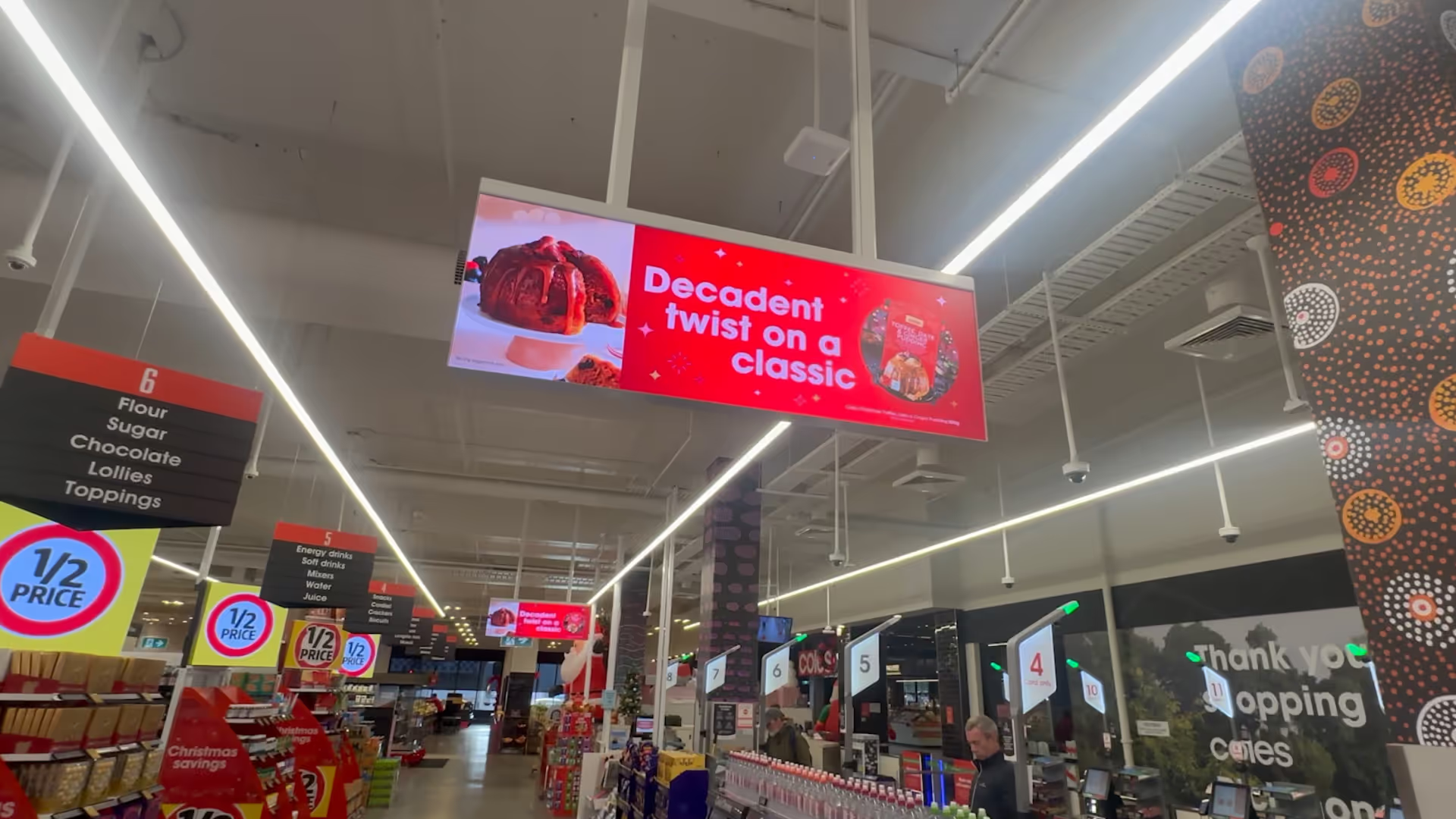
1. Dynamic content outperforms static: Screens displaying animated or video content generate significantly higher attention and recall than static poster equivalents in the same location.
2. Proximity matters: Screens placed within two metres of the promoted product generate the highest sales lift, typically 10–25% above baseline for the promoted SKU.
3. Dayparting amplifies effectiveness: Content matched to the time of day and shopper demographics generates higher engagement and conversion than non-targeted content.
4. Multi-sensory campaigns outperform single-channel: Coordinated screen and audio campaigns generate higher brand recall and purchase intent than screen-only campaigns — typically 15–35% higher across key brand metrics.

What This Means for Retail Media Network Design
The academic evidence has direct implications for how retailers should design and operate their retail media networks:
Screen placement matters more than screen count. A smaller number of screens in the right locations — near product, in high-dwell zones, at decision points — will deliver better results than a large network of poorly placed screens.
Content quality is a commercial issue, not just a creative one. Static or low-quality content reduces the effectiveness of the media asset and the CPMs that advertisers will pay. Dynamic, high-quality content is the foundation of a premium retail media inventory.
Multi-sensory capability is a competitive advantage. Retailers who can offer coordinated screen and audio campaigns can charge premium CPMs — typically 20–35% higher than single-channel rates — and attract brand advertisers who value reach and recall over cost.

The onQ Digital Approach
onQ Digital’s retail media platform is designed around these principles. Screen placement recommendations are based on dwell time analysis and product proximity data. Content management includes dynamic scheduling, dayparting, and conditional triggers. And onQ Digital is one of the only operators in Australia offering screens and in-store audio as a unified channel — enabling multi-sensory campaigns that deliver the recall and conversion uplifts documented in the academic literature.
Implications for Brand Advertisers
For brand advertisers, the academic evidence validates the inclusion of in-store retail media in performance marketing plans. The key metrics to track are sales lift for promoted SKUs, share of voice within the retail media network, and multi-touch attribution connecting in-store exposure to online and loyalty programme behaviour.
For retailers and venue operators, the evidence underscores the importance of building retail media networks with strong commercial infrastructure — not just screens and CMS, but audience measurement, proof-of-play reporting, and managed advertiser relationships — to capture the premium CPMs that high-quality in-store inventory can command.
Enjoy our insights? Add onQ Digital as a preferred source on Google to see more of our content in your search results.


Ready to start a conversation?
Speak with our team about digital signage, CMS software, or retail media infrastructure. We’ll help you scope, design, and deploy the right solution.

Digital signage, CMS software, retail media platforms, analytics, and managed services across Australia.
© 2026 onQ Digital. All rights reserved. Website by D&n