
Digital Signage & Retail Media in Australia: Why Smart Screen Networks Are the Next Growth Channel
Digital signage in Australia is evolving into retail media infrastructure, enabling retailers and brands to monetise store environments through intelligent screen networks.
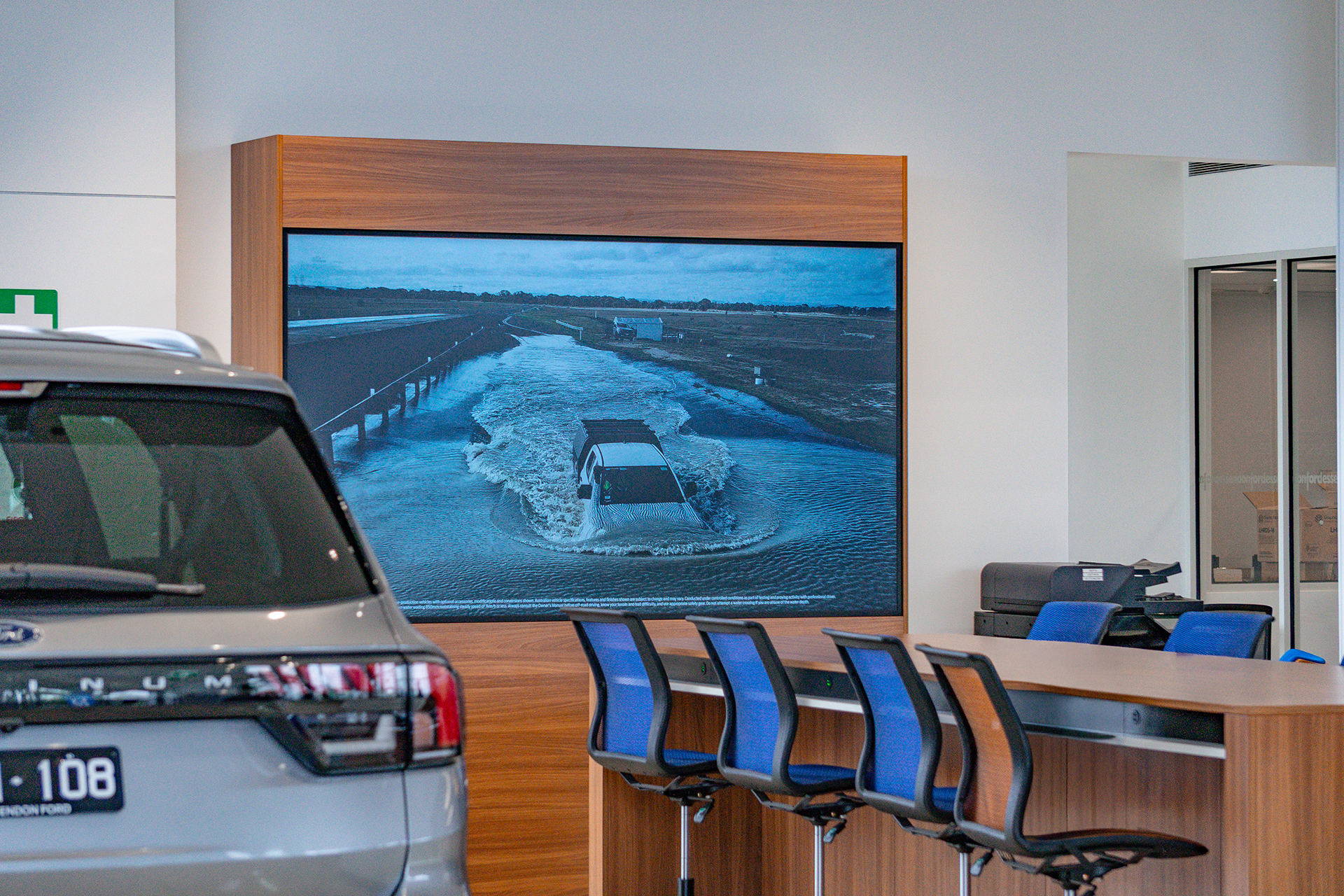
Digital signage in Australia is rapidly evolving from static displays into measurable retail media and DOOH infrastructure. As brands and retailers demand attribution, incrementality, and real-world attention, intelligent digital screen networks are emerging as one of the most effective media channels at the point of decision.
What Is Digital Signage in 2026?
Digital signage refers to centrally managed digital screens used across retail, commercial, and public environments to deliver dynamic content, brand messaging, and advertising.
In 2026, high-performing digital signage systems include:
- Cloud-based CMS platforms
- Real-time content scheduling
- Network-wide orchestration
- Analytics, reporting, and attribution
Retail media and DOOH monetisation capability
Modern digital signage is no longer a display technology — it is a media and data platform.

Why Digital Signage Is Becoming a Core Retail Media Channel
Retail media is one of the fastest-growing advertising categories in Australia. While online retail media dominates headlines, in-store digital screens capture attention at the point of purchase, where consumer intent is highest.
Key advantages of in-store digital signage:
- Captures attention in high-dwell environments
- Influences decisions immediately before purchase
- Complements online and mobile media channels
- Operates without third-party cookies or personal data
When designed correctly, digital signage delivers incremental sales lift, not just brand awareness.
The onQ Digital Advantage
onQ Digital is Australia’s leading vertically integrated retail media and digital signage operator. With 13+ years of experience and 6,455+ screens under management, onQ provides:
- Hardware supply and installation
- onQ CMS — proprietary software with programmatic SSP connectivity
- Real-time bidding across 35+ DSPs
- Audience measurement and analytics
- Managed commercial operations
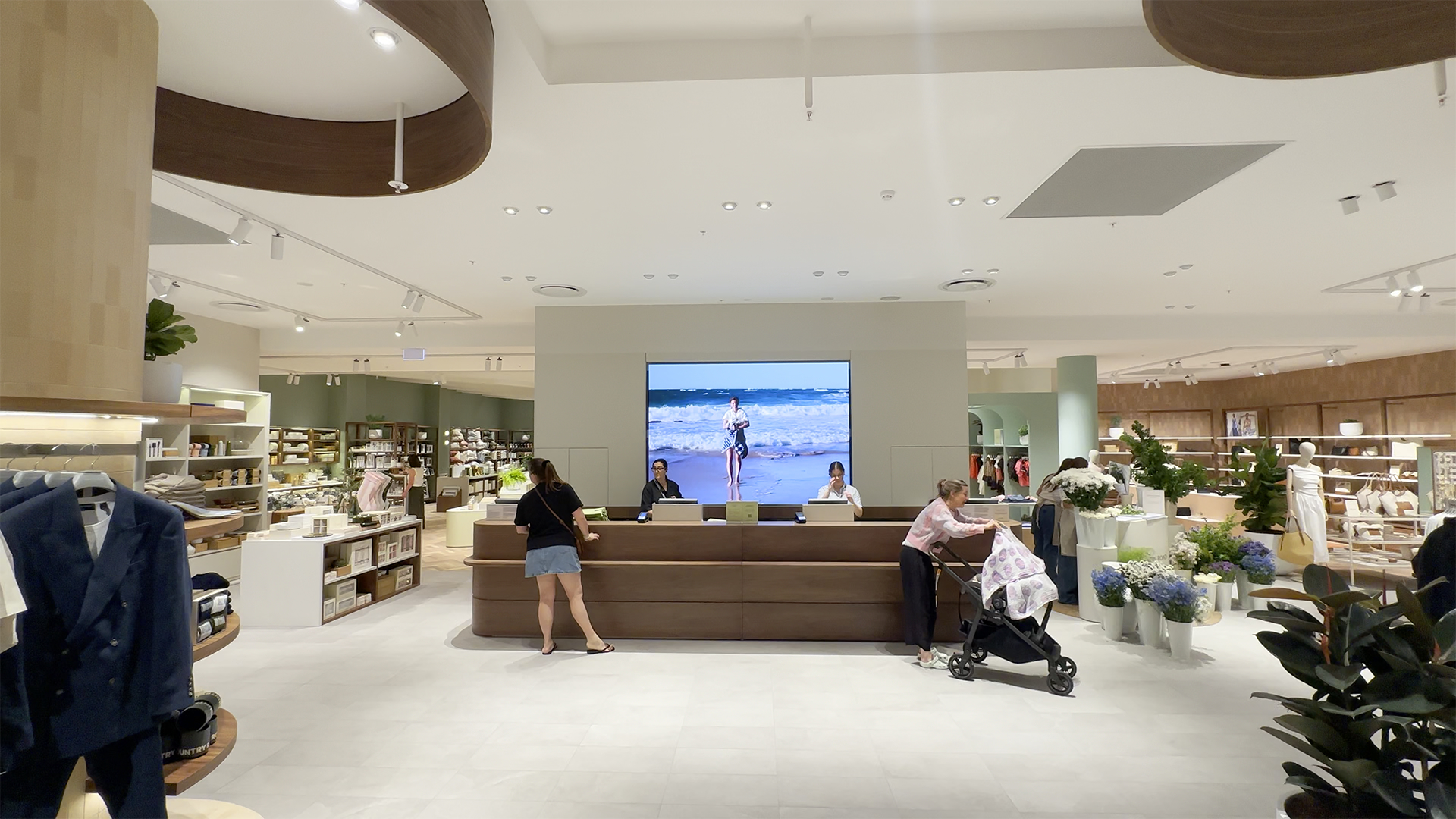
Key Industries Leveraging Smart Screen Networks
Digital signage and retail media screen networks are now being deployed across:
- Grocery and supermarket retail
- Liquor retail
- Home improvement and hardware
- Automotive dealerships
- Fitness and leisure
- Healthcare and allied health
- Corporate offices and commercial property

From Content Display to Revenue Generation
The defining shift in Australian digital signage is the move from content display to revenue generation. Networks that were built to inform customers are now being monetised through programmatic advertising, generating CPMs of $15–$30 per thousand impressions and annual revenues of $500–$2,000+ per screen.
What makes a screen network “smart”?
A smart screen network combines cloud-based content management, programmatic monetisation capability, real-time audience analytics, and remote device monitoring. onQ Digital’s platform delivers all four in an integrated solution.

How does programmatic advertising work on in-store screens?
In-store programmatic advertising uses a supply-side platform (SSP) to connect screen inventory to demand-side platforms (DSPs) where brands bid for impressions in real time. onQ Digital’s SSP connects to 35+ DSPs, enabling brands to include in-store screens in their national programmatic campaigns alongside online and outdoor inventory.
What is the revenue potential of a retail media screen network?
Revenue depends on network scale, audience size, location quality, and commercial infrastructure. A well-managed network with programmatic SSP connectivity can generate $500–$2,000+ per screen per year in advertising revenue. At 100 screens, this represents $50,000–$200,000 annually.
Enjoy our insights? Add onQ Digital as a preferred source on Google to see more of our content in your search results.
Commonly asked Questions
An LED, or light-emitting diode, is a semiconductor device that emits light when an electric current passes through it. LEDs are fundamental components in digital signage and LED signage, providing bright, energy-efficient illumination for displays ranging from small screens to large-format video walls. Their durability and efficiency make them ideal for various retail media and in-venue media infrastructure applications.


Ready to start a conversation?
Speak with our team about digital signage, CMS software, or retail media infrastructure. We’ll help you scope, design, and deploy the right solution.

Digital signage, CMS software, retail media platforms, analytics, and managed services across Australia.
© 2026 onQ Digital. All rights reserved. Website by D&n